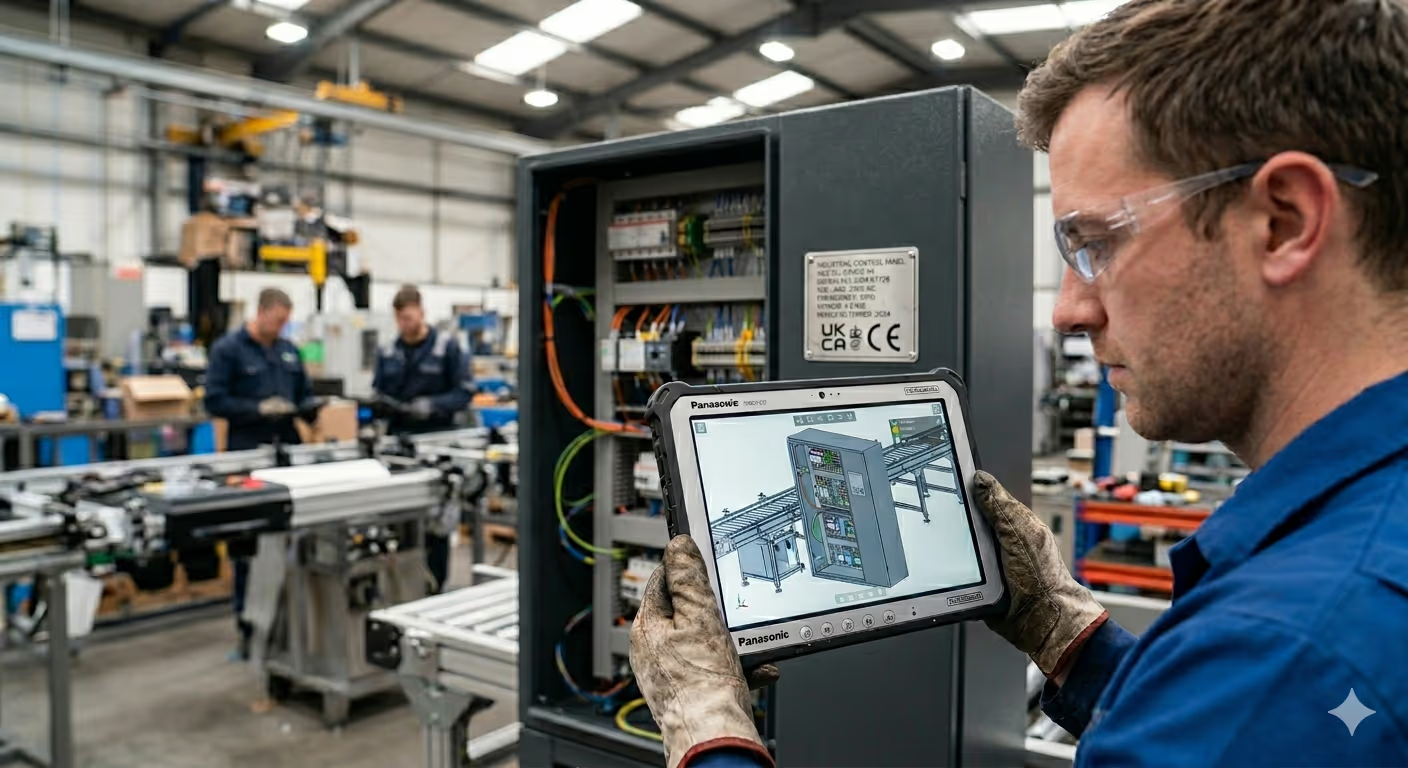
Digital twin in industry: a 2026 guide
· by Panayot Dimkov
The digital twin in industry has become one of the most repeated —and most misunderstood— buzzwords of Industry 4.0. This practical, myth-busting guide explains what it really is, what it is not, the types that exist, what it actually does on a real factory floor and how to launch a pilot with measurable return without overspending.
1 What a digital twin is (and is NOT)
A digital twin is a dynamic virtual representation of a physical asset —a machine, a line, a whole plant— kept in sync with reality through data. When the twin receives the same inputs as the physical system, it produces the same outputs: that is why it lets you simulate, predict and optimise without touching real production.
The usual confusion is equating it with a simulation or a CAD model. The difference is one of life and connection: a simulation is a one-off exercise on a static model to test a hypothesis; a 3D model is geometry without data. The digital twin combines both and, on top of that, is plugged into the real asset, receiving data continuously and updating itself throughout the entire life cycle.
Three confusions worth clearing up
| Concept | What it is | What it lacks to be a digital twin |
|---|---|---|
| 3D / CAD model | Visual geometry of the asset | No real-time data and no behaviour |
| Simulation | One-off behaviour model | Not connected to the real asset; single use |
| Dashboard / SCADA | Visualises live real data | Does not predict or simulate future scenarios |
| Digital twin | Model + live data + simulation | — |
2 Types of digital twin in a factory
Not all digital twins have the same scope. Classifying them well helps you decide where to start and avoid buying more than you need. The most useful distinction for a plant manager is by scope.
Cutting across all of these, by life-cycle phase we distinguish the prototype twin (it exists before the physical asset, to design and test) and the operational twin (it follows the asset already in production, feeding on its data). The usual path is to start with a process twin or a single critical asset and scale towards the plant.
3 Real use cases on the floor
The digital twin stops being a buzzword the moment it is applied to a concrete problem. These are the uses that really move the needle in a factory, ordered by adoption maturity.
4 What technology a digital twin needs
A digital twin is not an off-the-shelf product: it is an architecture that integrates several layers. If one of them is missing or poorly designed, the twin stays a mock-up. This is the usual stack, from the bottom up.
The good news is that many plants already have layers 1 to 3 in place. If your factory has a properly sized SCADA system and a solid plant network, you are more than halfway there: the jump to the digital twin is mostly about adding the model and the analytics layer on top of a base that already exists.
5 How to launch a pilot (without overspending)
The classic mistake is wanting to twin the entire plant at once. The sensible way is the opposite: a narrow pilot on a single critical asset that proves value in months and funds the next phase. These are the steps.
- Pick a critical asset. A machine or line whose downtime hurts: the one that most impacts production or quality.
- Instrument the basics. Temperature, vibration and electrical consumption are enough to start. No need to flood the equipment with sensors on day one.
- Choose a simple model. Physics-based or lightweight AI. Sophistication comes later; first, make it work.
- Visualise the data. A real-time dashboard to see the asset and its twin side by side.
- Run a "what if?". Simulate a failure, a configuration change or a maintenance stop and measure the result.
ROI: when it pays for itself
A pilot on a critical asset can start from around €25,000; twinning a full plant easily exceeds six figures. The key is to measure return with clear indicators —energy savings, downtime reduction, quality improvement— from day one. In practice, if the twin prevents a single long shutdown, it pays for itself within the first year.
A digital twin is, moreover, the natural culmination of other Industry 4.0 levers: it lives off the same instrumentation as predictive maintenance and feeds on the quality control delivered by machine vision. It is not an isolated project, but the layer that connects what you are already digitising.
Frequently asked questions
What is a digital twin in industry?
It is a virtual replica of a machine, process or plant connected to its physical counterpart through sensors, fed with real-time data to simulate, predict and optimise its behaviour without stopping production.
What is the difference between a digital twin and a simulation or 3D model?
A simulation or 3D model is static and one-off. A digital twin is alive: it is fed continuously with real data, updates itself and follows the asset throughout its entire life cycle.
What types of digital twin exist?
By scope, you have product or component twins, process twins and plant or full-system twins. By life cycle, prototype twins (before manufacturing) and operational twins (in production).
What technology do I need for a digital twin?
IIoT sensors, plant connectivity (OPC-UA, MQTT, Modbus), a SCADA or supervisory layer, a model of the asset and a data and analytics platform where the twin receives inputs and returns results.
How much does a digital twin cost and what is the ROI?
A pilot on a critical asset can start from around €25,000; a full plant easily exceeds six figures. If it prevents a single long shutdown, it usually pays for itself in the first year.
How do I get started with a digital twin in my factory?
With a narrow pilot: pick a critical asset, instrument the basics (temperature, vibration, consumption), build a simple model, visualise the data and test what-if scenarios before scaling up.
The bottom line
A digital twin is neither magic nor a luxury reserved for big industry: it is a data architecture in the service of a business question. Start with a critical asset, prove the return with a pilot and scale on top of what you already have —your SCADA, your plant network, your sensors. At Nexum Automatics we integrate that full stack, from the supervisory layer to the model, so the digital twin stops being a buzzword and becomes a tool that reduces downtime and costs.
Want to know which asset in your plant is the best candidate for a digital twin?
Tell us about your case and we will help you define the pilot and estimate the return.
Talk to an expertNexum Blog
Related articles
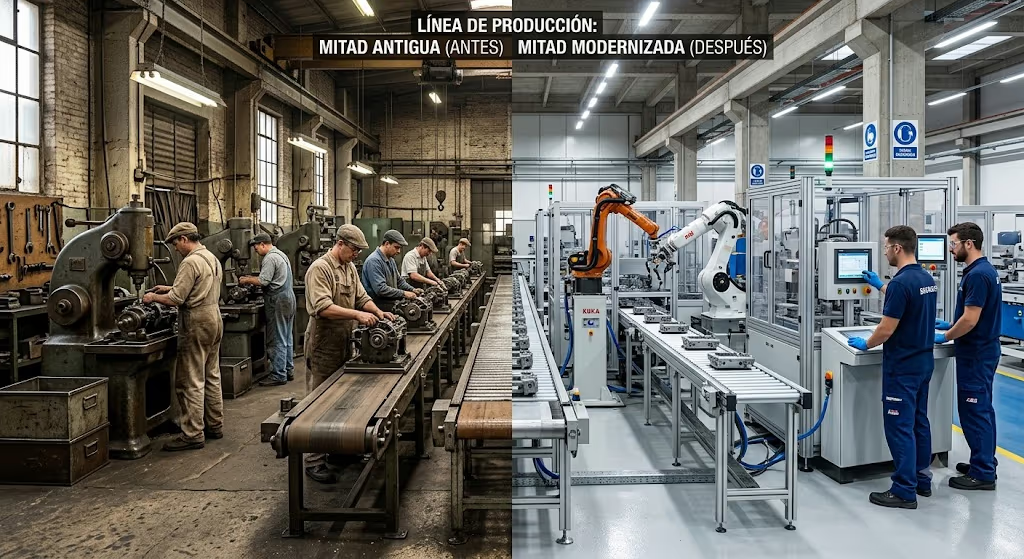
4 Aug 2026
How Much Does a Production Line Retrofit Cost?
Production line retrofit cost: €20,000–400,000 depending on scope, the 4 retrofit levels, ROI in 12–24 months and how to avoid long production stops.
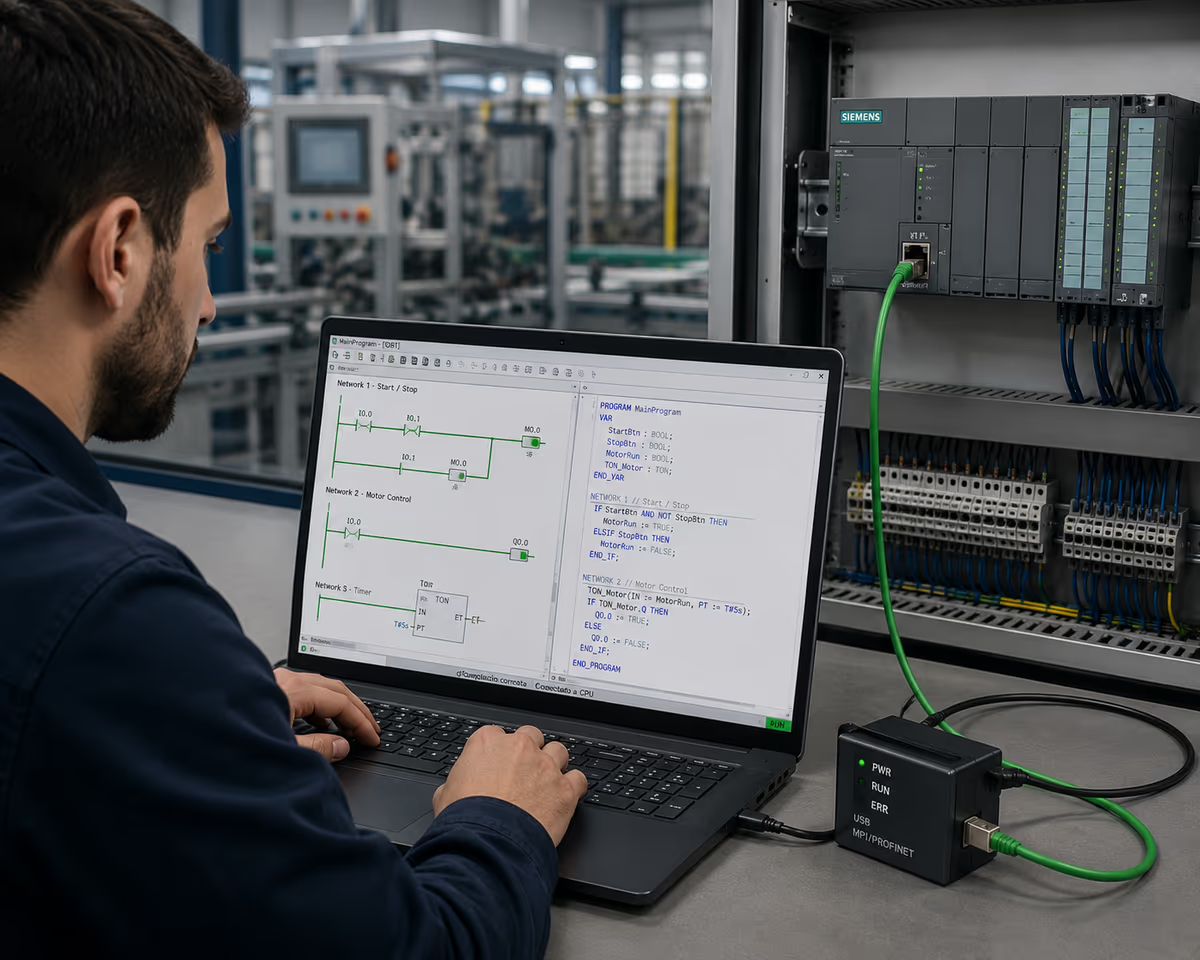
16 Aug 2026
How much does PLC programming cost? Real prices 2026
How much PLC programming costs: rates of €65-110/h and projects from €3,000 to over €25,000. Price factors and what a good quote must include.
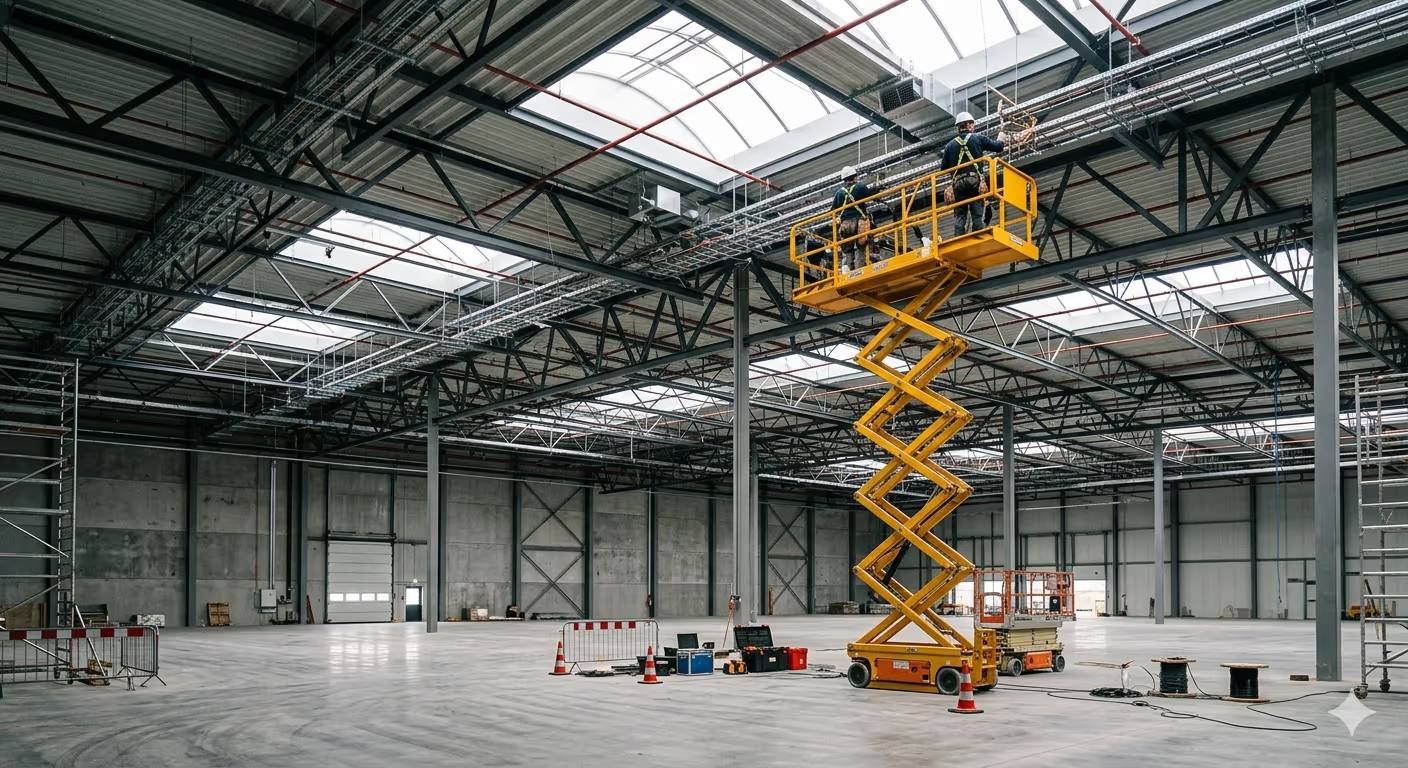
1 Jul 2026
How much does a BMS cost? (2026 prices)
How much a BMS costs in an industrial unit: cost per point and per m², ranges by size, energy savings and the mistakes that blow the budget.