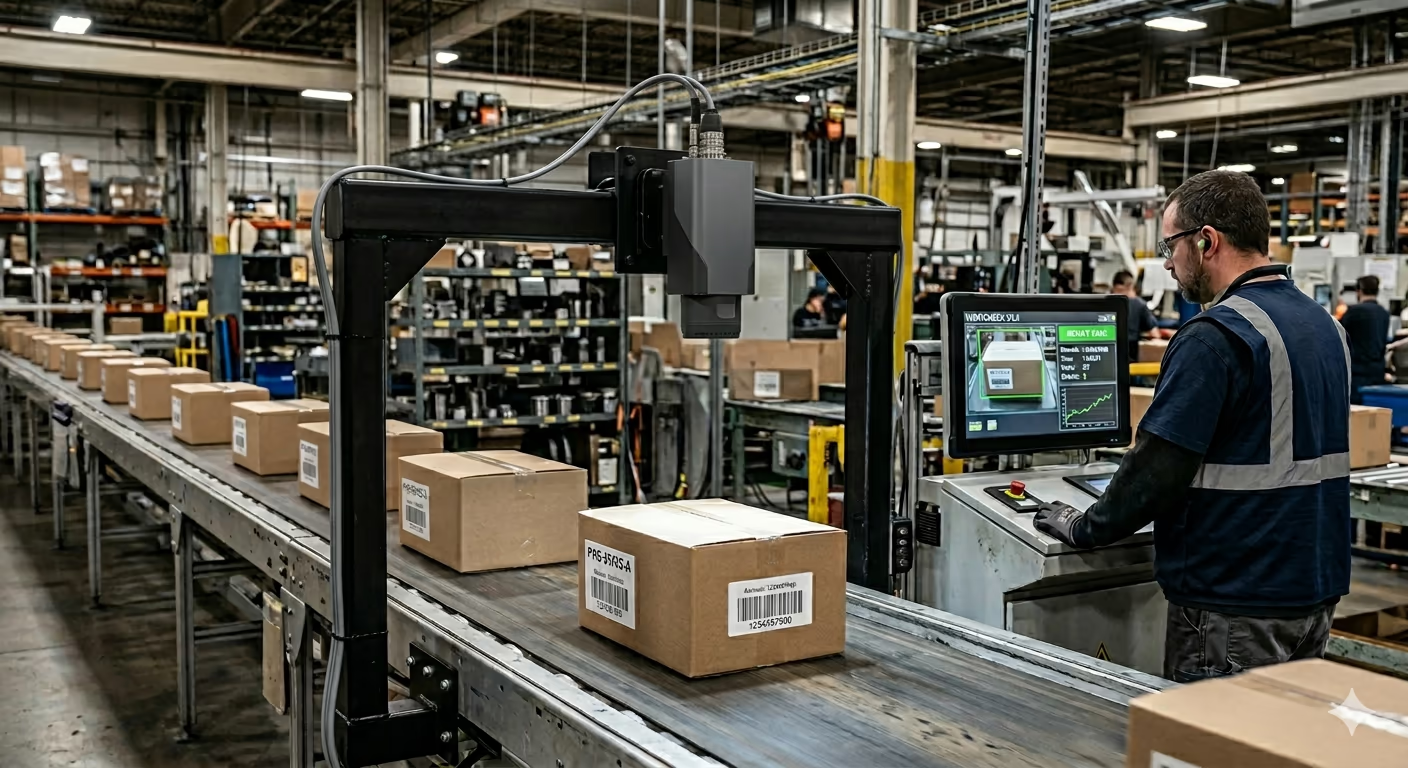
Machine vision for industrial quality control
· by Panayot Dimkov
Machine vision for quality control lets a production line inspect 100 % of parts in real time, without fatigue and without subjective judgement. This guide explains what it is, how it works, what types of systems exist and how to justify the investment in an industrial plant.
1What is machine vision for quality control
Machine vision applied to quality control is an automated system that uses industrial cameras, controlled lighting and image-processing algorithms to inspect products during manufacturing. Its job is to detect defects, verify dimensions, check for the presence or absence of components and sort parts, all instantly and without direct human intervention.
The difference from manual inspection is structural. An operator inspects by sampling, gets tired and applies a criterion that varies between people and shifts. A vision system inspects 100 % of production, always applies the same criterion and works at line speed, whatever it is. That is why it has become a cornerstone of Industry 4.0 in sectors such as automotive, food, pharma, electronics and packaging.
2How a machine vision system works
Although every application is different, all machine vision systems share the same workflow. Understanding it helps to size the project correctly and to avoid the most common mistake: underestimating the importance of lighting and integration with the line.
The critical link is usually lighting: the same defect can be invisible or obvious depending on how the light hits it. That is why a well-planned vision project devotes as much effort to lighting and optics as to software. Integration with the plant SCADA system and PLCs ensures the camera's decision turns into a physical action on the line.
3Types of machine vision systems
There is no single system that fits everything. Choosing well starts with understanding what each family solves and when each one fits. These are the four most common categories in industrial environments.
2D vs 3D: when to use each
| Criterion | 2D vision | 3D vision |
|---|---|---|
| What it inspects | Colour, shape, presence, codes | Volume, height, deformation |
| Speed | Very high | Medium-high |
| Relative cost | Lower | Higher |
| Typical case | Labelling, OCR/code reading | Weld-bead measurement |
4What defects it detects and where it is applied
The power of machine vision for quality control lies in its versatility: the same principle serves to inspect a weld, a glass container or an electronic board. These are the most widespread applications on production lines.
These applications fit naturally into the design of automated production lines, where the vision station sits at the key points of the flow to stop the defect as early as possible. If you are planning a new line, it is also worth reading how to design an efficient production line and planning where to place quality control from the start.
5Advantages over manual inspection
The question every plant manager asks is fair: if people are already inspecting, why invest in machine vision? The answer lies in the numbers and in consistency.
| Factor | Manual inspection | Machine vision |
|---|---|---|
| Coverage | Partial sampling | 100 % of parts |
| Criterion | Subjective and variable | Objective and repeatable |
| Speed | Limited by fatigue | At line speed |
| Traceability | Hard to record | Data on every part stored |
| Cost per unit | Grows with volume | Falls with volume |
6How to justify the investment and where to start
A machine vision project is not tackled by buying a camera, but by precisely defining which defect you want to detect and what economic impact it has today. The return is usually fast —months, not years— when the target defect generates a relevant cost of poor quality.
- Define the critical defect. Which failure causes the most complaints, rework or scrap today.
- Quantify the cost of poor quality. Put a figure on the current problem: euros per reject, per return, per hour of stopped line.
- Start with a pilot station. One well-solved application is worth more than ten half-done ones.
- Secure lighting and integration. They are 80 % of success; software is the most visible part, but not the most critical.
- Measure and scale. With the pilot validated and the data in hand, replicate across the rest of the line.
This logic of starting small, measuring and scaling is the same one we apply in industrial process automation projects. And it pairs very well with a predictive maintenance strategy for automated plants: the same data that vision generates on defects feeds the continuous improvement of the process. To go deeper into the state of the art, the Cognex machine vision fundamentals guide is a solid technical reference.
Frequently asked questions
What is machine vision in quality control?
It is an automated system that uses industrial cameras, controlled lighting and image-analysis software to inspect products during manufacturing. It detects defects, measures dimensions and checks components instantly, inspecting 100 % of parts without fatigue or subjective judgement.
How does a machine vision system work?
It follows five steps: lighting creates the contrast, the camera captures the image of each part, software processes it with rules or AI, it issues a pass or fail verdict and sends the signal to the PLC, which ejects the defective part or logs the data. Lighting is the factor that most affects the result.
What is the difference between 2D and 3D machine vision?
2D vision captures a flat image and is fast and cost-effective, ideal for colour, shape, presence and code reading. 3D vision reconstructs volume and depth using laser or several cameras, and is needed when the part's height, deformation or volumetric measurements matter.
What are its advantages over manual inspection?
It inspects 100 % of production with an objective, repeatable criterion, works at line speed without fatigue and stores traceability for every part. The biggest benefit is eliminating the cost of poor quality —rework, complaints and returns— by catching the defect on the line and not at the customer.
How much does machine vision cost and when does it pay off?
The investment depends on the type of camera, the lighting and the integration, and can be significant up front. However, the return is usually measured in months when the target defect generates a high cost of poor quality. The key is to start with a pilot station on the most costly defect and scale after validating results.
In short
Machine vision for quality control turns inspection into a continuous, objective and traceable process, able to stop the defect before it moves down the line. The key is not the most expensive camera, but defining the critical defect well, getting the lighting right and starting with a pilot that proves the return. At Nexum Automatics we design and integrate vision stations within automated production lines, connected to the plant control.
Want to know which defect on your line is a candidate for machine vision?
Tell us your case and we will estimate the solution and the return on investment together.
Talk to an expertNexum Blog
Related articles
14 Aug 2026
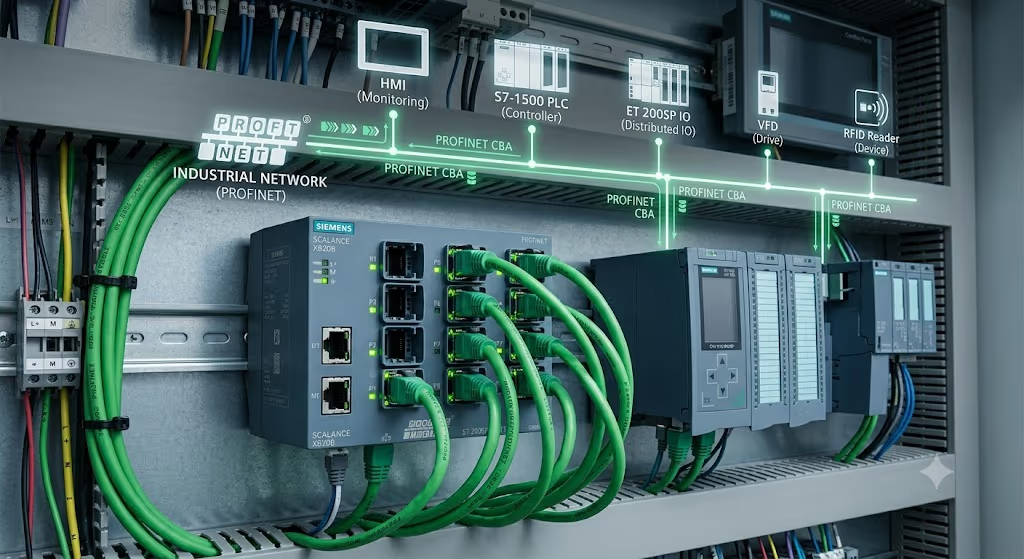
Modbus vs Profinet vs OPC UA: which one to use
Modbus, Profinet and OPC UA compared: speed, determinism, security and cost. Find out which protocol to use at each layer of your plant.
10 Aug 2026
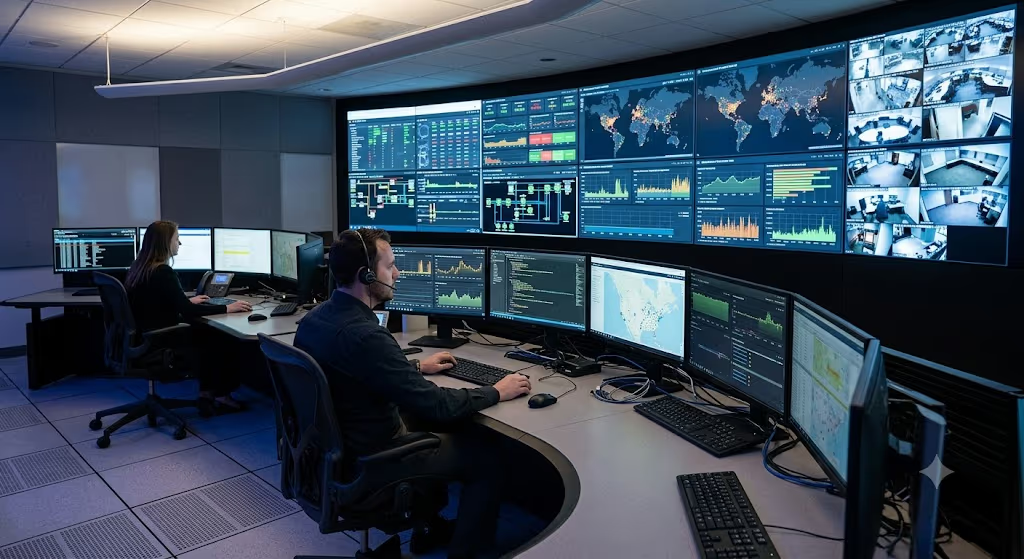
SCADA software: how to choose the right one for your plant
How to choose SCADA software without vendor lock-in: tag licensing, redundancy, protocols and total cost. Vendor-neutral integrator criteria.
19 Jan 2026
The definitive guide to increase competitiveness without increasing the number of employees
For years, business growth has been linked to an almost automatic idea: more work requires more people. The good news is that growing competitiveness without increasing headcount is not only possible, but strategic. In this guide we explain how to do it realistically, sustainably and without burning out your team.