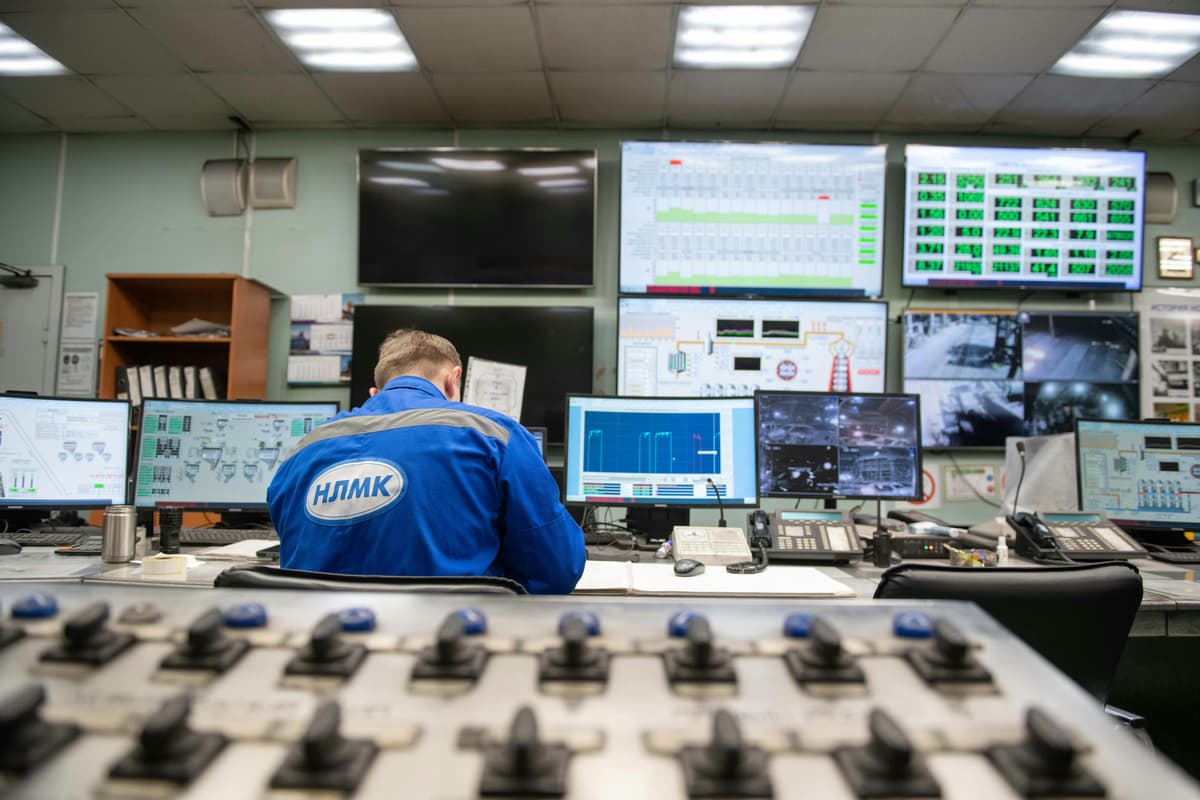
Predictive maintenance in automated plants: what is it and how to implement it?
· by Panayot Dimkov
Every unplanned shutdown in an automated plant has a direct cost—lost production, overtime, emergency parts—and an equally devastating indirect cost: loss of customer confidence and erosion of margins. Predictive maintenance is the technological solution to this problem. It’s not about inspecting machines on a schedule, but rather listening to them continuously and acting only when the data indicates that something is about to fail.
1What is predictive maintenance and how does it differ from preventive maintenance
Predictive maintenance is a strategy based on the continuous monitoring of equipment’s actual condition using sensors, data analysis, and algorithms, with the goal of predicting failures before they occur. Unlike preventive maintenance—which operates on fixed time intervals regardless of the equipment’s condition—predictive maintenance intervenes only when indicators signal that intervention is necessary.
The result is twofold: unexpected downtime is avoided, and unnecessary interventions that consume time and resources without adding real value are eliminated.
Comparison of Maintenance Strategies
| Strategy | When it is performed | Typical cost | Risk of downtime |
|---|---|---|---|
| Corrective | When the equipment has already failed | Very high | Maximum |
| Preventive | At fixed time intervals | Medium | Moderate |
| Predictive | When data indicates degradation | Optimal | Minimum |
2What technologies make predictive maintenance possible
The implementation of a predictive strategy relies on a combination of technologies that work in an integrated manner. It is not about adopting a single tool, but rather building an ecosystem for data capture, transmission, and analysis. The ISA-95 standard from the International Society of Automation establishes the reference frameworks for integrating these systems into plant architecture.
3Which parameters are monitored and why
Each type of equipment has its own characteristic warning signals. Understanding them is the first step in determining which sensors to install and which thresholds to configure. The systems integrated into the industrial facility allow these parameters to be captured continuously without operator intervention.
| Parameter | Typical equipment | Failure it anticipates |
|---|---|---|
| Vibration | Motors, pumps, bearings | Imbalance, misalignment, fatigue |
| Temperature | Electrical panels, transformers, gearboxes | Overload, excessive friction, short circuit |
| Electric current | Motors, variable speed drives | Winding deterioration, overloads |
| Pressure / flow | Hydraulic and pneumatic systems | Leaks, blockages, seal wear |
| Ultrasound | Valves, compressors, bearings | Internal leaks, cavitation, poor lubrication |
| Oil analysis | Gearboxes, gearboxes | Contamination, lubricant degradation |
4How to implement it step by step
The biggest mistake when approaching predictive maintenance is trying to implement it across the entire plant all at once. The key is to start with critical equipment—those whose downtime directly impacts production or safety—and scale up gradually. If your plant is also looking to increase competitiveness without adding staff, predictive maintenance offers one of the fastest returns on investment.
Phase 1 — Inventory and Criticality
Catalog all plant equipment and classify it by criticality: impact on production, repair cost, historical failure rate, and availability of spare parts. This determines where to place the first sensors.
Phase 2 — Instrumentation and Connectivity
Install the appropriate sensors on each priority piece of equipment and ensure connectivity to the analytics system. This is where the industrial facility’s architecture plays a decisive role: a well-designed plant network greatly facilitates this phase.
Phase 3 — Baseline and Reference Models
During the first few weeks, the system collects data under normal operating conditions. This baseline serves as the reference against which future deviations will be detected. Without it, any alert would be arbitrary.
Phase 4 — Alert Configuration and Work Orders
Define alert thresholds for each parameter and integrate the system with the CMMS so that it automatically generates a work order when a threshold is exceeded. Human intervention should be limited to executing the action, not detecting the problem.
Phase 5 — Continuous Review and Model Improvement
Every intervention performed provides learning data. Models must be reviewed periodically to adjust thresholds, incorporate new patterns, and improve the accuracy of predictions.
5 KPIs to measure the program’s success
Without clear metrics, it is impossible to justify the investment or determine whether the program is working. The following indicators should be measured before implementation—to establish a baseline—and continuously once the program is up and running. BMS-type energy monitoring systems complement these KPIs by providing consumption data that also anticipates degradation.
| KPI | What it measures | Target |
|---|---|---|
| MTBF | Mean Time Between Failures | Increase > 30% in 12 months |
| MTTR | Mean time to repair | Reduction > 40% |
| OEE | Overall Equipment Effectiveness | Improvement of 5–10 percentage points |
| Unplanned downtime | Number of unexpected events | Reduction > 50% |
| Maintenance cost per unit | Maintenance cost efficiency | Reduction 15–25% |
| False positive rate | Alerts without subsequent actual failure | < 10% to maintain team confidence |
6Common Mistakes and How to Avoid Them
Most predictive maintenance programs that fail to meet their objectives do not fail because of the technology: they fail due to change management and misaligned expectations. Understanding the most common mistakes allows you to avoid them from the program’s design phase. If you also need to assess whether your electrical panels are ready to support the additional instrumentation, this is a starting point worth verifying before installing sensors.
In short
Implementing predictive maintenance in an automated plant is not a technological expense: it is an investment with a measurable return in reduced downtime, savings on parts, and extended equipment lifespan. The key is to start with the right approach—critical equipment, quality data, and a committed team—and scale progressively as the system matures. At Nexum Automatics, we design and integrate monitoring and control solutions tailored to the reality of each plant, from the facility’s architecture to the data analysis layer.
Want to know which pieces of equipment in your plant are candidates for predictive maintenance and what the estimated return would be? Tell us about your situation.
Talk to an expertNexum Blog
Related articles

30 Sep 2026
What It Costs to Automate a Process with AI
What it costs to automate a process with AI: indicative ranges by complexity, what drives the price up and which licences you pay for on top.

15 Jun 2026
Machine vision for industrial quality control
What machine vision for quality control is, how it works, types of systems and how to justify the investment in your industrial production line.
16 Aug 2026
How much does PLC programming cost? Real prices 2026
How much PLC programming costs: rates of €65-110/h and projects from €3,000 to over €25,000. Price factors and what a good quote must include.