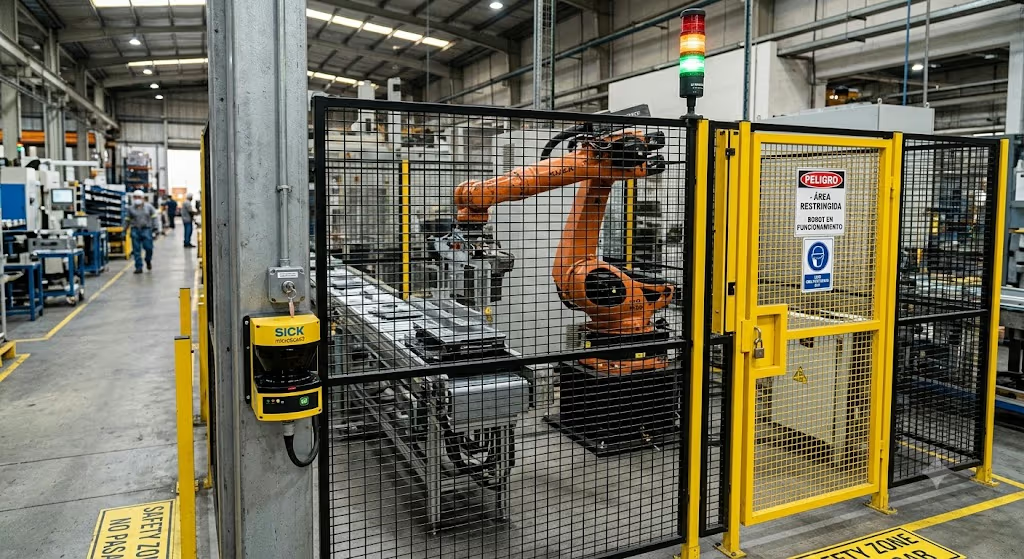
Robot cell safety standards: CE marking guide 2026
· by Panayot Dimkov
The safety standards a robot cell must comply with are not a final formality: they shape the design, the schedule and 10–20% of the budget. In this guide we set out — with exact designations — which regulations an industrial robot cell must meet in the EU, who is responsible for CE marking, and which documents you are entitled to demand from your integrator.
Which standards must a robot cell comply with?
Direct answer: a robot cell installed in the EU must comply with the Machinery Directive 2006/42/EC — which requires CE marking of the assembly — and, as the practical route to conformity, the applicable harmonised standards: EN ISO 10218-1 (robot safety) and EN ISO 10218-2 (safety of the robot system and its integration), ISO/TS 15066 where there is collaborative operation, EN 60204-1 for the machine's electrical equipment and EN ISO 13849-1 for the design of the safety functions. The risk assessment underpinning it all follows EN ISO 12100. And there is a date circled in red: the new Machinery Regulation (EU) 2023/1230 will replace the directive and becomes mandatory from January 2027.
| Standard / legal text | What it covers | Applies to |
|---|---|---|
| Directive 2006/42/EC | Essential health and safety requirements, CE marking | Every cell |
| Regulation (EU) 2023/1230 | Replaces the directive; applicable from January 2027 | Every cell |
| EN ISO 10218-1 | Safety requirements for the industrial robot (manufacturer) | Every cell |
| EN ISO 10218-2 | Safety of the robot system and cell integration | Every cell |
| ISO/TS 15066 | Collaborative operation: methods, force and pressure limits | Collaborative |
| EN 60204-1 | Electrical equipment of machines: panel, wiring, stop functions | Every cell |
| EN ISO 13849-1 | Safety-related parts of control systems (Performance Level) | Every cell |
| EN ISO 12100 | Principles of risk assessment and risk reduction | Every cell |
| EN ISO 13855 / EN ISO 13857 | Minimum safety and reach distances | Guarding/ESPE |
Once the cell is in service, the employer's obligations do not end: EU workplace legislation on work equipment (in Spain, Royal Decree 1215/1997, transposing the Work Equipment Directive) requires the equipment to be kept safe throughout its working life — inspections, maintenance and training included.
Who is responsible for CE marking of the cell? The integrator
This is the question that causes the most confusion and can cost the most money. The robot you buy from FANUC, KUKA, ABB or Yaskawa arrives with a declaration of incorporation (Annex II B of the directive): it is partly completed machinery, expressly not fit to operate on its own. The moment a gripper, guarding, an electrical panel and a program are added, a new machine comes into existence — and that machine needs its own CE marking.
The responsible party is whoever constitutes the assembly: normally, the integrator. At Nexum Automatics we take on that role as part of the project: risk assessment, safety function design, technical file and an EC declaration of conformity signed by us. It is a useful criterion for comparing quotes: if a supplier hands over the cell with "you can sort out the CE yourself", they are not selling you a finished cell — they are transferring the legal obligations of a manufacturer to you.
- An integrator builds the cell → the integrator is the manufacturer of the assembly and signs the EC declaration.
- The end user integrates in-house → the company assumes the manufacturer obligations: technical file, marking and liability.
- An existing cell is substantially modified (greater reach, new tooling, changed safety concept) → the modified assembly may require a new conformity assessment.
This division of responsibility is one of the reasons a turnkey project costs what it costs — we break it down in how much robot cell integration costs.
Risk assessment step by step under EN ISO 12100
Everything else hangs off this. The risk assessment under EN ISO 12100 is not a form to fill in: it is the engineering document that decides which safety measures your cell carries and at what performance level. The process we follow on every project:
Step 5 deserves emphasis: EN ISO 13849-1 requires every safety function to achieve a Performance Level (PL a to PL e) matched to the risk. In robot cells, the critical functions — safety stop, door monitoring, area scanner — typically demand PL d, which in practice means redundant architecture (category 3) and certified components: safety relays or a safety PLC, guard locking devices, approved laser scanners. The IEC/SIL alternative route is EN 62061; both are valid, but they are not to be mixed casually within one function.
Fencing or collaborative? What ISO/TS 15066 and EN ISO 13855 say
The standards do not force you to fence: they force the residual risk to be acceptable. There are two philosophies, and many real cells combine both:
The traditional fenced cell
Separating people and robot with fixed and movable guards is the most robust solution and almost always the cheapest to validate. The rules of the game: guards are dimensioned per EN ISO 13857 (safety distances to prevent reaching hazard zones) and every practicable access carries an interlock per EN ISO 14119, normally with guard locking while the robot is not in a safe stop. Where electro-sensitive protective equipment is used — light curtains, laser scanners — the mounting distance is calculated with EN ISO 13855: the formula S = K·T + C, with a body approach speed of 1,600 mm/s, converts your robot's actual stopping time into millimetres of separation. That is why stopping time is measured at commissioning, not copied from a catalogue.
The collaborative cell (ISO/TS 15066)
A cobot is not safe "out of the box": what ISO/TS 15066 regulates is the complete collaborative application, tooling and workpiece included. The specification defines the collaborative operating methods — safety-rated monitored stop, hand guiding, speed and separation monitoring, and power and force limiting — and, for the latter, tabulates the biomechanical pressure and force limits admissible per body region. In practice that means force measurements with calibrated equipment on the real application: a cobot with a sharp-edged gripper or a heavy part may need drastic speed reductions… or end up fenced anyway. We analyse that trade-off in cobot vs industrial robot.
Which documents your integrator must hand over
A "finished" cell without paperwork is not finished. At project acceptance, demand this documentation package — it is what a labour inspector, your prevention service or an expert witness after an incident will ask for:
- EC declaration of conformity for the assembly, signed by the integrator as manufacturer of the cell, listing the standards applied.
- CE marking plate on the cell, with manufacturer, year and identification data.
- Technical file (or its deliverable part): risk assessment, drawings, calculation and validation of safety functions per EN ISO 13849-2, electrical schematics per EN 60204-1.
- Instruction manual in the user's language: intended use, operating modes, lockout, safe maintenance and cleaning.
- Declarations of incorporation for the partly completed machinery integrated (robot, feeders) and certificates for the safety components.
- Test records: stopping-time measurement, distance verification per EN ISO 13855, functional tests of every safety function and, for collaborative cells, the force measurement report.
This package is not defensive bureaucracy: it is what allows the cell to be modified in the future without redoing the engineering from scratch, and what protects the owner legally. In our robotic installation projects, the CE documentation is handed over together with operator training, before the acceptance signature.
How much does safety add to the budget?
The uncomfortable question, answered honestly: in Nexum Automatics' experience, the complete safety and conformity package represents roughly 10–20% of the total cell budget. On standard handling or palletising cells that translates into about €8,000–30,000, split as follows:
| Item | Typical content | Indicative share |
|---|---|---|
| Risk assessment and safety engineering | EN ISO 12100, PLr definition, safety concept | 2–4% |
| Physical elements | Fencing, interlocked doors, light curtains, laser scanners | 5–10% |
| Safety control | Safety PLC/relays, emergency stops, safe wiring | 2–4% |
| Validation and CE documentation | Tests, measurements, technical file, EC declaration | 1–3% |
Two lessons from experience. First: that percentage drops when safety is designed in from the initial layout and rises — sometimes doubles — when it is patched on at the end over an already-built cell. Second: comparing quotes without reading the safety chapter is comparing apples with oranges; a quote 15% cheaper with no safety PLC and no CE documentation is not cheaper — it is an unfinished cell. For the full price context, see industrial robot prices and the breakdown in robot cell integration costs.
Frequently asked questions
Which standards must a robot cell comply with?
A robot cell in the EU must comply with the Machinery Directive 2006/42/EC (CE marking of the assembly) and the applicable harmonised standards: EN ISO 10218-1 and EN ISO 10218-2 for the robot and its integration, ISO/TS 15066 for collaborative operation, EN 60204-1 for the electrical equipment and EN ISO 13849-1 for the safety functions. The risk assessment follows EN ISO 12100. From 20 January 2027 the new Machinery Regulation (EU) 2023/1230 will apply.
Who is responsible for CE marking of a robot cell?
The integrator who builds the cell. The robot leaves the factory with a declaration of incorporation as partly completed machinery, but the assembly of robot, tooling, guarding and controls is a new machine: whoever constitutes it must compile the technical file, sign the EC declaration of conformity and affix the CE marking. If the end user integrates in-house, they take on those manufacturer obligations themselves.
How much does safety add to a robot cell budget?
In Nexum Automatics' experience, the safety package — risk assessment, fencing or electro-sensitive devices, interlocks, safety PLC, validation and CE documentation — typically represents 10–20% of the total cell budget. In absolute figures, standard cells usually run between €8,000 and €30,000 for safety.
When does the new Machinery Regulation (EU) 2023/1230 apply?
Regulation (EU) 2023/1230 becomes mandatory from 20 January 2027 and replaces Directive 2006/42/EC. Being a regulation, it applies directly across the EU without national transposition. Cells put into service before that date are CE marked under the current directive.
The bottom line
Robot cell compliance boils down to one clear chain: risk assessment under EN ISO 12100 → design per EN ISO 10218-1/-2 (plus ISO/TS 15066 if collaborative), EN 60204-1 and EN ISO 13849-1 → CE marking of the assembly under Directive 2006/42/EC, with Regulation (EU) 2023/1230 on the 2027 horizon. The party accountable for that chain is the integrator, and well-planned safety costs 10–20% of the project — badly planned, considerably more.
That is how we deliver our robotic installations: cell, safety and CE in a single contract.
Is your cell compliant? Will the next one be, by design?
Tell us about your process and we will tell you which standards apply, which safety concept fits and what it would cost — CE marking included in the quote.
Talk to an expertNexum Blog
Related articles
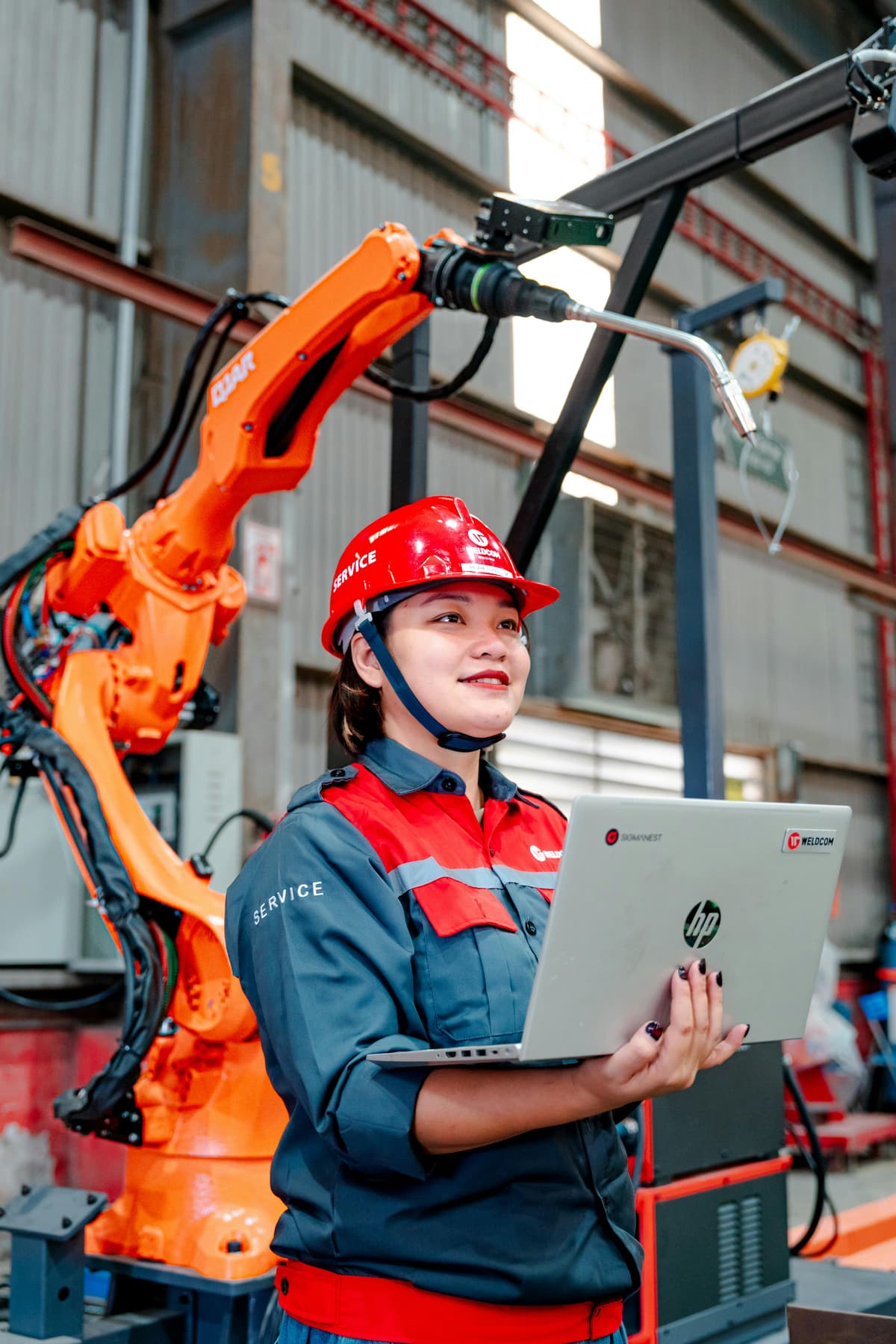
18 May 2026
Industrial Robotics Integrator: What They Do and How to Choose One
What is an industrial robotics integrator, what services do they offer, how to choose a certified one, and what guarantees to expect. 2026 Guide for Spanish Manufacturers.
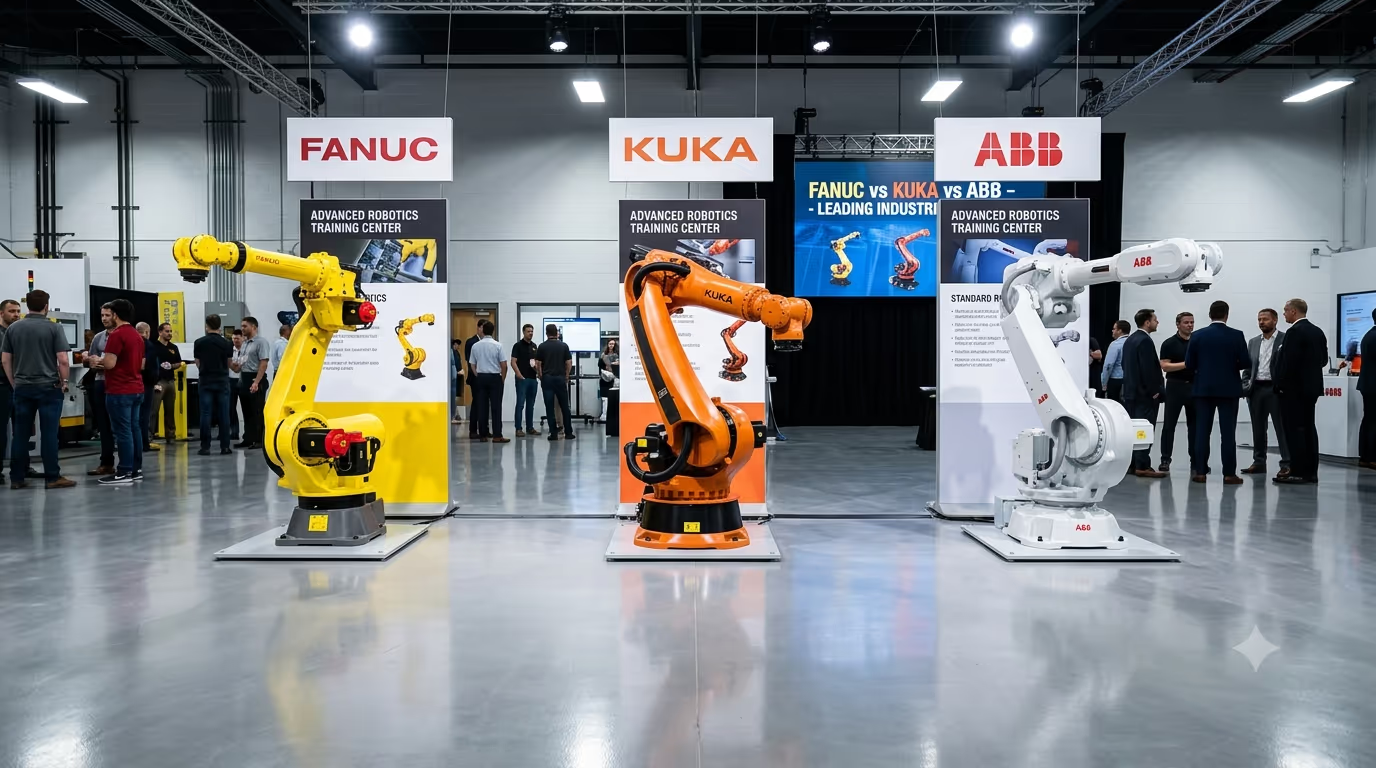
2 Jul 2026
How to choose: FANUC vs KUKA vs ABB
How to choose a robot integrator and brand (FANUC vs KUKA vs ABB): criteria, certifications, key questions and red flags to check before you sign.

26 Jun 2026
BMS for industrial buildings: cost & grants
How much a BMS costs in an industrial building (€15,000–120,000) and which IDAE grants, Next Generation funds and CAE certificates can finance it.