BMS vs EPMS: differences and which you need
· by Panayot Dimkov
When you need to monitor an industrial building or a warehouse, two acronyms that are often confused show up: BMS and EPMS. Understanding the difference between a BMS and an EPMS avoids buying the wrong system —or paying twice— and is key to deciding what your factory really needs.
1 What a BMS is and what an EPMS is
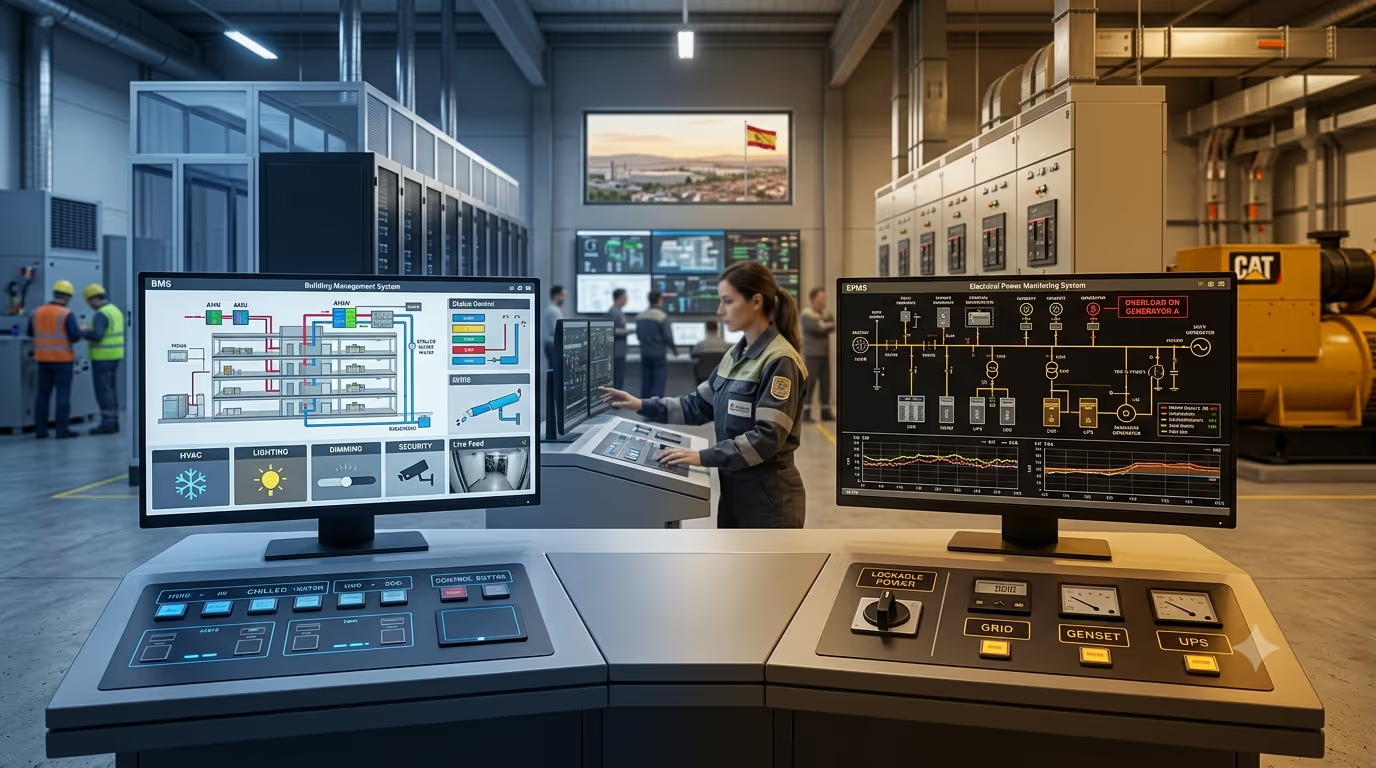
A BMS (Building Management System) is the platform that supervises and controls a building's mechanical and electrical systems: HVAC, lighting, ventilation, fire detection, access control and, at a basic level, energy. Its goal is the building's overall comfort, safety and efficiency.
An EPMS (Electrical Power Management System) is dedicated exclusively to the electrical infrastructure: it measures voltage, current, power and, above all, power quality. It communicates several times per second and captures events that occur in milliseconds —within a single cycle— which lets it detect faults, voltage sags and anomalies a BMS doesn't even see.
The key: the BMS gives the wide picture of the building; the EPMS gives the fine X-ray of the electrical network. That's why a BMS offers basic energy data, but not the depth of grid, usage and quality analysis an EPMS provides.
2 The key differences between BMS and EPMS
These are the differences that really matter when deciding, summarised so you can compare them at a glance:
| Criterion | BMS | EPMS |
|---|---|---|
| Scope | The whole building (HVAC, light, security, energy) | Only the electrical installation |
| Goal | Comfort, safety and overall efficiency | Supply reliability and power quality |
| Data speed | Seconds or minutes | Sub-second (events in milliseconds) |
| Power quality | Basic consumption data | Sags, harmonics, transients, power factor |
| Fault detection | Limited | Real-time, with root-cause analysis |
| Typical user | Maintenance and building management | Electrical engineering and availability |
3 When you need each one
It's not a matter of "trend", but of which risk you want to control. A quick guide:
A BMS is enough —or your priority— if…
- You want to manage HVAC, lighting and security centrally.
- Your priority is the building's overall comfort and energy efficiency.
- Consumption data at building or zone level is enough for you.
You need an EPMS if…
- A micro power outage stops your production or spoils product.
- You have sensitive loads, continuous processes or equipment that suffers from poor power quality.
- You need to analyse faults, harmonics and transients and justify utility penalties.
- You run a data centre, a hospital, a critical factory or any installation where power can't fail.
4 BMS + EPMS: why integrate them
The greatest value doesn't come from choosing one and discarding the other, but from integrating them. The EPMS brings detailed electrical-network intelligence that goes far beyond what a BMS can do; the BMS brings the building context. Combined into a single platform, the operator sees comfort and safety and electrical health in detail, and can correlate an electrical event with what was happening in the building at that instant.
In practice, many critical installations (data centres, industry, healthcare) deploy a BMS for overall management and an EPMS underneath for the electrical layer, communicating with each other. That's how you get the best of both without giving up depth. You can see how we approach it in our BMS and EPMS service.
5 And for an industrial factory?
In a warehouse or factory, the "BMS or EPMS" question is almost always answered with "it depends on the electrical risk". If your process tolerates micro-outages and your priority is to heat, cool and light efficiently, a well-sized BMS may be enough. But if a half-second voltage dip drops a line, spoils a batch or trips your drives, the EPMS stops being a luxury and becomes production protection.
The sensible approach is to first analyse what an electrical fault costs you and which loads are sensitive, and from there decide whether you need only a BMS, only an EPMS or both integrated. To understand power-quality fundamentals, bodies such as the IEC (International Electrotechnical Commission) define the reference standards.
Frequently asked questions
What is the difference between a BMS and an EPMS?
A BMS manages the whole building —HVAC, lighting, security and energy— with a broad view and data every few seconds or minutes. An EPMS focuses only on the electrical installation, but communicates sub-second and analyses power quality (sags, harmonics, transients) and faults in real time. The BMS gives the wide picture; the EPMS, the electrical detail.
Can a BMS replace an EPMS?
Not for the critical electrical part. A BMS offers basic consumption data, but it doesn't communicate at the speed needed to capture millisecond events or analyse power quality. When electrical reliability is critical, you need an EPMS, ideally integrated with the BMS.
What does my factory need, BMS or EPMS?
It depends on the electrical risk. If your priority is to heat, cool, light and manage the building efficiently, a BMS may be enough. If a half-second voltage dip stops the line or spoils product, you need an EPMS to protect production, usually integrated with the BMS.
Can a BMS and an EPMS be integrated?
Yes, and it's the most advisable approach in critical installations. Integrated into a single platform, the EPMS brings detailed electrical-network intelligence and the BMS the building context, so electrical events can be correlated with what was happening in the building at that moment.
What is power quality and why does the EPMS measure it?
It's the set of parameters showing whether the electrical supply is stable and clean: voltage sags and spikes, harmonics, transients and power factor. The EPMS measures them in real time because those anomalies —invisible to a BMS— are what trip equipment, spoil product and cause downtime.
In short
BMS and EPMS aren't rivals: the BMS manages the building and the EPMS protects the power. The decision depends on what an electrical fault costs you and which loads are sensitive. Analyse the risk and, in critical plants, integrate them to have the global view and the electrical detail at once.
See how we approach it in our BMS and EPMS systems.
BMS, EPMS or both for your plant?
Tell us about your building, your critical loads and what downtime costs you. We analyse the risk and propose the solution you really need.
Talk to an expertNexum Blog
Related articles

7 Oct 2026
Process Automation ROI: How to Calculate It
How to calculate process automation ROI for admin work with your own data: what to measure first, which costs get forgotten and how to check it afterwards.

4 Aug 2026
How Much Does a Production Line Retrofit Cost?
Production line retrofit cost: €20,000–400,000 depending on scope, the 4 retrofit levels, ROI in 12–24 months and how to avoid long production stops.

9 Oct 2026
Mandatory B2B E-Invoicing in Spain: What to Do
Mandatory B2B e-invoicing in Spain now has its regulation: expected dates, how it differs from Verifactu and how to prepare while automating.