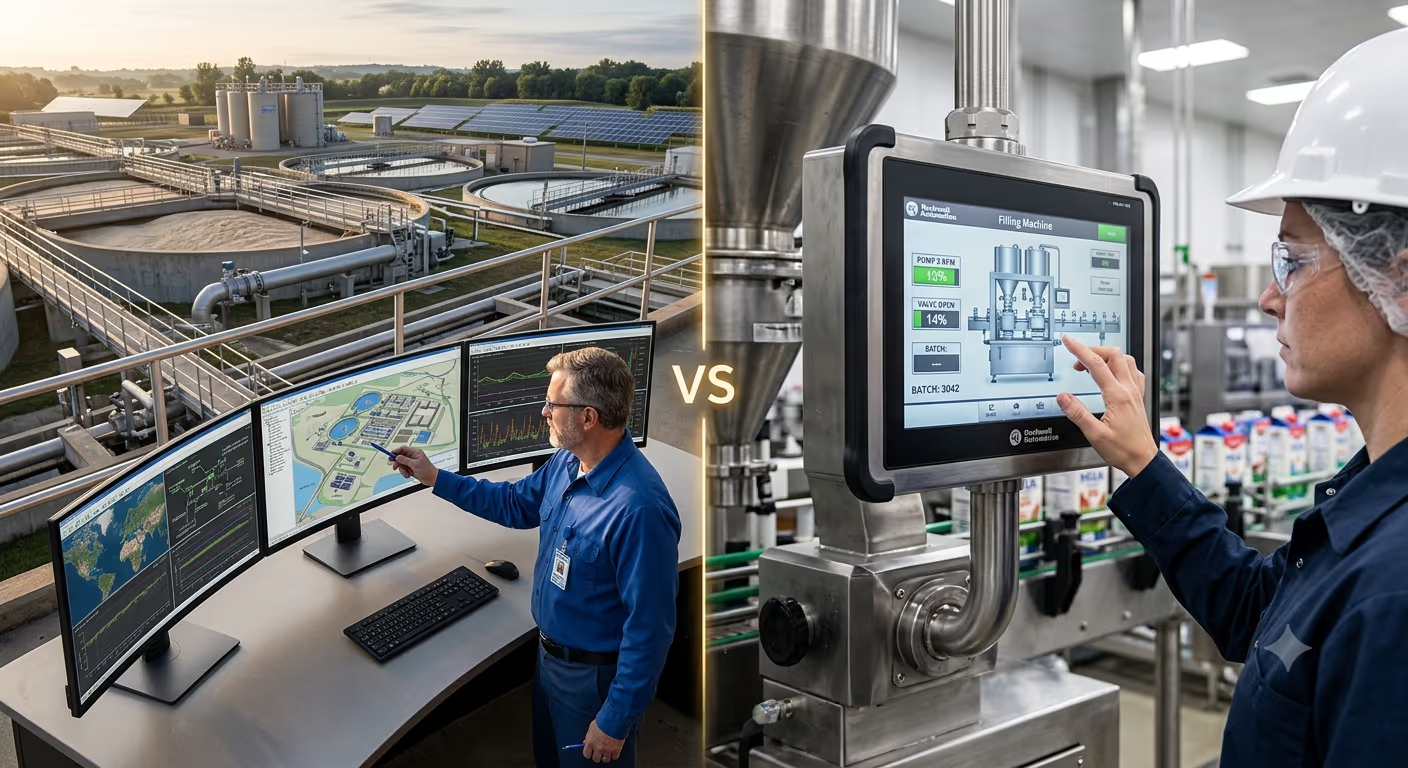
SCADA vs HMI: differences and which to choose
· by Panayot Dimkov
When you need to give a plant visibility and control, the same question always comes up: do I need an HMI, a SCADA, or both? Understanding the difference between SCADA and HMI is key to avoid overpaying for an oversized system —or falling short when the process grows.
1 What an HMI is and what a SCADA is
An HMI (Human-Machine Interface) is the panel —physical or touch— through which an operator interacts with a specific machine or station: it shows real-time status, issues commands, adjusts parameters and acknowledges alarms. Its scope is local and specific: the cell, the line, the equipment in front of them.
A SCADA (Supervisory Control And Data Acquisition) is a higher software layer that gathers data from many PLCs and field devices, centralises it, builds historians, manages plant-wide alarms and lets you operate the whole —even remotely— from a control room. Its scope is global and strategic: the entire plant, or several plants.
The key to not confusing them: the HMI solves the immediate interaction with a piece of equipment; the SCADA solves the overall supervision and the data intelligence. In fact, almost every SCADA includes screens that are HMIs; but not every HMI is a SCADA.
2 The key differences between SCADA and HMI
Beyond the definition, these are the differences that really matter when deciding, summarised so you can compare them at a glance:
| Criterion | HMI | SCADA |
|---|---|---|
| Scope | One machine or station | Multiple processes and plants |
| Main function | Operate and interact locally | Supervise, log and control the whole |
| Historical data | Limited or none | Historian database and trends |
| Alarms | From the machine itself | Centralised, ranked and logged |
| Remote access | Usually not | Yes, from control room or office |
| Architecture | Panel + PLC | Servers, clients, network and many PLCs |
| Cost and complexity | Low | Medium-high depending on the plant |
3 When you need each one
It's not about which is "more advanced", but about what your process demands. A quick guide:
An HMI is enough if…
- You have one machine or station an operator runs locally.
- You don't need long historians or automatic production reports.
- Control and supervision are handled in front of the equipment.
- You want the most contained investment and commissioning.
You need a SCADA if…
- You supervise several distributed processes, lines or sites.
- You want historians, trends and traceability to analyse and improve.
- You need remote access and centralised, logged alarms.
- The process is critical and downtime is expensive: it pays to see everything.
4 How HMI, SCADA and PLC fit together
HMI and SCADA don't work alone: underneath sits the PLC (programmable logic controller), which actually reads sensors and drives motors, valves or variable-speed drives. The usual industrial control stack looks like this:
In an isolated cell, the PLC with its HMI may be enough. As soon as there are several cells, lines or buildings worth seeing together, the SCADA sits on top and orchestrates them. That's why the PLC + HMI + SCADA combination is so common: each layer does what it does best.
5 It's not "one or the other": they almost always complement each other
The most common mistake is framing it as an exclusive choice. HMI and SCADA are not at the same level and one does not replace the other: the HMI gives fine control over the machine and the SCADA gives the overall view and the process memory. The useful question isn't "SCADA or HMI?", but "how far do I need to see and control my process?".
The answer depends on the number of devices, on whether you need historians and remote access, and on what downtime costs. That's where it pays to rely on whoever designs the full architecture, from the PLC to the SCADA system, instead of buying an isolated screen and finding out too late that it falls short. You can dig into the fundamentals of supervision through bodies such as the ISA (International Society of Automation).
Frequently asked questions
What is the difference between SCADA and HMI?
The HMI is the interface an operator uses to run a specific machine or station locally, while the SCADA is the system that supervises, logs and controls many distributed processes at once, with historians, centralised alarms and remote access. The HMI handles the immediate interaction; the SCADA, the overall supervision.
Can an HMI replace a SCADA?
Not for the same job. An HMI covers local control of one piece of equipment, but it doesn't centralise data from several machines, keep long historians or give remote access to the whole plant. When several processes are worth seeing together, you need a SCADA on top of the HMIs.
Do I need a PLC as well as the HMI or SCADA?
Yes. The PLC is what actually runs the control logic: it reads sensors and drives motors or valves in real time. The HMI and SCADA are visualisation and supervision layers that rely on one or more PLCs. The usual combination is PLC + HMI + SCADA.
When is it worth moving from an HMI to a SCADA?
When you go from a single machine to several processes, lines or buildings that are worth supervising together; when you need historians, traceability and reports; or when you want remote access and centralised alarms. If undetected downtime costs you dearly, a SCADA usually pays off.
Is a SCADA more expensive than an HMI?
Yes, usually. An HMI is a panel with a contained cost; a SCADA involves servers, network, licences and, above all, integration engineering. But its value lies in the global view, the data and remote access: in distributed or critical plants, that cost is recovered through better availability and efficiency.
In short
HMI and SCADA aren't rivals: the HMI gives you control of each machine and the SCADA gives you control of the plant. The decision depends on how many processes you need to see, on whether you want historians and remote access, and on what downtime costs. Before buying a screen, think about the full architecture.
See how we approach it in our SCADA systems.
HMI, SCADA or both?
Tell us how many devices you have and what you want to see and control. We design the architecture —from PLC to SCADA— that fits your plant and your budget.
Talk to an expertNexum Blog
Related articles
16 Aug 2026
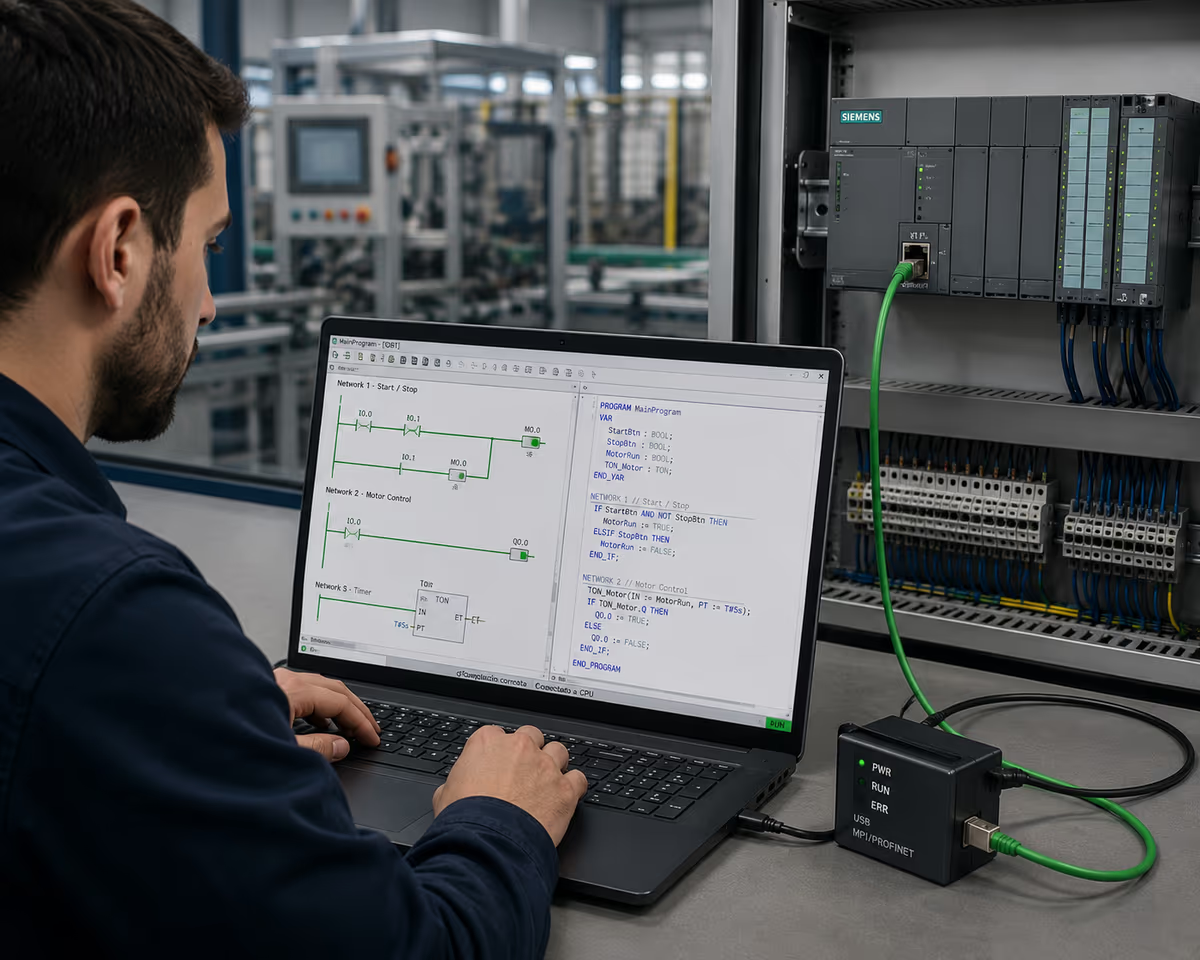
How much does PLC programming cost? Real prices 2026
How much PLC programming costs: rates of €65-110/h and projects from €3,000 to over €25,000. Price factors and what a good quote must include.
12 Aug 2026
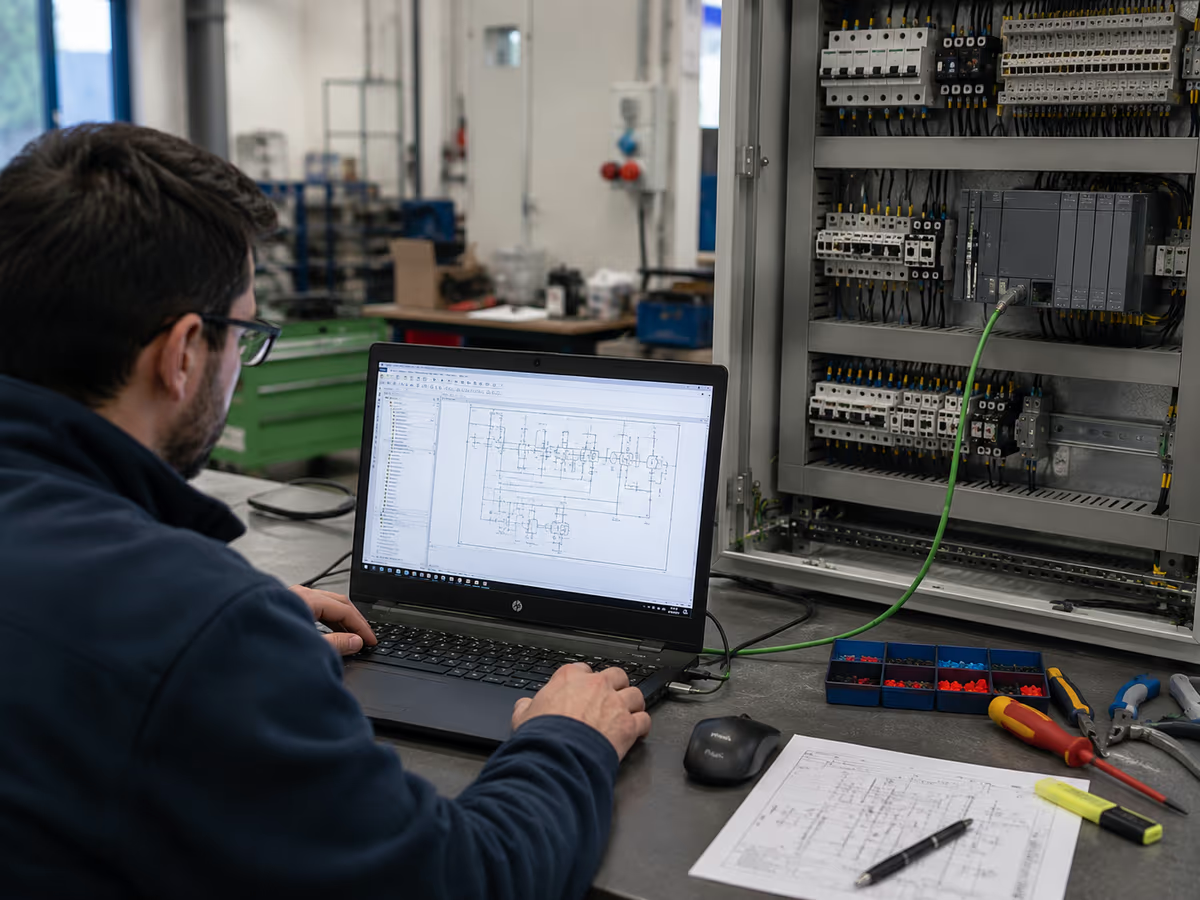
Industrial control panel design: phases and costly mistakes
Industrial electrical panel design in 5 phases: specification, EPLAN schematics, thermal sizing, IEC 61439 and documentation. An integrator's guide.
25 Jun 2026
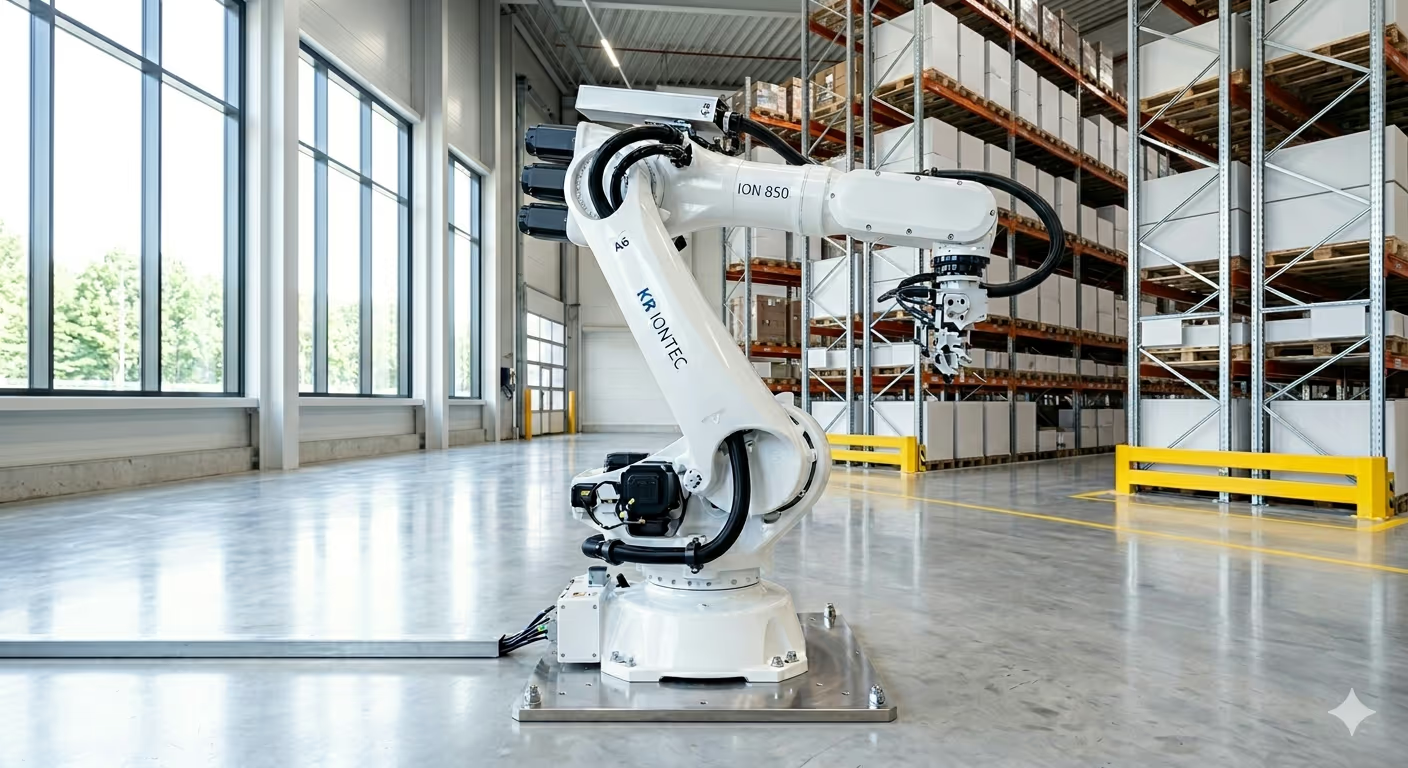
Industrial robot price: 2026 buyer's guide
How much does an industrial robot cost in 2026: arm price by type, brand, payload and reach, integration costs and ROI. A clear guide to budgeting.