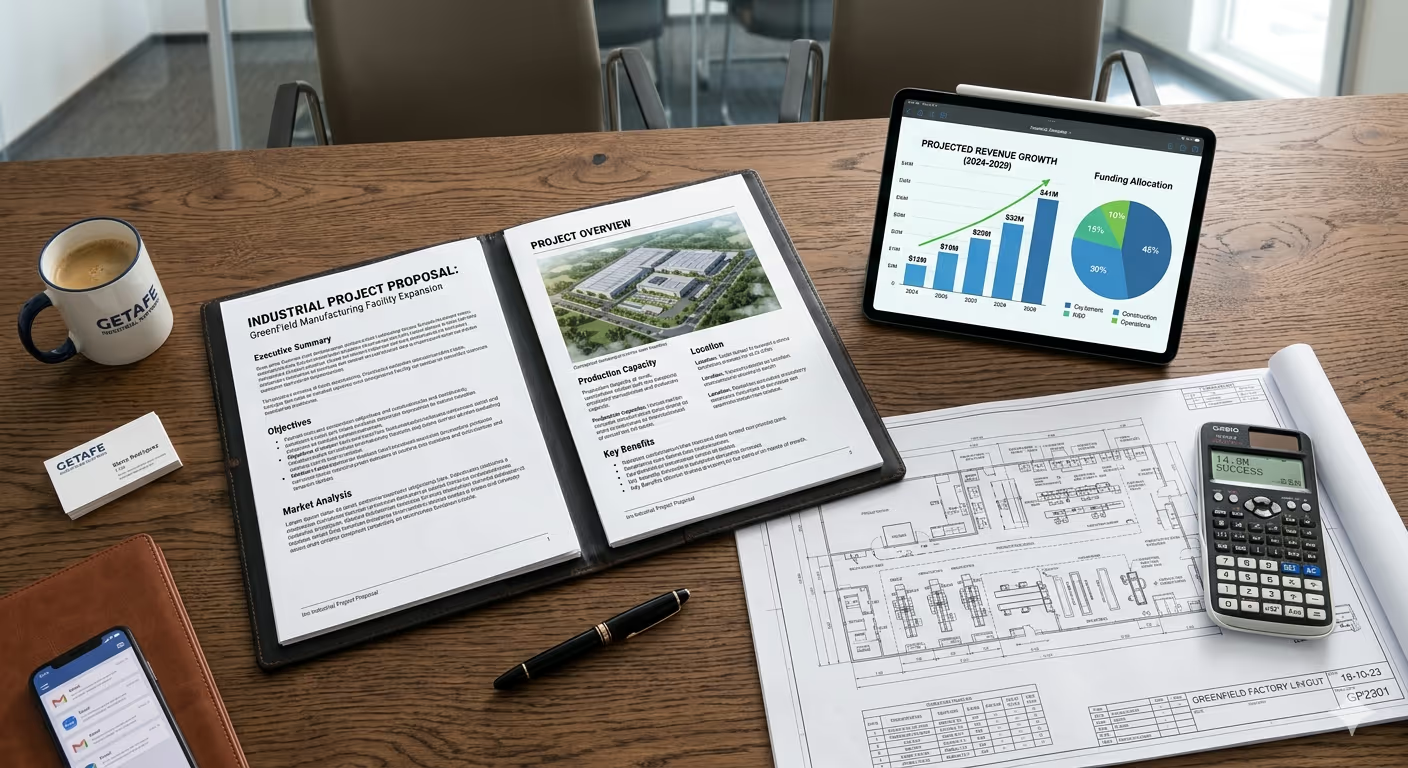
EU funding for industrial automation 2026
· by Panayot Dimkov
Securing industrial automation funding is, in 2026, the difference between a robotics or Industry 4.0 project being profitable or staying on the shelf. Spain channels EU Next Generation EU and ERDF funds toward the digitalisation of factories through several programmes, and most SMEs fail to use them simply because they don't know they exist. This guide sums up the real routes —ACTIVA, CDTI, ENISA, regional grants and tax credits— and how to fit your investment into a call for applications.
1 What the EU and Spain fund in industrial automation
Before hunting for calls it helps to understand what counts as eligible expenditure. Industrial digitalisation aid does not fund "buying a machine" on its own: it funds the digital transformation of a production process. That covers a broad range of investments that an integrator like Nexum delivers every day:
The ultimate source of almost all this money is the EU funds: Next Generation EU (through the Recovery, Transformation and Resilience Plan) and the ERDF, which finances investments in automation, connected machinery and industrial software. The important thing is that you rarely access "EU funds" directly: you do so through the national and regional programmes that distribute them.
2 The main funding routes in 2026
These are the five routes any industrial plant or SME should know before budgeting an automation project. They are not mutually exclusive: the usual approach is to combine two or three.
| Programme / route | What it covers | Type of aid | Who it is for |
|---|---|---|---|
| ACTIVA Industria 4.0 (Ministry of Industry) | Advice and diagnosis of digital transformation; a funding line to implement digitalisation | Grant + loan | Industrial SMEs and large firms |
| CDTI (R&D&I projects) | Industrial research and development of innovative processes or products, including smart manufacturing | Soft loan + non-repayable tranche | Technology-based companies |
| ENISA | Unsecured participative loans for growth and digitalisation | Participative loan | SMEs and startups |
| Regional Industry 4.0 grants | Digitalisation and advanced manufacturing projects managed by each autonomous region | Outright grant | Industrial SMEs in the region |
| R&D&I tax credit (Corporate Tax Act art. 35) | Investment in robotics and process innovation, via Corporate Income Tax | Tax credit | Any company with tax payable |
ACTIVA Industria 4.0
Managed by Spain's Ministry of Industry and Tourism, ACTIVA Industria 4.0 combines two things: specialised advice to diagnose your digital transformation and a funding line to carry it out. The funding mode can cover up to 80 % of the eligible budget (loan plus grant), with softer conditions for SMEs. Eligible technologies include collaborative and cognitive robotics with at least one physical robot, as well as sensors.
CDTI and ENISA
The CDTI is the reference when your project has a genuine R&D or process innovation component: it offers very low-rate loans with a non-repayable tranche and prioritises smart manufacturing. ENISA, for its part, grants participative loans without requiring collateral or guarantees, designed for SMEs and startups that want to grow and digitalise. Both options fit well when the automation investment is part of a capacity leap or a new product.
3 Tax credit for robotics and R&D&I
This is the most underused and often the most profitable route. Investment in industrial robotics, cobots or AGV/AMR can qualify for the R&D&I tax credit under article 35 of the Spanish Corporate Tax Act, which directly reduces the tax bill by between 12 % and 42 % of the spend, depending on whether it is classified as technological innovation or as R&D.
To apply it with legal certainty it is worth documenting the innovative nature of the project (a binding reasoned report) and clearly separating which part of the investment meets the requirements. If your project also fits process automation within certain industrial chains, the deduction percentages can be even higher.
4 Typical requirements and mistakes that sink the application
Although each call has its own small print, the requirements recur. These are the ones the administration usually demands to grant automation aid:
- An industrial company established in Spain with several years of activity (often a minimum of three).
- A technical report and budget covering the project scope, the equipment and the expected improvement or saving.
- A minimum investment per project, which varies by programme (in CDTI R&D, on the order of €175,000 per company).
- Incentive effect: not having started the investment before submitting the application.
- Being up to date with tax and Social Security obligations.
5 How to apply and fit your project step by step
The process is very similar across almost all calls. An experienced integrator usually supports you so that the technical documentation speaks the language the administration expects:
Step 1 is decisive and normally requires realistic figures. If you don't yet know how much your investment costs, start from our guides on how much it costs to automate a production line and on the cost of integrating a robotic cell: with a solid budget, fitting the aid is much easier.
6 Automation vs. energy efficiency: don't mix up the routes
It is important not to blend two worlds of aid that overlap in the messaging but not in the calls. Automation and digitalisation aid (ACTIVA, CDTI, Industry 4.0) funds productivity and competitiveness: robots, lines, data. IDAE energy-efficiency aid funds energy saving and decarbonisation.
If your project is about building management, HVAC or cutting consumption, the energy route suits you better, which we detail in our guide to BMS for industrial buildings: price and grants. If your project is to robotise a cell or digitalise a line, the right route is the one in this article. And when a single project touches both, the ideal is to split it into separate line items to qualify for each.
Frequently asked questions
What funding is available in 2026 to automate an industrial plant in Spain?
The main routes are the Ministry of Industry's ACTIVA grants (advice plus loan-and-subsidy funding), CDTI soft loans for R&D&I, ENISA participative loans, each region's Industry 4.0 calls, and the tax credit for investment in robotics and R&D&I. Almost all are fed by the EU Next Generation EU and ERDF funds.
Does buying industrial robots or cobots qualify for a tax deduction?
Yes. Investment in industrial robotics can use the R&D&I tax credit under article 35 of the Spanish Corporate Tax Act, cutting the tax bill by 12 % to 42 % of the spend. When the project counts as process innovation or automation it is also compatible with CDTI or ENISA grants, so several routes can be combined.
How do these grants differ from the IDAE energy-efficiency aid?
Automation and digitalisation aid (ACTIVA, CDTI, Industry 4.0) funds robots, lines, sensors and industrial software to raise productivity and competitiveness. IDAE aid funds energy efficiency and consumption cuts. If your project is building management or energy saving, the IDAE route fits better; we cover it in our guide to BMS and energy grants.
Can an SME access this funding or is it only for large companies?
SMEs are the main target of most programmes. ACTIVA has a dedicated SME line, ENISA funds only SMEs and startups, and the regional Industry 4.0 calls prioritise small and medium industrial firms with several years of activity. The R&D&I tax credit does not depend on company size.
What are the typical requirements to be granted automation funding?
They usually ask for an industrial company legally established in Spain with several years of activity, a technical report with budget and the expected saving or improvement, a minimum investment per project and, crucially, not having started the investment before applying (incentive effect). R&D&I lines also assess how innovative the project is.
Can several grants be combined in a single automation project?
Partly yes. R&D&I tax credits are compatible with CDTI or ENISA grants and loans. Outright grants are usually incompatible with each other if they fund the same cost, but you can phase them or combine financing (loan) with a tax credit. Plan the fit before applying so you do not exceed the aid-intensity limits.
In short
The industrial automation funding routes are not an impossible bureaucratic maze: they are several options —ACTIVA, CDTI, ENISA, regional grants and the tax credit— that, well combined, can cover a very significant share of your investment in robotics or Industry 4.0.
The key is the order: first the diagnosis and the budget, then choose the route and apply before investing. With a solid technical report, fitting an automation project into a call for applications is perfectly achievable for an SME.
Want to fund your automation project?
We help you size the investment, prepare the technical report and fit your robotics or Industry 4.0 project into the right grant.
Talk to an expertNexum Blog
Related articles

9 Oct 2026
Mandatory B2B E-Invoicing in Spain: What to Do
Mandatory B2B e-invoicing in Spain now has its regulation: expected dates, how it differs from Verifactu and how to prepare while automating.

10 Aug 2026
SCADA software: how to choose the right one for your plant
How to choose SCADA software without vendor lock-in: tag licensing, redundancy, protocols and total cost. Vendor-neutral integrator criteria.
2 Aug 2026
Industrial Electrical Panel Maintenance: Price Guide
Industrial electrical panel maintenance price: €300–900 per annual inspection, what it includes, frequency by environment and standards. Get a quote.