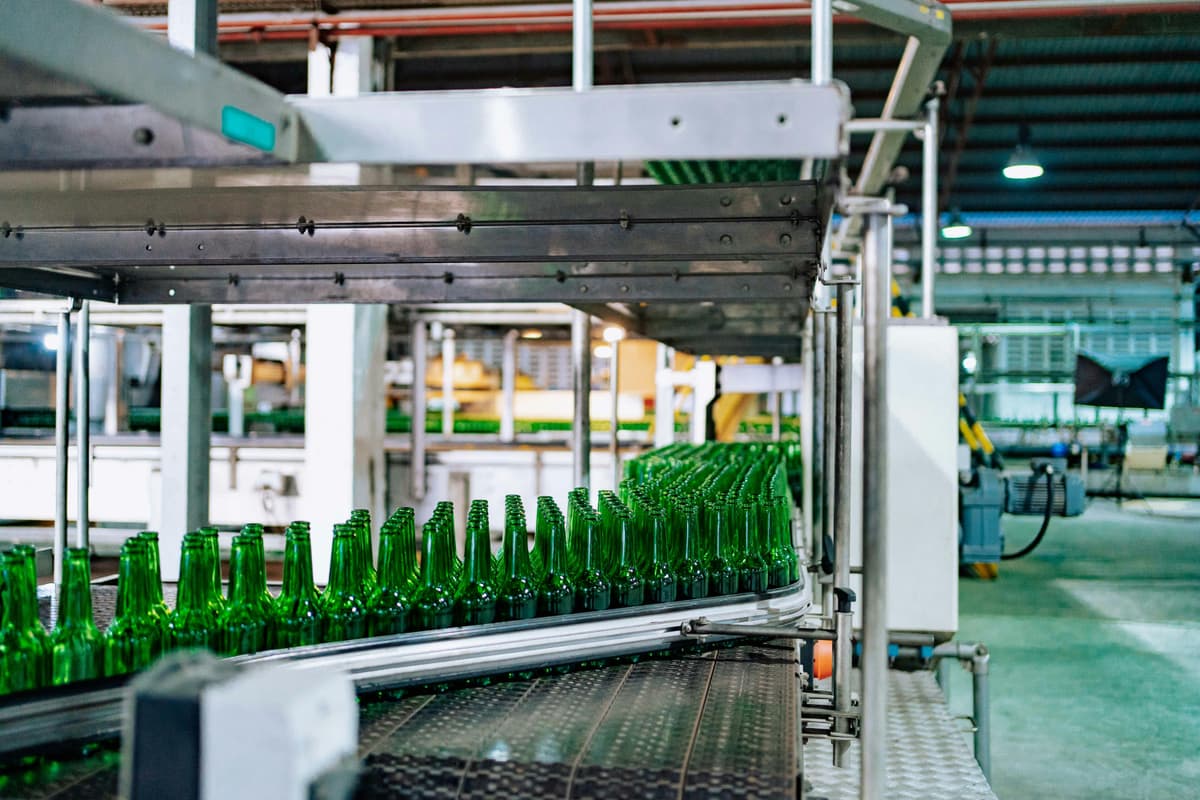
Industrial Automation in Madrid: The Complete Guide 2026
· by Panayot Dimkov
If you're looking to automate your factory or production process in Madrid and don't know where to start, this guide provides everything you need: what systems are available, how much they cost, how to choose an integrator, and what return on investment you can expect. No unnecessary technical jargon—just real data.
1. What is industrial automation and why is Madrid a leader in Spain
Industrial automation is the application of technology—robots, PLCs, SCADA, electrical panels, BMS systems—to enable production processes to operate with less manual intervention, greater precision, and continuously.
In Spain, the sector has grown steadily: the country ranks third in Europe for industrial robotics installations, with more than 5,100 (source: IFR World Robotics 2025) new installations registered in 2024. Madrid and its metropolitan area account for a significant portion of this activity, driven by sectors such as the automotive industry in Getafe and Villaverde, the pharmaceutical industry in Alcobendas and Las Rozas, logistics in Coslada and San Fernando, and the food industry in the Corredor del Henares.
Why automate now? There are several reasons, but plant managers most frequently cite three:
- Reduced operating costs: savings on direct labor can reach 30% in high-frequency repetitive processes.
- Consistency and quality: an automated system does not get tired, does not make errors due to fatigue, and can operate 24 hours a day.
- Scalability: once the system is installed, increasing production does not require expanding the workforce in the same proportion.
2. The 6 Key Systems Every Factory Needs
A full-service industrial integrator does more than just install robots. Successful automation projects combine multiple systems that work together. These are the six that form the core of Nexum Automatics’ offering:
1. SCADA Systems
A SCADA (Supervisory Control and Data Acquisition) system is the digital brain of your plant. It monitors all processes in real time, collects data from PLCs and field sensors, stores it in a historian, and allows you to monitor and control the facility from anywhere—even remotely.
For a medium-sized plant, a well-implemented SCADA system can detect bottlenecks invisible to the human eye, reduce unplanned downtime, and generate the traceability reports required by regulations in sectors such as pharmaceuticals or food.
2. Robotic Systems
Industrial robots—KUKA, ABB, FANUC—perform tasks such as welding, palletizing, assembly, machine tending, or visual inspection with a precision and speed that no operator can sustainably match.
In recent years, cobots (collaborative robots) have made robotics accessible to SMEs: they are easier to program, do not require safety fences in many applications, and can be repositioned as production needs dictate. The ROI for a cobot in standard applications is 12 to 18 months.
3. Industrial Electrical Panels
Every automated system requires a well-designed and manufactured electrical panel. Industrial electrical panels—distribution, control, MCC, ATEX—are the infrastructure that powers and protects the rest of the systems.
Manufacturing them in accordance with IEC 61439 is not a mere formality: it is the guarantee that the panel has passed the required verification tests and that technical liability is covered.
→ Industrial Electrical Panels
4. BMS and EPMS
BMS (Building Management System) and EPMS (Energy and Power Management System) manage the energy in industrial buildings: HVAC, lighting, ventilation, generators, transformers, and substations.
In a context of high energy prices, a well-configured BMS can reduce consumption by 15 to 30% without reducing productivity.
5. Automated Production Lines
An automated production line integrates robots, conveyors, machine vision systems, inline quality control, and recipe management into a continuous, synchronized flow. It represents the most complex level of automation and has the greatest impact on production capacity.
6. Industrial Process Engineering
Before automating, you must understand the process. Process engineering—value stream mapping, Lean methodology, waste identification—allows automation to be designed on a solid foundation, not on inherited inefficiencies.
A robot that automates a poorly designed process only exacerbates the problem. Process engineering ensures that what is being automated is worth automating.
3. How to Choose an Industrial Integrator in Madrid
What exactly does an industrial automation integrator do?
An industrial automation integrator designs, programs and installs bespoke systems by combining components from different manufacturers — KUKA, ABB or FANUC robots, Siemens or Allen-Bradley PLCs, Profinet, Modbus TCP or OPC-UA communications — to solve a specific customer process. Unlike a machinery manufacturer, which produces standard equipment in series, the integrator delivers a unique solution for each plant: detail engineering, electrical panel manufacturing, programming (PLC, SCADA, robot), installation and commissioning with training.
The market for automation integrators in Madrid ranges from large engineering firms to small specialized companies. Here are the criteria you should evaluate before signing any contract:
- Manufacturer certifications: An integrator certified by KUKA, ABB, or FANUC has passed technical approval processes and has access to priority support, parts, and updates.
- In-house control panel manufacturing: the most efficient automation projects are executed with an integrator that manufactures its own electrical control panels. When the same company that programs the robot also manufactures the control panel that powers it, coordination times are reduced and technical responsibility is centralized.
- Industry expertise: not all sectors have the same requirements. The pharmaceutical industry requires GMP traceability. The food industry requires AISI 316L materials and IP65 control panels with CIP protocols. Ask about projects completed in your sector.
- After-sales support: access to preventive maintenance, software updates, and breakdown response within hours—not days—is just as important as the project price.
- Cost transparency: A reputable integrator will provide you with a clear breakdown of engineering, hardware, software, installation, commissioning, and training.
4. Costs and Real Return on Investment
How much does it cost to automate a factory in Madrid?
Automating a factory in Madrid in 2026 costs, in indicative ranges: from €40,000 for a basic robotic cell, between €15,000 and €80,000 for a SCADA system for a medium-sized plant, and over €300,000 for a complete automated production line. These ranges come from projects delivered by Nexum Automatics and include engineering, installation, commissioning and training.
The average return on investment (ROI) for industrial SME projects sits between 18 and 36 months: high-throughput robotics projects pay back sooner; SCADA projects — where the value lies in traceability and quality rather than direct labour savings — later. R&D tax deductions (up to 25%) and EU recovery funds can shorten that horizon.
This is the information plant managers and CFOs seek most, yet few integrators openly publish it. Here are the actual ranges for projects in Madrid in 2026:
| System | Cost range | Estimated ROI |
|---|---|---|
| Robotic cell | €40,000 – €120,000 | 12 – 24 months |
| SCADA for a medium-sized plant | €15,000 – €80,000 | 18–36 months |
| Industrial electrical panel | €8,000 – €50,000 | — |
| Complete production line | €150,000 – €300,000+ | 24–48 months |
| Standard cobot application | €30,000 – €90,000 | 12–18 months |
In terms of return on investment, the average ROI for SME projects ranges from 18 to 36 months, with high-throughput robotics projects at the lower end and SCADA projects—where the value lies more in quality and traceability than in direct labor savings—at the upper end.
5. Frequently Asked Questions About Industrial Automation
How much does it cost to hire an industrial automation company in Madrid?
The cost varies depending on the project’s complexity: a basic robotic cell starts at €40,000, a complete automated production line can exceed €300,000, and a SCADA system for a medium-sized plant ranges from €15,000 to €80,000. Madrid-based integrators include engineering, installation, commissioning, and training in the total price. The average ROI for SME projects is 18 to 36 months.
What is the difference between an automation integrator and a machinery manufacturer?
An industrial automation integrator designs, programs, and installs systems by combining components from different manufacturers—KUKA, ABB, Siemens, Schneider—to address a specific customer process. A machinery manufacturer produces standard equipment in series. The integrator offers custom solutions, which are better suited for factories with specific processes or complex layouts. Nexum Automatics is a certified integrator with experience in SCADA, robotics, electrical panels, BMS, and production lines.
What services does an industrial automation company offer?
A full-service industrial automation company like Nexum Automatics offers: SCADA monitoring and control systems, robotic installations (KUKA, ABB, FANUC), manufacturing of industrial electrical panels in accordance with IEC 61439, design of automated production lines, BMS and EPMS systems for energy management in industrial buildings, and process engineering for Lean optimization. Combining all these services under a single integrator reduces coordination costs and ensures compatibility between systems.
What grants are available for automating a factory in Spain in 2026?
In 2026, the main grants for industrial automation in Spain include: tax deductions for R&D&I (up to 25% of spending on automation projects), European funds from the PRTR Recovery Plan for industrial digitization, programs from the Community of Madrid for the modernization of industrial SMEs, and the Digital Kit for process digitization. Additionally, ICO financing offers preferential terms for automation investment projects, including interest rate subsidies for energy efficiency projects linked to BMS.
Which industrial sectors in Madrid benefit most from automation?
In Madrid and its metropolitan area, the sectors with the highest demand for industrial automation are: automotive and components (Getafe, Villaverde), food and beverages (Corredor del Henares), pharmaceuticals and laboratories (Las Rozas, Alcobendas), logistics and warehousing (Coslada, San Fernando), and machinery manufacturing (industrial parks in southern Madrid). These sectors primarily seek robotic cells for picking and palletizing, SCADA systems for traceability and quality control, and electrical panels compliant with IEC 61439.
Do you have a project in mind? Tell us about your process and we’ll provide an initial technical assessment with no obligation.
Contact Nexum →Nexum Blog
Related articles
23 Jun 2026
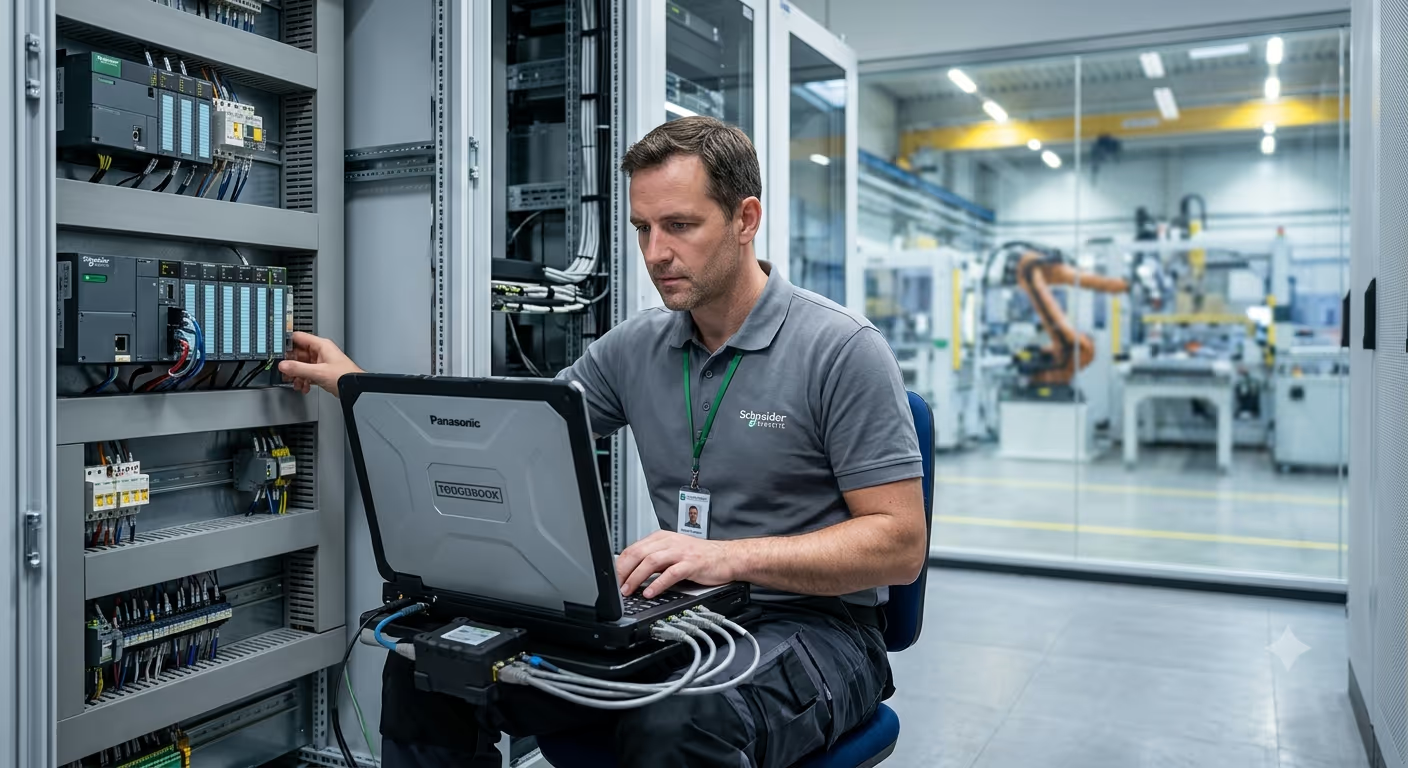
NIS2 and OT cybersecurity in industry
A practical OT cybersecurity and NIS2 guide for industrial plants: who is in scope, obligations, fines, IT vs OT and IEC 62443.
6 Jul 2026
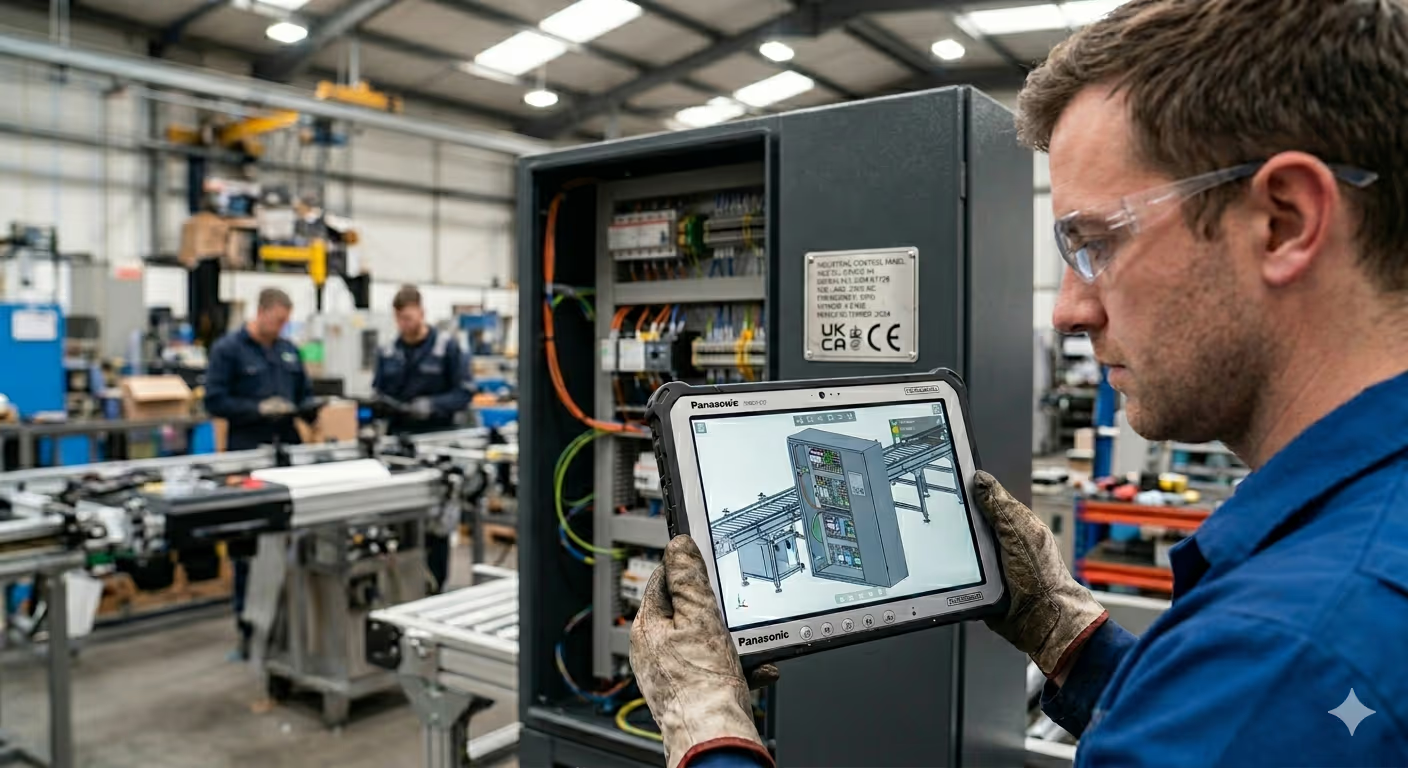
Digital twin in industry: a 2026 guide
What a digital twin in industry is and isn't: types, real use cases, the technology you need and how to launch a pilot with measurable ROI.
12 Aug 2026
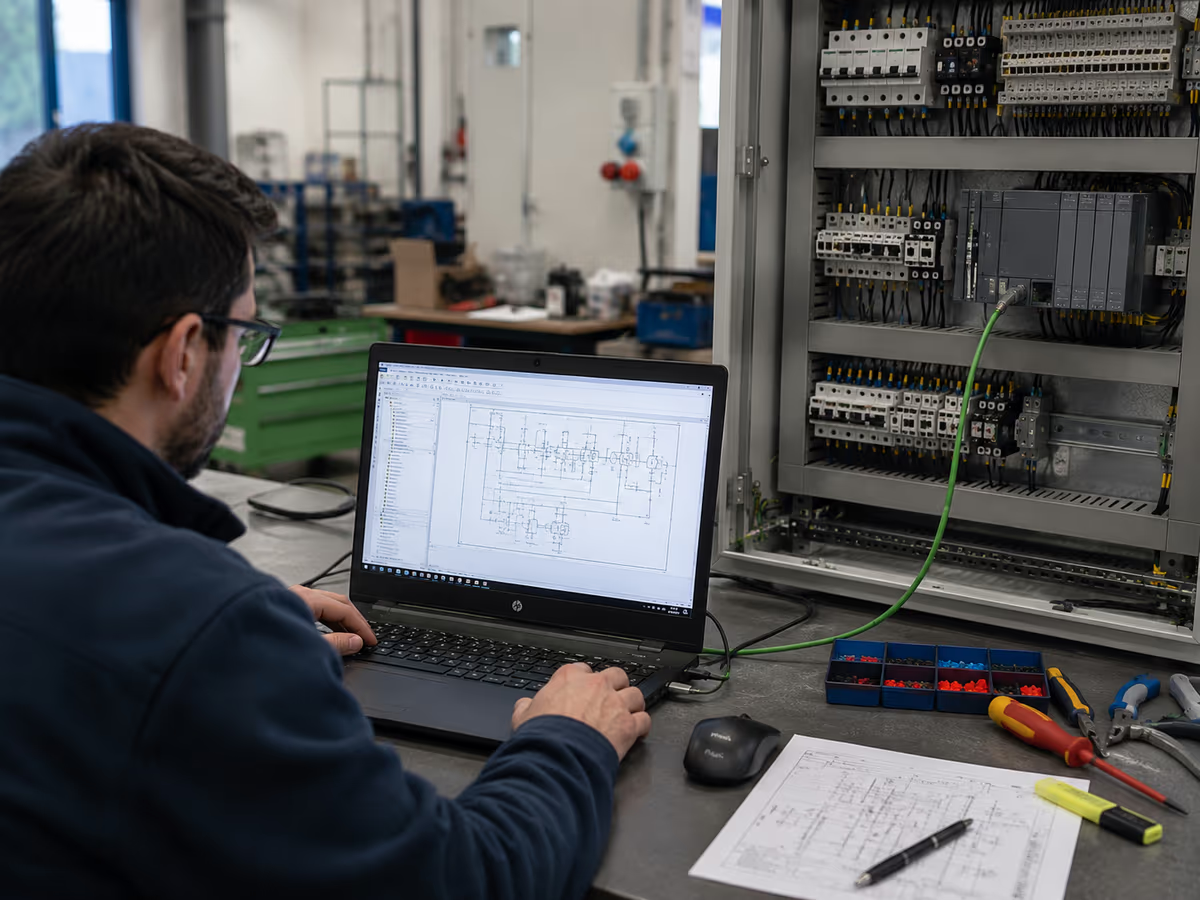
Industrial control panel design: phases and costly mistakes
Industrial electrical panel design in 5 phases: specification, EPLAN schematics, thermal sizing, IEC 61439 and documentation. An integrator's guide.