SCADA vs PLC: differences and when you need both
· by Panayot Dimkov
If you are automating a machine or a whole plant, sooner or later someone will present the PLC and the SCADA as if they were alternatives to choose between. They are not. Understanding the difference between SCADA and PLC keeps you from over-buying, under-sizing and — costliest of all — designing a control architecture you will have to rebuild in two years.
What is the difference between a SCADA and a PLC?
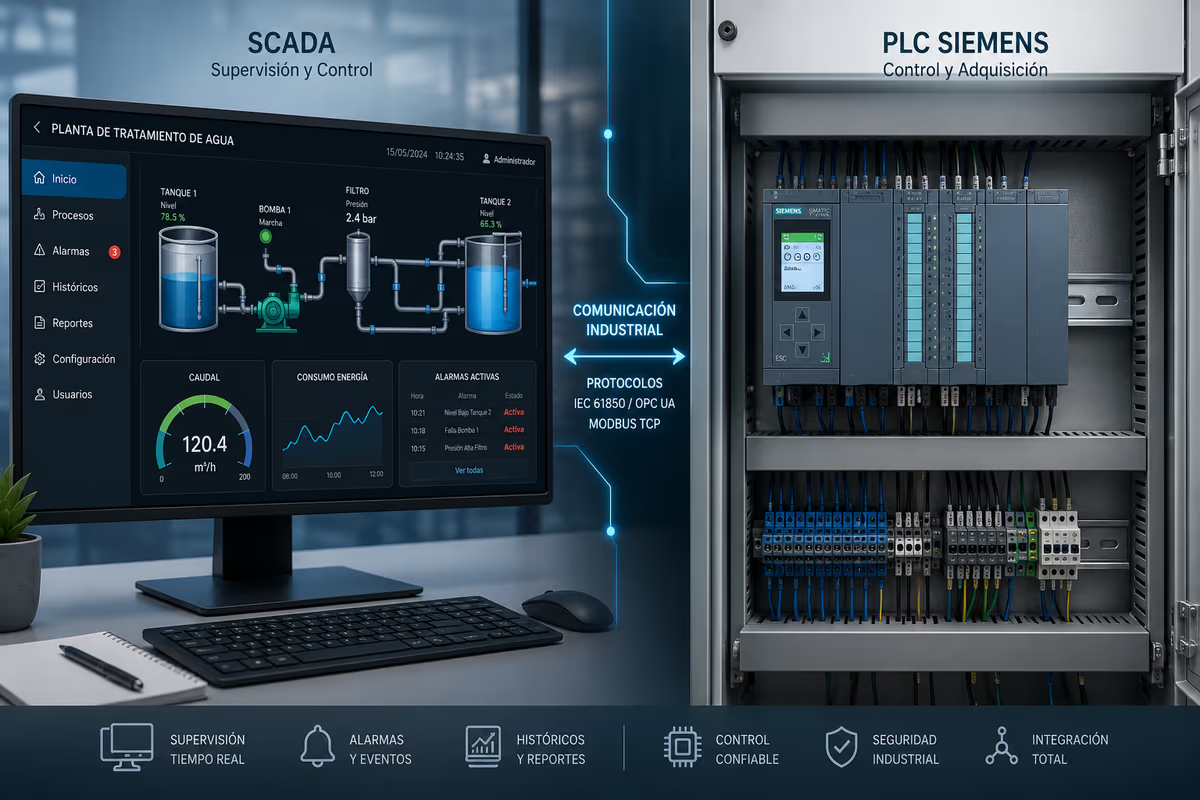
The difference is one of layer and function: the PLC (programmable logic controller) is the hardware that executes the control logic in real time — reading sensors and driving motors, valves or drives within milliseconds — while SCADA is the supervision software that collects the data from one or many PLCs, stores it, visualises it and manages alarms and reports at plant scale.
Put another way: the PLC decides and acts on the physical process; the SCADA observes, records and helps people decide. The PLC needs nobody watching a screen to keep the machine under control; the SCADA does not switch a single contactor without a PLC underneath executing the command. That is why the right question is almost never "SCADA or PLC?", but "which part of my problem is control and which part is supervision?".
| Criterion | PLC | SCADA |
|---|---|---|
| Nature | Industrial hardware + control program | Supervision software on servers/PCs |
| Function | Run the logic: read inputs, drive outputs | Supervise, store, visualise and alarm |
| Response time | Milliseconds, deterministic | Seconds; runs no critical control |
| Scope | One machine, cell or specific process | The whole plant, even several plants |
| Data | Instantaneous states and values | Months or years of history, trends, reports |
| Users | The machine itself; programmed by a technician | Operators, maintenance and management |
| Examples | Siemens S7-1200/S7-1500, Allen-Bradley ControlLogix | WinCC, Ignition, Citect, FactoryTalk View |
What exactly does a PLC do?
A PLC (Programmable Logic Controller) is a hardened industrial computer designed to run a control program cyclically and deterministically. Its operation boils down to the scan cycle: it reads all inputs (limit switches, temperature probes, encoders, photocells), executes the programmed logic and writes all outputs (contactors, solenoid valves, variable-speed drives). That cycle repeats tens or hundreds of times per second, with guaranteed timing.
That predictability is what separates a PLC from an ordinary PC: a safety interlock, a positioning move or a dosing sequence cannot depend on the operating system being "busy". PLCs are programmed in the IEC 61131-3 languages — ladder (LD), function blocks (FBD), structured text (ST) — and are extended with digital and analogue I/O cards, high-speed counters, motion axes and industrial communications.
In the European market, the platforms we meet most often as integrators are Siemens SIMATIC (S7-1200 for compact machines, S7-1500 for demanding lines and processes) and Rockwell's Allen-Bradley (CompactLogix and ControlLogix, common in multinationals of American origin). Omron, Mitsubishi, Schneider or Beckhoff join them depending on the sector. The platform choice conditions spare parts, maintenance staff and future extensions, so it deserves a deliberate decision rather than inertia.
What does a SCADA add on top of the PLCs?
With the PLCs running, the plant already produces. What you still lack is memory, context and an overall view: each controller knows its own patch and nothing else. The SCADA (Supervisory Control And Data Acquisition) connects to all the PLCs, concentrates their data and turns it into something people can exploit. For the full grounding, see what a SCADA system is and what it is for.
In practice, a well-designed SCADA brings four things no PLC gives you on its own:
- Historisation. A historian keeps months or years of temperatures, flows, consumptions and states, ready for trends and reports.
- Traceability. Which batch was produced, with which parameters, on which machine and with which incidents: essential in food, pharma and automotive.
- Alarm management. Centralised, prioritised alarms with a record of who acknowledged what and when, instead of scattered beacon lights around the shop floor.
- Remote access. The plant visible from the control room, the engineering office or the on-call phone, with user profiles and auditing.
The SCADA is also the natural gateway for plant data towards MES, ERP or energy analytics. The same layered logic repeats outside the factory: in a building, supervision is split between BMS and EPMS, a comparison we analyse in BMS vs EPMS. And if the project is serious, designing this layer is exactly what we do in our custom SCADA systems.
What about DCS? Continuous versus discrete process
Dig a little and a third player appears: the DCS (Distributed Control System), with products such as Siemens SIMATIC PCS 7. A DCS integrates into a single platform what the PLC + SCADA world keeps as two separate layers: controllers, supervision, historians and alarm management come from the same system, with a shared engineering database.
Its natural ground is the continuous process: chemicals, petrochemicals, power generation, paper, large-scale water treatment. There you find thousands of PID control loops running 24/7, where a shutdown is measured in tens of thousands of euros and full redundancy is justified. The DCS delivers that integration and that availability, in exchange for a markedly higher entry cost and rigidity.
In discrete and hybrid manufacturing — assembly lines, packaging, intralogistics, mid-sized food plants — flexibility rules: machines from different builders, phased extensions, a mix of PLC brands. There the PLC + SCADA combination wins almost every time: each machine keeps its autonomy and the supervision layer adapts to what exists, instead of demanding a single-vendor ecosystem. Our experience as integrators is clear: for the vast majority of small and mid-sized plants, PLC + SCADA is the right architecture; the DCS is reserved for large continuous processes.
When do you need both PLC and SCADA?
The short answer: as soon as you have more than one machine worth seeing together, or a single one whose process needs historians, traceability or remote access. The typical architecture we deploy on site looks like this:
Two details of this architecture make the difference between a healthy project and a troubled one. First, the network: Profinet (or EtherNet/IP in Allen-Bradley environments) solves the real-time link between PLC and field devices, and OPC UA has become the standard for the SCADA to talk to PLCs of different brands without fragile proprietary drivers. Second, the boundary of responsibilities: all the logic that protects machine and people lives in the PLC; the SCADA supervises and sends setpoints, but the plant must keep operating even if the server stops.
When that boundary is respected, adding SCADA to a plant that already has PLCs does not mean rebuilding the control: it is a project of communications, signal mapping and screens. When it is not respected — process logic buried in SCADA scripts, for instance — every server outage becomes a production stoppage.
How much does a PLC cost, and how much a SCADA?
They are different orders of magnitude. From Nexum Automatics' project experience, the hardware of a compact PLC for one machine sits at a few hundred euros, and a high-end CPU with its periphery at a few thousand; the bulk of the real cost is engineering: programming, testing and commissioning. A SCADA, by contrast, is a project in its own right: licences by tag count, server, network and — above all — the hours of developing screens, alarms and historians.
There is no point repeating the full breakdown here: you will find it, with ranges by plant size and the licence and engineering line items, in our guide on how much a SCADA system costs. One conclusion is worth advancing: the expensive mistake is rarely the price of the controller or the licence, but deciding on supervision late and paying for the integration twice.
Frequently asked questions
What is the difference between a SCADA and a PLC?
The PLC is the programmable controller that runs the control logic in real time at machine level: it reads sensors and drives motors or valves within milliseconds. SCADA is the software that supervises, stores and visualises the data from all those PLCs at plant level, with historians, centralised alarms and remote access. They don't compete: SCADA relies on the PLCs.
Can a SCADA work without a PLC?
In practice, no. SCADA does not read sensors or act on the process directly: it receives data from PLCs, RTUs or other field controllers and sends them setpoints. Without a control layer underneath, SCADA has nothing to supervise. That is why every SCADA project starts by reviewing which PLCs exist and how they communicate.
Can a PLC work without a SCADA?
Yes. A standalone machine with its PLC and local HMI runs perfectly well without SCADA, and that is the usual setup for individual equipment. What you lose without SCADA are long-term historians, traceability, centralised alarms and remote access: as soon as there are several machines or the process is critical, that gap ends up costing money.
When is a DCS better than PLC + SCADA?
A DCS (distributed control system, such as SIMATIC PCS 7) pays off in large continuous processes — chemicals, power, paper — with thousands of control loops, where control and supervision come integrated by design. For discrete or hybrid manufacturing, production lines and mid-sized plants, the PLC + SCADA combination is more flexible and more economical.
The bottom line
PLC and SCADA are not alternatives: they are layers. The PLC runs the real-time control and keeps the machine safe whatever happens; the SCADA turns the data from all the PLCs into plant-wide visibility, historians, traceability and remote access. The project decision is not "which of the two", but where to draw the boundary between control and supervision and which network (Profinet, OPC UA) ties them together.
If you are at that point, see how we approach our custom SCADA systems.
PLC, SCADA, or the full architecture?
Tell us which machines you have and what you need to see and control. We design the complete control architecture — from panel and PLC to SCADA — matched to your plant and your budget.
Talk to an expertNexum Blog
Related articles
3 Jan 2026
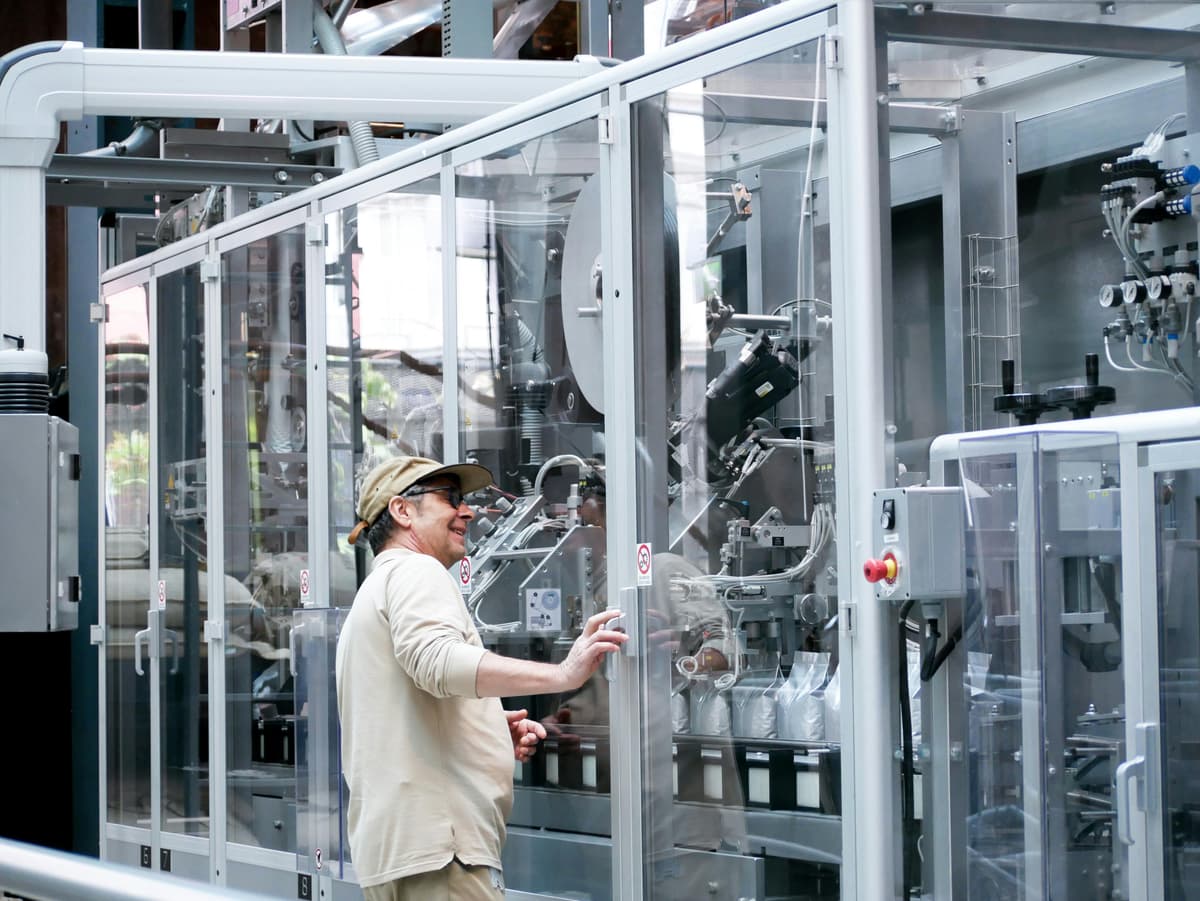
Automated industrial plants: what are they, applications and when to implement them?
Could your production process be more efficient and safer? In this article we explain what automated industrial facilities are, where they are applied and when it makes sense to implement them.
15 Jun 2026
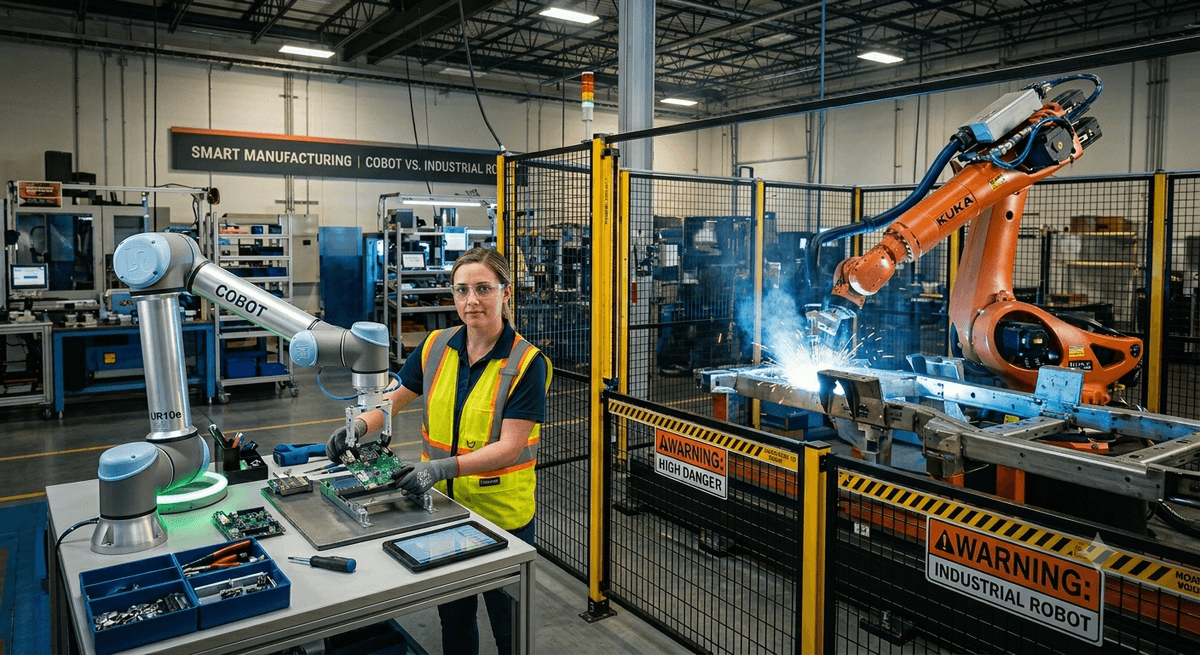
Cobot vs Industrial Robot: Which to Pick
Difference between a cobot and an industrial robot: safety, payload, speed, cost and when to choose each. A 2026 integrator's guide for your plant.
8 Aug 2026
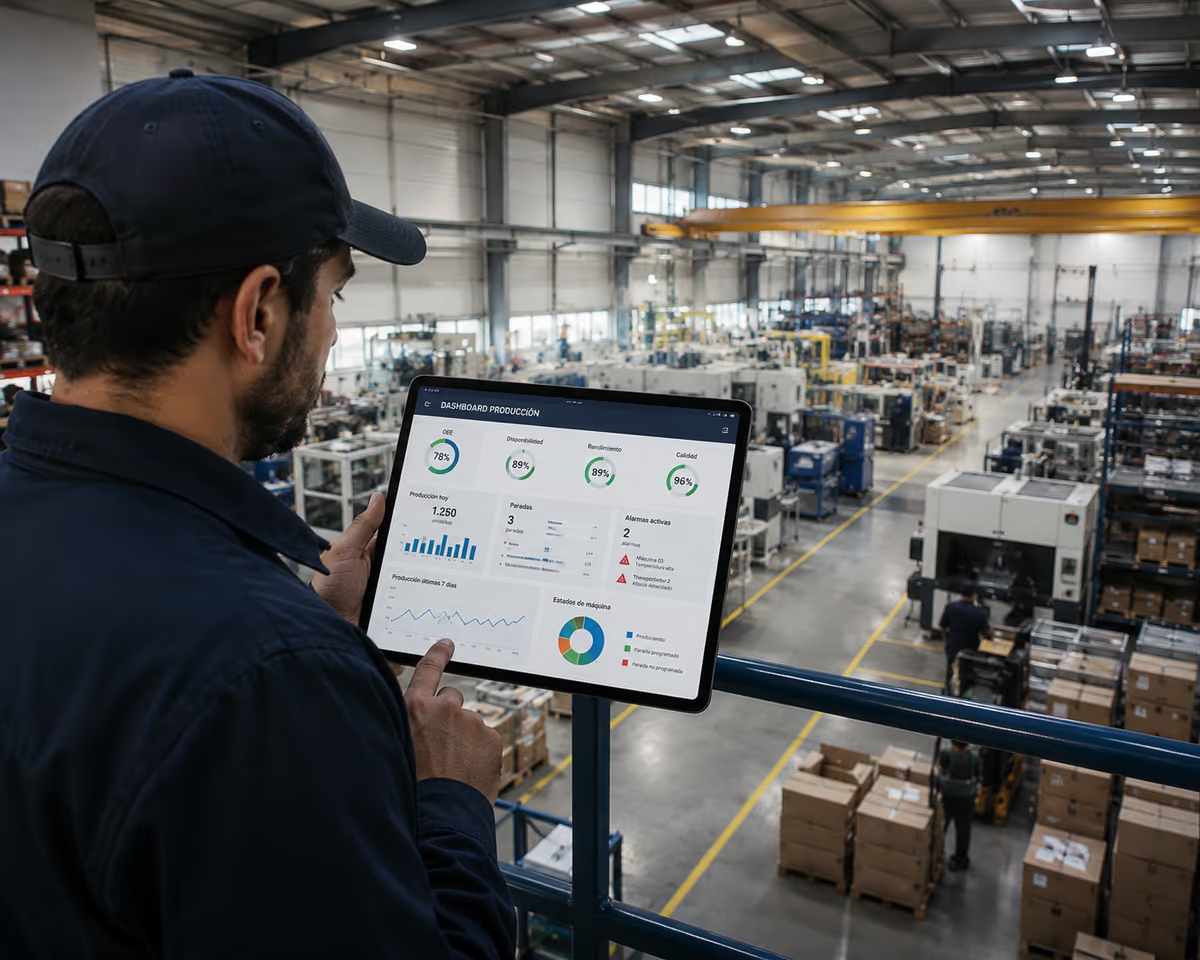
SCADA for SMEs: when it pays off and what it costs
SCADA for SMEs: from how many signals it pays off, what an entry project costs (€15,000–40,000), phases, typical mistakes and available grants.