BMS for industrial buildings: cost & grants
· by Panayot Dimkov
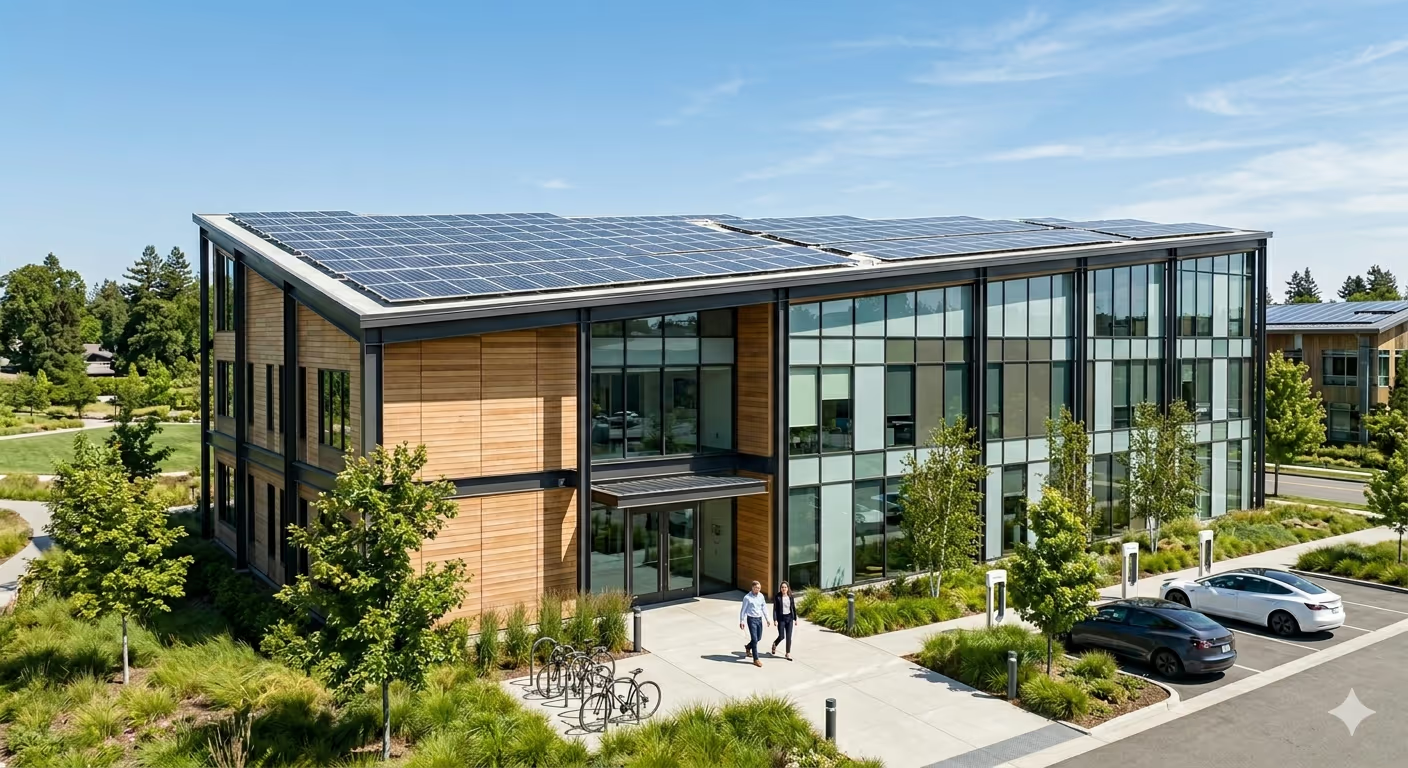
A Building Management System (BMS/GTB) for industrial buildings centralises the control of HVAC, lighting, energy and access in your facility so you spend less and see what is happening in real time. The good news: a large share of that investment is grant-eligible in Spain thanks to energy-efficiency aid schemes and Energy Saving Certificates (CAE).
1 What a BMS controls in an industrial building
A Building Management System (BMS) —GTB in Spanish— is the system that supervises and automates a building's technical installations from a single point. In an industrial context it is not about comfort, but about cutting the energy bill, keeping installations available and having data to decide.
If you want the concept in depth, we cover it in what a BMS is and how it improves energy efficiency. Here we focus on the building-management angle and, above all, on price and the grants available. These are the four blocks a BMS controls in a facility:
2 Benefits: why a BMS pays for itself
The case is not technological, it is economic. A well-designed BMS acts on a facility's largest fixed cost —energy— and on installation availability. These are the usual returns:
- 15–30% energy savings on HVAC and lighting, simply by removing out-of-hours consumption and tuning setpoints.
- Cheaper maintenance: technical alarms and data let you move from corrective to predictive maintenance and avoid downtime.
- Real visibility: a single SCADA supervision panel shows what each zone consumes and where money is lost.
- Compliance and reporting: it eases energy audits and the justification of grants and CAE certificates.
3 How much a BMS costs: price factors
There is no single price: a BMS is quoted by number of control points (each sensor, actuator or signal monitored or governed) and by the degree of integration with the rest of the systems. These factors move the figure most:
| Factor | What makes it cheaper or pricier | Impact |
|---|---|---|
| Number of points | Every climate, lighting, energy or access signal to control | High |
| SCADA / supervision integration | Central panel, history, alarms and connection to existing PLCs | High |
| Systems to integrate | HVAC, lighting, energy metering, fire, access | Medium |
| State of the wiring | New build vs. existing unit with panels to refurbish | Medium |
| Protocols (KNX, Modbus, BACnet) | Open equipment vs. closed proprietary systems | Medium |
As an orientation for an industrial unit in Spain, the typical ranges of a turnkey BMS installation are:
| BMS scope | Approx. points | Indicative investment |
|---|---|---|
| Basic: HVAC + lighting of one unit | 50–150 | €15,000–35,000 |
| Mid: + energy metering and SCADA supervision | 150–400 | €35,000–70,000 |
| Advanced: + access, fire, multi-building | 400+ | €70,000–120,000+ |
4 Energy-efficiency grants and subsidies for industry
Here is the key that makes the project profitable: a large part of a BMS is grant-eligible because it generates measurable energy savings. In Spain several routes coexist, nearly all fed by the Next Generation EU funds and the National Energy Efficiency Fund.
| Programme | What it covers | For whom |
|---|---|---|
| IDAE industrial energy-efficiency aid | Energy-management systems and process upgrades. Minimum ~€50,000 for energy management | SMEs and large industrial firms |
| Next Generation / recovery funds | Digitalisation and decarbonisation of installations | Companies of any sector |
| CAE (Energy Saving Certificates) | Monetise each kWh saved after the action (RD 36/2023) | Firms carrying out upgrades |
| Regional calls | Managed by the regions with IDAE funds | Depends on region and sector |
Energy-efficiency aid for industry is channelled mainly through the IDAE grants catalogue, with intensities that can cover a very high share of the investment depending on company size. In parallel, the Energy Saving Certificates (CAE) turn certified savings into income.
Typical requirements for the grant to be awarded
- Prior energy audit or certificate: the technical basis justifying the expected saving.
- Measurable saving: a demonstrable reduction in final energy consumption and CO₂ emissions.
- Minimum investment per action (in many industrial calls, around €50,000).
- Technical report and budget with scope, equipment and the measurement of the saving.
- Do not start works before applying (in most schemes, the incentive effect is mandatory).
5 How to apply for the grants, step by step
The process is very similar across calls. An integrator experienced in BMS usually guides you through these steps so the technical documentation matches what the administration requires:
6 The BMS within your automation strategy
A BMS does not live in isolation: it gains value when integrated with the rest of your plant. Supervision relies on a SCADA system that centralises data and alarms, and it helps to know the difference between SCADA and HMI to size the supervision layer well. If your goal is plant-wide efficiency and digitalisation, the BMS is one more piece of a coherent industrial automation strategy.
Frequently asked questions
What is the difference between GTB and BMS?
None in substance: GTB (Gestión Técnica de edificios) is the Spanish term and BMS (Building Management System) the English term for the same system, which supervises and automates a building's HVAC, lighting, energy and access. In industrial settings EPMS is also used when the focus is on electrical-energy management.
How much does it cost to install a BMS in an industrial building?
A basic BMS (HVAC and lighting) starts at around €15,000–35,000; a mid installation with energy metering and SCADA supervision sits between €35,000 and €70,000; and an advanced one with access, fire or several buildings can exceed €70,000–120,000. The price depends mainly on the number of control points and the integration required.
What grants are available to install a BMS in Spain?
The main ones are the IDAE energy-efficiency aid for industry (funded by the National Energy Efficiency Fund and Next Generation funds), the equivalent regional calls and the Energy Saving Certificates (CAE), which let you monetise the kWh saved after the installation.
What requirements do energy-efficiency subsidies ask for?
Usually: a prior energy audit or certificate, a measurable saving in energy and emissions, a minimum investment per action (around €50,000 in many industrial programmes), a technical report with budget and, crucially, not having started the works before submitting the application.
What are CAE and how do they help finance a BMS?
Energy Saving Certificates (CAE), governed by RD 36/2023, certify each kWh of final energy saved after an efficiency action. Obligated energy retailers buy them, so the company installing the BMS recovers part of the investment by selling the certified saving.
Does a BMS pay off even without a subsidy?
Yes. The typical 15–30% saving on HVAC and lighting pays back the installation in a few years on its own. Grants and CAE simply shorten that payback period, often by half, depending on the size of the unit and the energy bill.
The bottom line
A BMS for industrial buildings is not a technology expense but an efficiency investment that the energy saving itself pays back, and that IDAE grants, Next Generation funds and CAE make even more profitable.
The key is the right order: audit, project and application before installing. If you want a real estimate for your unit, start with an on-site control-point survey.
Want to make the most of the grants for your BMS?
We help you size the installation, calculate the saving and align the documentation with the available energy-efficiency subsidies.
Talk to an expertNexum Blog
Related articles

9 Oct 2026
Mandatory B2B E-Invoicing in Spain: What to Do
Mandatory B2B e-invoicing in Spain now has its regulation: expected dates, how it differs from Verifactu and how to prepare while automating.
3 Jan 2026
Automated industrial plants: what are they, applications and when to implement them?
Could your production process be more efficient and safer? In this article we explain what automated industrial facilities are, where they are applied and when it makes sense to implement them.
24 Mar 2026
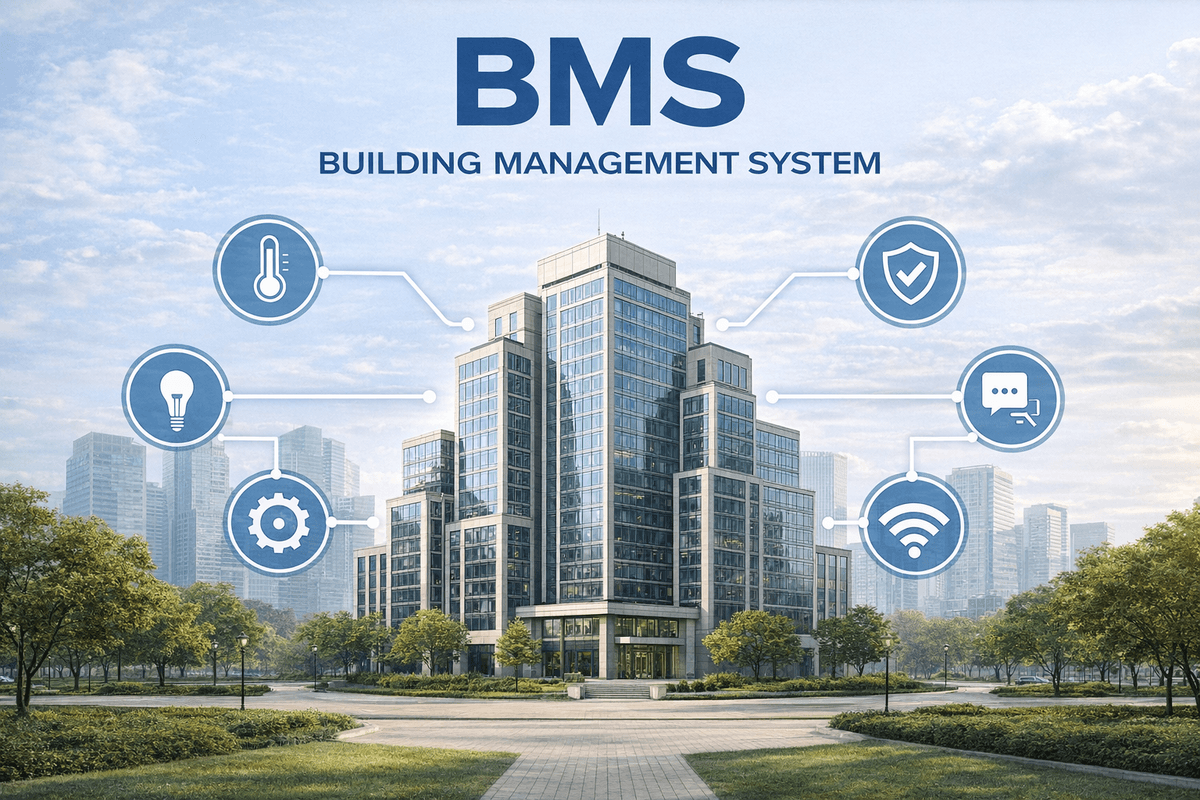
What is a BMS system and how does it improve energy efficiency?
Discover what a BMS (Building Management System) is, how it works and how much it can reduce the energy consumption of your building or industrial facility. Practical guide for maintenance managers.