
Process Automation ROI: How to Calculate It
· by Panayot Dimkov
Calculating process automation ROI for administrative work is easy. Calculating it well is another matter. The formula fits on one line, but the numbers that go into it usually come from optimistic estimates, and that turns the calculation into a justification rather than a decision.
This article explains what to measure before touching anything, which costs are almost always forgotten, why counting hours alone undervalues the project, and how to verify afterwards whether the return was real. If you are still sizing the investment, start with how much it costs to automate a process with AI.
1The baseline: what to measure first
Without a prior measurement there is no ROI, there is a story. And that measurement has a very specific window: it can only be taken before automating. Once the flow is running, the opportunity is gone for good.
2The costs almost everyone forgets
The cost side is usually cleaner than the saving side, because there are invoices. But four items systematically fall out of the calculation or get underestimated.
| Item | Why it gets forgotten | Order of magnitude |
|---|---|---|
| Annual maintenance | The project is imagined as a building that gets finished, when it is a system living connected to others that change. | 15–25% of implementation, every year |
| Internal team time | It is not invoiced, so it does not appear. But analysis meetings, testing and sign-offs consume real hours from people who are paid. | Variable, never zero |
| Training and adoption | It is assumed the flow "just gets used". If nobody understands what it does or how to handle an exception, the process quietly goes back to being done by hand in parallel. | Days, not hours |
| Recurring licences | Checked at signing and never reviewed. They grow with the number of users or the volume processed. | Grows with usage |
A calculation ignoring these four lines can inflate the return considerably. And the worst part is not the error itself: it is that when reality falls short, the organisation concludes that "automation does not work", when what did not work was the arithmetic.
3Why counting hours alone undervalues the project
Curiously, the most common mistake on the saving side is not exaggerating but falling short. Most calculations count hours and stop there.
4How to calculate automation ROI, step by step
No invented figures: what follows is the structure, for you to fill with your own data.
Multiply that ratio by 100 and you have the annual return as a percentage. Divide the other way round, D ÷ (A − B − C), and you get the payback period in years: 0.5 means the investment comes back in about six months.
Two warnings about this outline. First: B is never zero. There are always exceptions, validations and supervision, and any calculation assuming total automation is wrong from the premise. Second: if the result comes out tight, do not force the numbers. A process that does not show a clear return is probably not the one to automate first.
5Verifying afterwards, which almost nobody does
The project ends when the flow works, but the calculation does not. Three or six months later you have to measure exactly the same things, with the same method, and compare.
- The same four metrics from the baseline: hours, volume, errors and cycle time.
- The share going through exceptions. If it is higher than expected, the real saving will be lower and it is better to know early.
- Actual recurring cost against what was budgeted, especially where services are paid per use.
- What was done with the freed hours. The uncomfortable question that turns a theoretical saving into a real one.
Frequently asked questions
What is the ROI formula for an automation?
The formula is simple: annual saving minus annual cost, divided by the initial investment. The hard part is not the formula but making the first two numbers real. The saving must come from measured hours, not estimates, and the annual cost must include licences and maintenance, not just implementation.
Which costs are always forgotten when calculating return?
Four above all: annual maintenance, usually 15 to 25 per cent of implementation; the internal time your team spends during the project, which is real even if never invoiced; training for the people who will live with the flow; and recurring licences, which grow with users or volume. Ignoring them inflates the return artificially.
Is counting saved hours enough?
No, and stopping there usually undervalues the project. Errors corrected, late-payment charges, discounts lost and cycle time often weigh as much or more than hours. Besides, freed hours only become a real saving if that capacity goes to something else.
How long does it usually take to recover the investment?
There is no honest figure that fits every case, because it depends on the volume of the process and the hours it consumes today. The payback period is the initial investment divided by the net annual saving, using measured data; anyone quoting a standard period without measuring your process is guessing. What can be said is that a frequent, manual-heavy process pays back sooner than an occasional one.
How do you check afterwards whether the return was real?
By measuring exactly the same things you measured before, with the same method, a few months later. That is why the baseline measurement is not optional: without it there is no comparison, and the result ends up being accepted simply because the flow runs.
In short
The ROI of an automation is not calculated from an industry template: it is calculated from four of your own figures gathered in a week. Measured hours, real volume, cost of errors and cycle time. On the other side, every cost, including maintenance and the internal time nobody invoices.
And then you verify it. Measuring again at six months is what separates a managed investment from an expense justified after the fact. That baseline measurement is exactly where we start in our process analysis.
Want to know whether your process delivers a return?
We analyse the process with you, define the baseline and tell you with numbers whether automating it pays off and where to start. Without promising figures we cannot demonstrate.
Request a process assessmentNexum Blog
Related articles
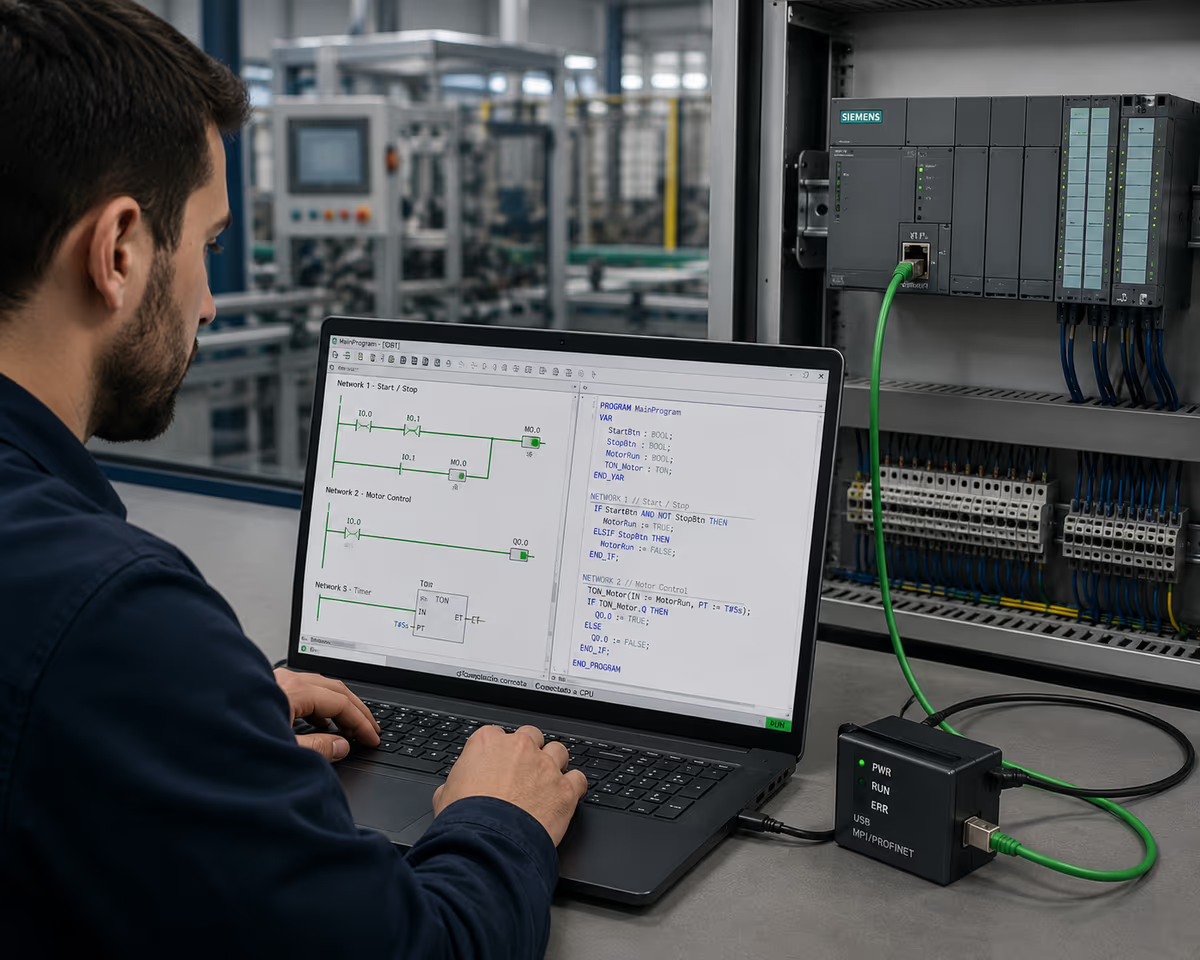
16 Aug 2026
How much does PLC programming cost? Real prices 2026
How much PLC programming costs: rates of €65-110/h and projects from €3,000 to over €25,000. Price factors and what a good quote must include.
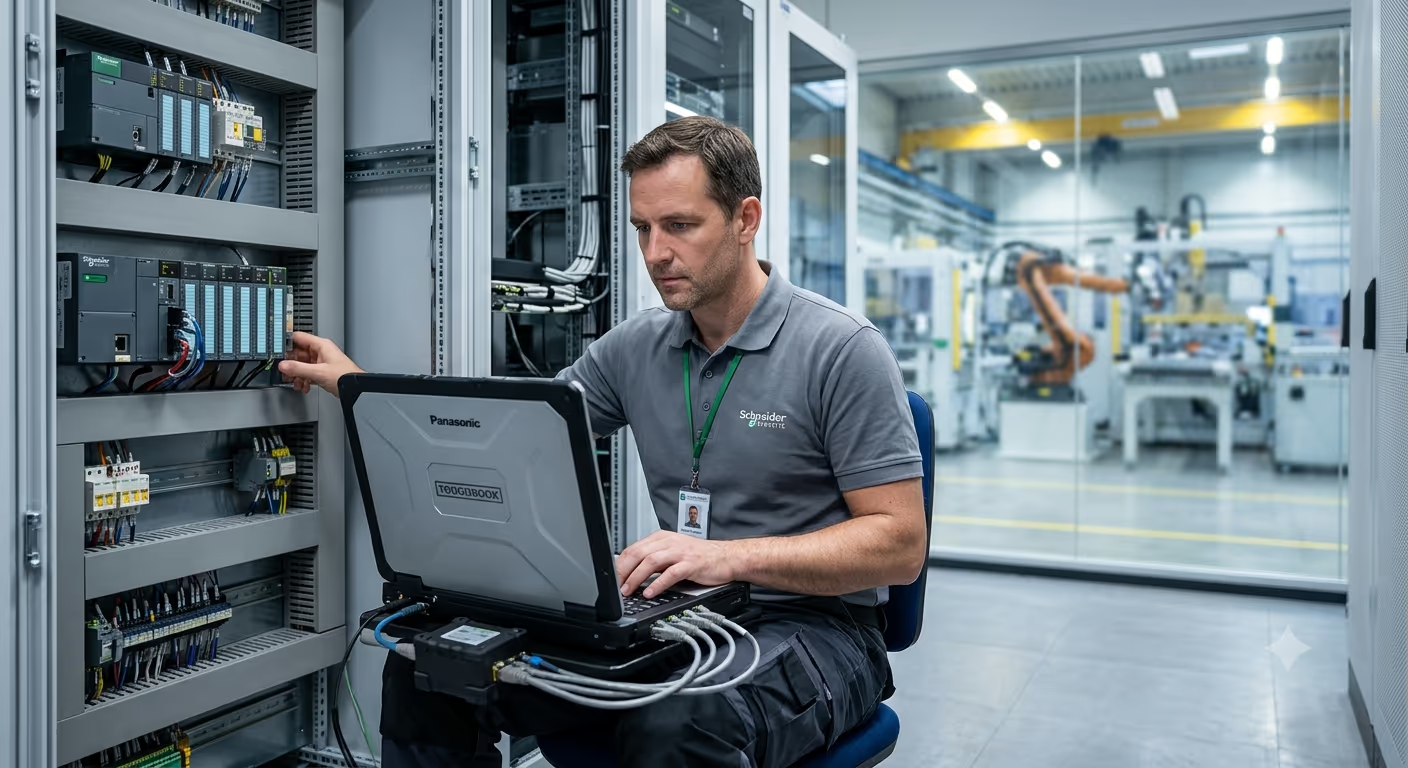
23 Jun 2026
NIS2 and OT cybersecurity in industry
A practical OT cybersecurity and NIS2 guide for industrial plants: who is in scope, obligations, fines, IT vs OT and IEC 62443.
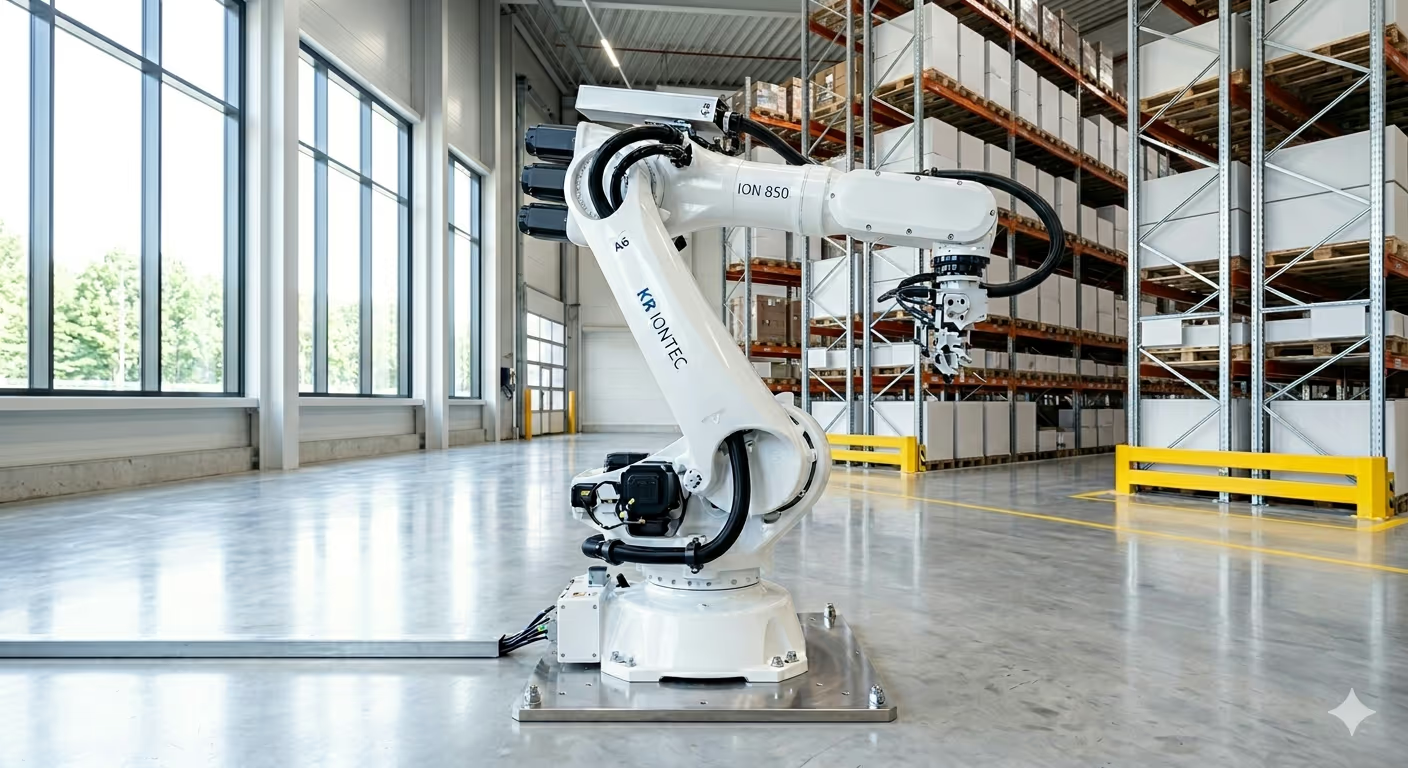
25 Jun 2026
Industrial robot price: 2026 buyer's guide
How much does an industrial robot cost in 2026: arm price by type, brand, payload and reach, integration costs and ROI. A clear guide to budgeting.