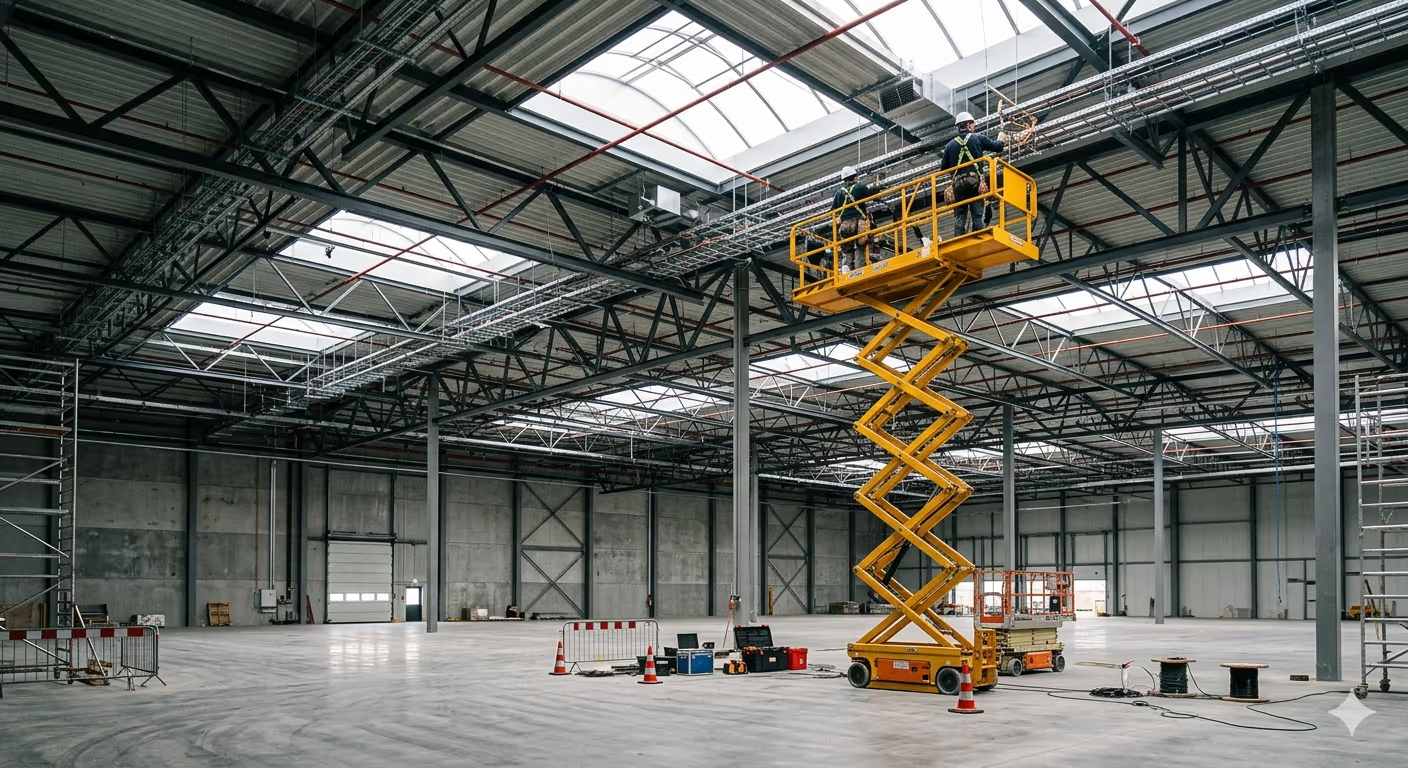
How much does a BMS cost? (2026 prices)
· by Panayot Dimkov
If you are wondering how much a BMS costs in an industrial building, the short answer is: it depends on the points, not the floor area. As a reference, an installation runs between €8 and €25 per m² or between €300 and €1,200 per control point. This guide breaks down the real budget —sensors, controllers, cabling, software and engineering— and when it pays for itself.
Before the figures: if you are still not clear on exactly what one of these systems does, it is worth reading first what a BMS is and how it improves energy efficiency. Here we assume the concept and go straight to cost and return.
1What determines the price of a BMS
A BMS budget is built by adding up control points. A point is each signal the system reads or sends: a temperature sensor, a fan run status, a command to a three-way valve or the setpoint to a variable-frequency drive. Each point carries a cost in hardware, cabling and engineering hours, which is why the sum of points —not the square metres— is what really drives the final figure.
These are the factors that increase or reduce the cost of an installation the most:
2Cost breakdown by line item
So you can see where the money goes, here is a typical split for a mid-sized BMS in an industrial building. The per-point figures include material and labour for that line; they are indicative ranges for Spain in 2026, not a closed quote.
| Line item | What it includes | Indicative cost | Weight |
|---|---|---|---|
| Sensors and actuators | Temperature/humidity/CO₂ probes, meters, valves and actuators | €60–250 / point | 25–35 % |
| DDC controllers | Field controllers, I/O modules, power supplies and panels | €40–150 / point | 15–20 % |
| Cabling and bus | Bus/signal cable, conduit, terminations and labelling | €50–200 / point | 15–25 % |
| Supervision software | BMS/SCADA licence, graphics, trends, alarms and web access | €5,000–30,000 total | 5–10 % |
| Engineering and commissioning | Design, programming, integration, testing and tuning | €80–300 / point | 25–35 % |
Note the key point: engineering and commissioning weigh as much as the hardware. A BMS is not about buying boxes, it is about making dozens of devices from different vendors talk to each other and regulate themselves. Cutting corners there is the fastest way to end up with a system nobody looks at after six months.
3Estimating by point and by m²
For a first idea before counting points, these two cross-references help. Use them to position your case and then validate a detailed quote.
4Budget ranges by building size
Combining typical point counts and €/m², these are the orders of magnitude we usually see. They are starting figures to frame the project, not an offer:
| Type of building | Area | Approx. points | Indicative budget |
|---|---|---|---|
| Simple logistics / warehouse | 2,000–5,000 m² | 150–400 | €40,000–90,000 |
| Mid-sized production unit | 5,000–10,000 m² | 400–1,000 | €90,000–200,000 |
| Process plant / multi-HVAC | 10,000 m²+ | 1,000–3,000+ | €200,000+ |
If your installation also has a critical electrical side —where a half-second voltage dip stops the line or spoils product— then we are probably not talking about a BMS alone. That is where an EPMS comes in, with a different cost per point; we explain it in BMS vs EPMS: differences and which you need.
5Energy savings and return on investment
The question right after the price is always the same: how long until it pays off? A well-tuned BMS acts on the largest energy item in an industrial building —HVAC— and cuts consumption in a measurable way.
- 15–40 % energy savings depending on the starting point, with most of it in HVAC.
- ROI of 1 to 5 years in most well-sized installations.
- 2–3 years in old or poorly managed buildings, where the room for improvement is huge.
- The higher the starting electricity bill, the faster each saved kWh pays back.
Quick example: a building spending €250,000 a year on energy that achieves 20 % savings frees up €50,000 a year. On a €120,000 BMS, that is a payback of around 2.5 years from energy alone, before counting savings in maintenance and avoided breakdowns. Public energy-efficiency grants can be added to that calculation: we cover them in building management in industrial premises: price and grants.
6Mistakes that blow the budget
Most overruns do not come from the hardware, but from design decisions that are paid for afterwards. These are the ones we see most:
Frequently asked questions
How much does it cost to install a BMS in an industrial building?
As an order of magnitude, a BMS installation usually costs between €8 and €25 per m², or €300 to €1,200 per control point depending on complexity. A simple 5,000 m² logistics unit may fall in the €40,000–90,000 range, while a plant with heavy HVAC, process and energy to integrate easily exceeds €150,000. The number of points matters more than the square metres.
What is a control point in a BMS and why does it drive the price?
A point is each signal the system reads or controls: a temperature sensor, a run status, a command to a valve or a drive. Budgets are calculated by adding up points because each one needs a sensor or actuator, cabling or bus, an input/output on the controller and hours of programming and commissioning. That is why two buildings of the same size with different point counts cost very differently.
What is the payback period of a BMS?
A well-tuned BMS cuts energy consumption by 15 % to 40 %, mostly in HVAC. With those savings, the return on investment is usually 1 to 5 years, dropping to 2–3 years in old or poorly managed buildings where the room for improvement is greater. The higher the starting electricity bill, the faster it pays for itself.
What pushes a BMS budget up the most?
The biggest cost drivers are the number of points, the use of proprietary protocols and controllers (which lock you to one vendor), point-to-point wiring instead of a bus, integrating many different systems (HVAC, lighting, energy, fire) and, above all, undersized engineering and commissioning. A poor initial design blows up the hours and the later changes.
Is a BMS the same as an EPMS or a SCADA?
No. A BMS manages the building (HVAC, lighting, energy, access) with a broad view; an EPMS focuses on the electrical installation and power quality with sub-second detail; and a SCADA supervises industrial processes. They overlap and are often integrated, but their scope and cost per point differ. For an industrial unit, the norm is a BMS and, if electrical reliability is critical, an EPMS on top.
Is it better to install the BMS in new construction or in an existing building?
It is cheaper and cleaner in new construction, because the cabling and bus are run with the rest of the installations and nothing has to be opened up. In an existing building (retrofit) it can be done perfectly well, but the cost rises due to extra cabling, integration with old equipment and working in a running plant. Even so, it usually pays off through energy savings.
Bottom line
Installing a BMS in an industrial building costs, in orders of magnitude, between €8 and €25 per m² or €300 to €1,200 per point, and pays for itself in 1–5 years through energy savings. The exact figure is set by the number of points and the quality of the engineering, not by the square metres.
The smart decision is not the cheapest quote, but the one that sizes the points and the commissioning properly: that is where the savings that pay for the system come from.
Want a BMS quote tailored to your building?
We count the real points of your installation and give you a realistic cost and return, without locking you into any vendor.
Talk to an expertNexum Blog
Related articles
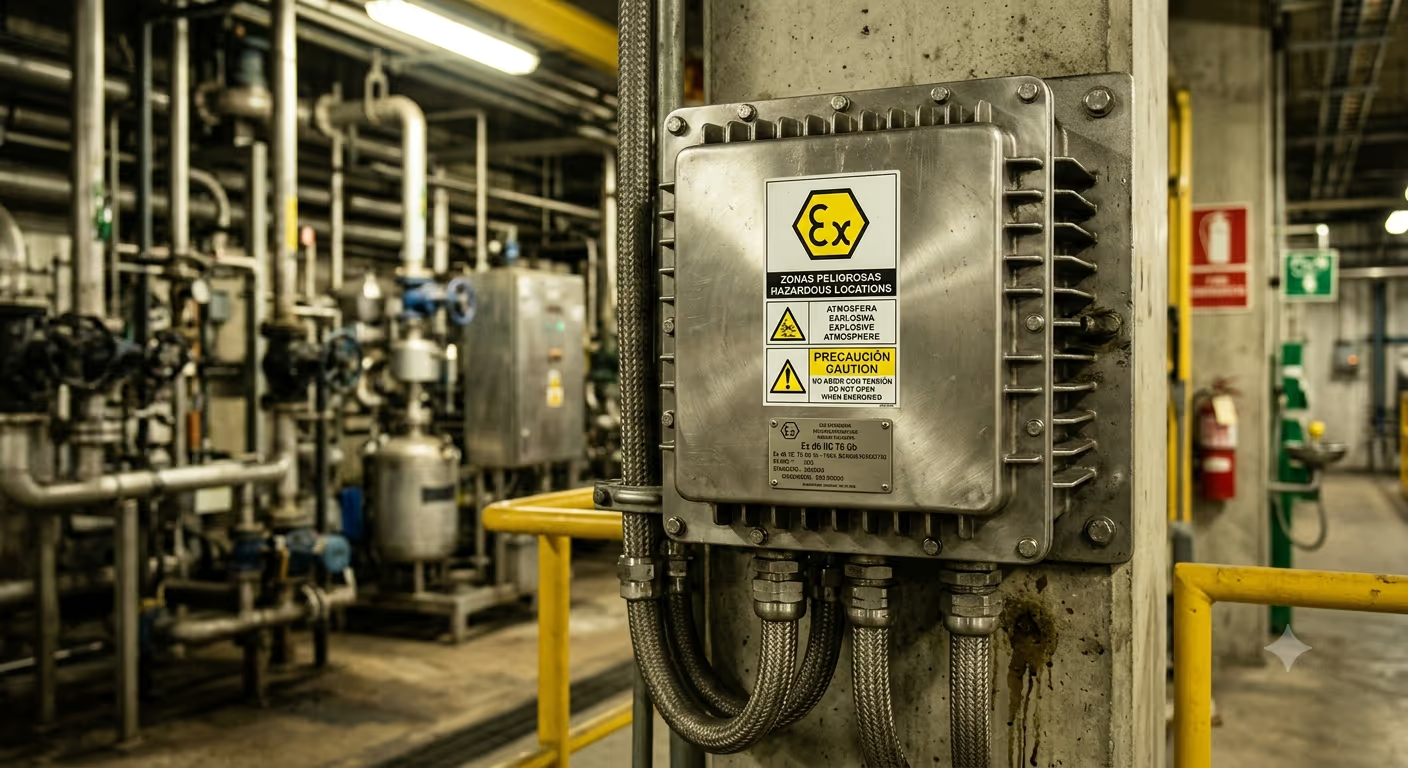
22 Jun 2026
ATEX Electrical Panels: Hazardous Area Guide
ATEX electrical panels for hazardous areas: zone classification, Ex marking, protection modes and Directive 2014/34/EU, explained step by step.
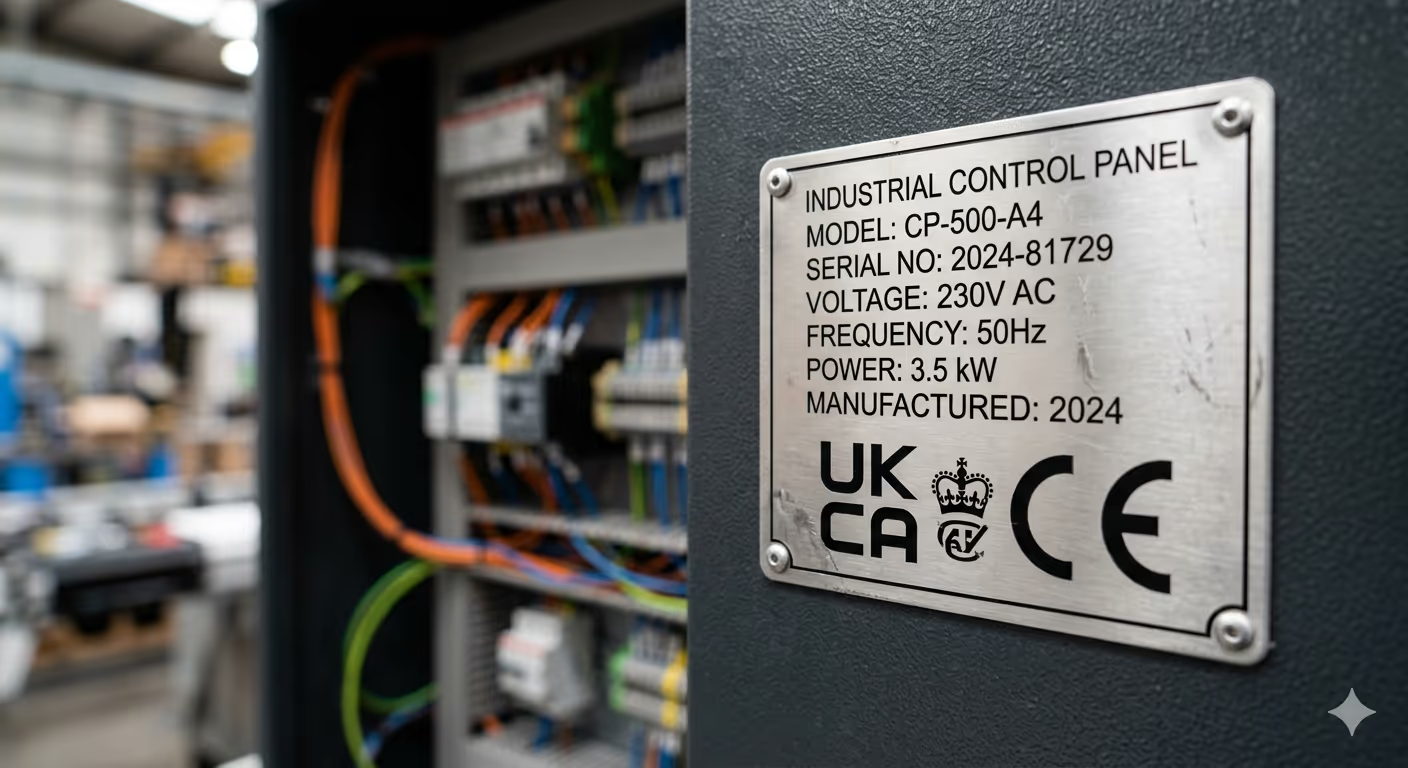
3 Jul 2026
UKCA vs CE Marking for Control Panels
UKCA vs CE marking for electrical control panels: which directives apply, the real 2026 status and what you need to export panels to Great Britain.

18 May 2026
Industrial Robotics Integrator: What They Do and How to Choose One
What is an industrial robotics integrator, what services do they offer, how to choose a certified one, and what guarantees to expect. 2026 Guide for Spanish Manufacturers.