
The definitive guide to increase competitiveness without increasing the number of employees
· by Panayot Dimkov
For years, business growth has been linked to an almost automatic idea: more work requires more people. However, in the current context—cost pressures, difficulty finding qualified talent, and increasingly fast-paced markets—this logic no longer always works.
The good news is that growing competitiveness without increasing staff is not only possible, but strategic. In this guide, we explain how to do it realistically, sustainably, and without burning out your team.
What does "being more competitive" really mean?
Before talking about solutions, it is worth clarifying the concept. Being competitive does not mean working longer hours or demanding more from the team, but rather delivering more value to the customer, reducing time, errors, and costs, responding more quickly to the market, and making better decisions with less friction.
And how is it possible to do all this with the human resources you already have?
Because there is almost always room for improvement in the way you work: repetitive tasks, unclear processes, overlapping decisions, and a lot of manual work that takes up the time of key people. If you organize the system first, you will recover capacity without expanding your workforce. And if you then need to hire, you will do so on a more solid and profitable basis.
The typical mistake: hiring to cover up inefficiencies
When a company is struggling, it's normal to think, "We need more people." Sometimes this is true. But if you hire without fixing the root cause, you only make the problem worse: more coordination, more dependence on key people, and more fixed costs to sustain a system that is still slow.
A quick way to see this is as follows: if two people are absent tomorrow, what will break down first? That's where the bottleneck is. And it's almost never a lack of talent; it's usually an overly manual process or unclear decisions.
Optimizing processes can free up between 10% and 30% of capacity without hiring anyone.
Automate the repetitive, not the critical
Optimizing processes is not about making a pretty diagram. It is about removing steps that do not add value, reducing repetitions, and making it clear who decides what and with what criteria. When this is organized, work flows: stress decreases, speed increases, and quality becomes more consistent.
In industrial automation, automation is not about "replacing people with machines"; it is about giving the team back useful time. If your technicians and engineers spend their days extracting data from PLC/SCADA to Excel, filling out forms, redoing reports, or manually validating what the system could already record, you are using talent for repetitive tasks. Not only is this expensive, it also delays improvements, maintenance, and troubleshooting.
The key is order: first you understand the process, then you simplify it, and finally you automate it. If you automate chaos, you only get chaos faster.
Better specialize your team
A competitive team is not one that does everything, but one that knows where it adds the most value. In industrial automation, that means learning to supervise what has been automated: understanding what the system does, detecting deviations in time, and adjusting judiciously. When you reduce multitasking and clarify roles, productivity increases without putting more pressure on people.
Use technology as a multiplier, not a band-aid
Well-chosen technology multiplies the team's capacity, but only if it is actually used. The problem is not having too few tools, but having too many that are poorly connected and with parallel systems that duplicate work.
The paradox is this: many companies try to grow by hiring, when what they really need is for the system to support growth. When you automate and standardize key processes, you stop depending on heroes, work becomes predictable, and the team stops pushing itself to the limit. And that's when growth changes shape: first, you grow in capacity and margin; then, if you bring in new people, you do so to truly scale up, not to fill gaps.
At Nexum, we help you identify what to automate, organize the process before touching technology, and deploy integrated solutions. We define a clear plan: where to start, what impact to expect, and how to measure it in terms of time, quality, and costs.
Nexum Blog
Related articles

9 Oct 2026
Mandatory B2B E-Invoicing in Spain: What to Do
Mandatory B2B e-invoicing in Spain now has its regulation: expected dates, how it differs from Verifactu and how to prepare while automating.

7 Oct 2026
Process Automation ROI: How to Calculate It
How to calculate process automation ROI for admin work with your own data: what to measure first, which costs get forgotten and how to check it afterwards.
3 Jan 2026
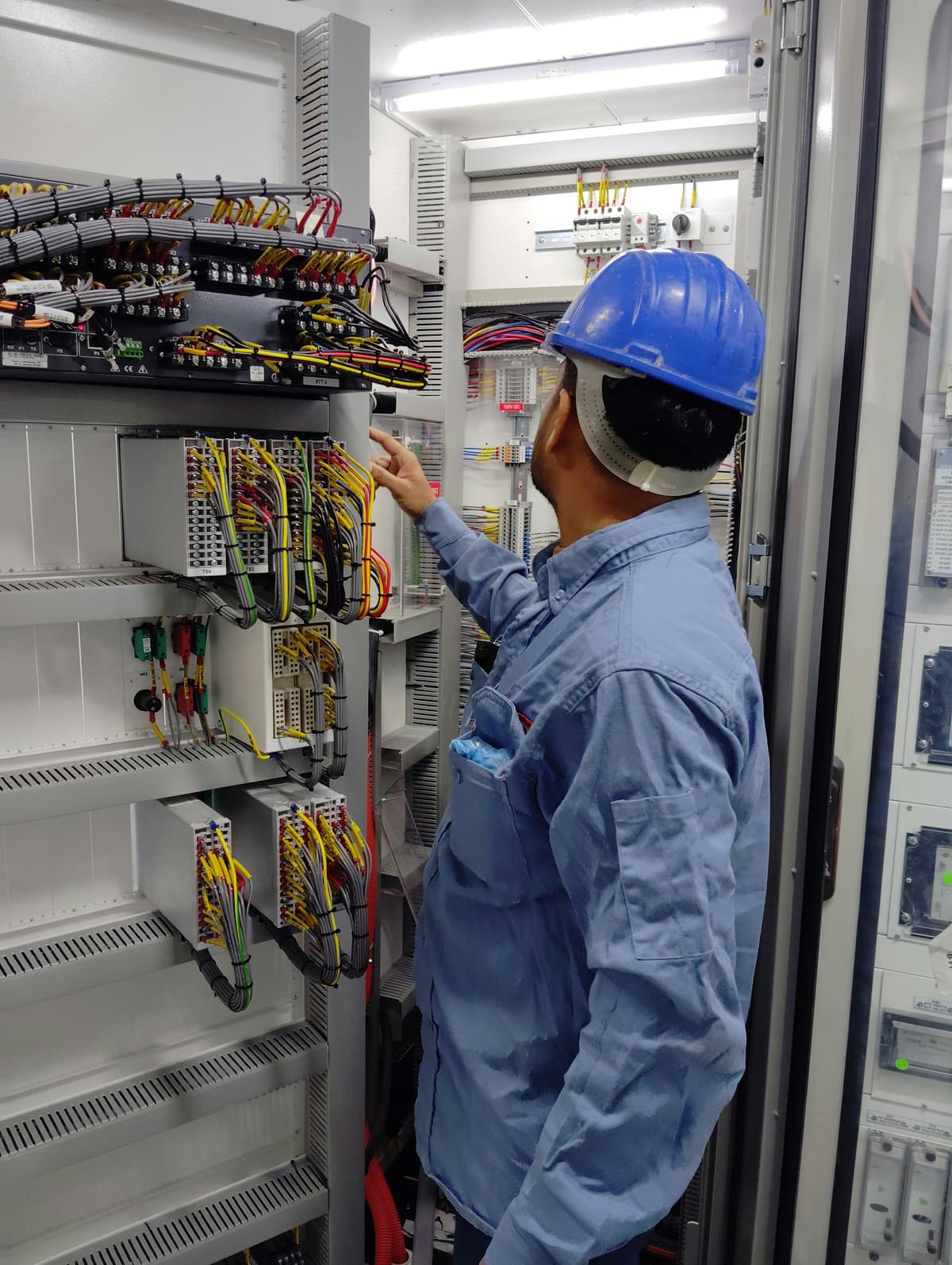
Industrial electrical control panels: actual uses in the plant and when to renew them
What is an industrial electrical control panel, what is it used for and how to detect when it is no longer reliable. Practical criteria for plant renovation.