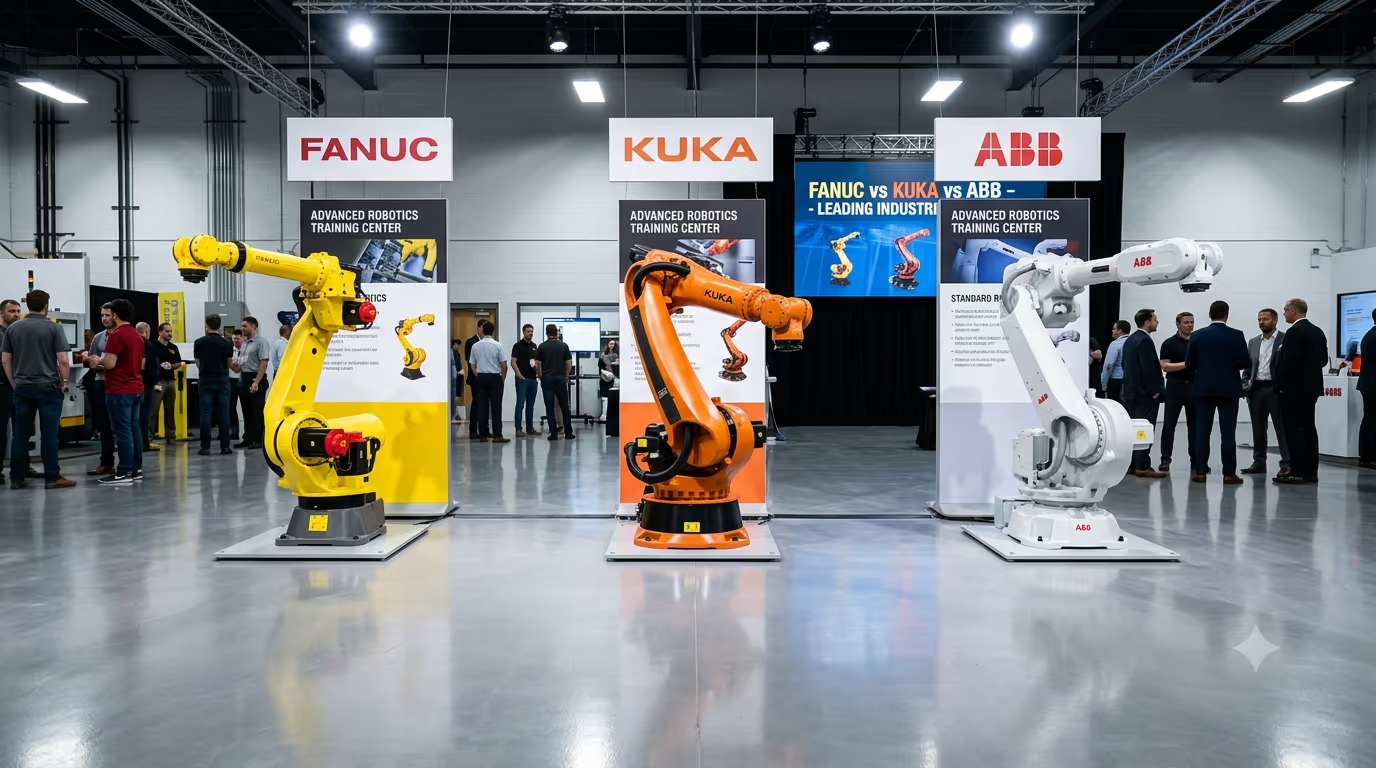
How to choose: FANUC vs KUKA vs ABB
· by Panayot Dimkov
Knowing how to choose a robot integrator is the decision with the biggest impact on your automation project — it matters more than the FANUC vs KUKA vs ABB debate. The robot is just an arm; the integrator is who turns it into a cell that runs for years without faults. This guide gives you the criteria for choosing an integrator, a calm look at the leading brands —all excellent and very similar—, the questions to ask before you sign and the red flags that save you trouble.
1Why the integrator matters more than the brand
FANUC, KUKA and ABB all build excellent robots of very similar reliability. Together with Yaskawa, these brands account for close to half of the world's industrial robot installations. In other words: if the hardware is good across all three, what separates a successful project from a troublesome one is not the badge on the arm but who integrates it.
A robotic system integrator does not build robots: they buy them and combine them with end-of-arm tooling (EOAT), an electrical panel, guarding and safety systems, sensors and control software to create a complete solution. That is where — in design, programming and commissioning — it is decided whether the cell meets cycle time, is safe and lasts.
2Criteria for choosing a robot integrator
These are the factors that truly separate a good integrator from the rest. Use them as a scorecard when comparing quotes.
Official manufacturer certification
A certified integrator has passed the brand's official homologation: FANUC ASI, KUKA Authorized System Partner, ABB Authorised Value Provider or UR Certified System Integrator. This guarantees officially trained technicians, priority access to support and spares, full software licences and the option to extend the robot warranty. Working with a non-certified integrator can, in some cases, void that warranty.
3FANUC, KUKA and ABB: all excellent and very similar
One idea worth being clear about: no brand is "better" than the others. FANUC, KUKA and ABB —and also Yaskawa, Universal Robots and others— build extremely high-quality, very reliable robots that, in everyday applications, are practically equivalent. Each maker has its own software ecosystem and a few nuances, but the differences keep getting smaller and are almost never the reason a project succeeds or fails.
Every leading brand comfortably covers the vast majority of processes: palletising, welding, handling, machining, assembly or painting. So the useful question is not "which is the best?" but "which one best fits my application and my integrator's experience?".
How to decide the brand in practice
For most standard applications, all the brands are more than capable. When that is the case, the deciding factor is not the spec sheet but local support and the integrator's experience with that specific brand. A robot —of any brand— programmed by a team that barely knows it performs worse than another in the hands of someone who masters it. That is why a multi-brand integrator adds value: they pick the brand for your process, not the one they sell.
4Key questions before you sign
Take this list to the meeting. The answers (and the willingness to give them) say more than any brochure.
- Can I visit two or three of your installations running for more than six months?
- Are you certified by the maker of the robot you propose? Who will do the programming?
- Do you have an in-house workshop to run the FAT before shipping the cell to my plant?
- What after-sales response times do you guarantee by contract, remote and on-site?
- What documentation do you deliver (risk assessment, CE declaration, drawings, commented programs)?
- How many projects do you run in parallel and who will be my technical contact?
- Does the quote include training for operators and technicians, and commissioning with real product?
It also helps to understand the investment upfront: review the price of industrial robots and the cost of integrating a robotic cell to tell whether a quote is realistic or suspiciously cheap.
5Red flags to avoid
These signs correlate with cost overruns, delays and safety problems. If they appear, ask for an explanation or change supplier.
Frequently asked questions
What matters more, the integrator or the robot brand?
The integrator matters more. FANUC, KUKA and ABB all offer excellent hardware with very similar reliability; what decides whether a cell runs for years without faults or causes trouble is the engineering, programming, safety and support the integrator provides. Choose the integrator first and let them recommend the optimal brand for your application.
What are the practical differences between FANUC, KUKA and ABB?
Fewer than it seems. All three build excellent, very reliable robots and, in everyday applications, deliver equivalent performance; each has its own software ecosystem and a few nuances, but none is "the best" in the abstract. For most projects all three —and others such as Yaskawa or Universal Robots— are perfectly valid: what makes the difference is local support and the integrator's experience, not the badge on the arm.
What does it mean for an integrator to be manufacturer-certified?
It means they have passed the brand's official homologation (FANUC ASI, KUKA Authorized System Partner, ABB Authorised Value Provider or UR Certified System Integrator). It guarantees officially trained technicians, priority access to support and spares, full software licences and the option to extend the robot warranty. A non-certified integrator can even void the warranty.
What questions should I ask before signing with an integrator?
Ask for visitable references of installations older than six months, brand certifications, whether they have an in-house workshop for FAT before shipping, what SAT response times they guarantee by contract (remote and on-site), what documentation they deliver (risk assessment, CE declaration, drawings, commented programs) and how many projects they run in parallel.
What are the red flags when choosing a robot integrator?
Be wary of quotes with no detailed scope, no CE declaration for the cell, refusing to give references, no workshop for FAT, after-sales support with no contractual response times, a single imposed brand with no justification and prices well below market. These usually end in cost overruns, delays and safety problems.
Is a multi-brand integrator better than a single-brand one?
A multi-brand integrator can pick the optimal brand for each application instead of pushing the one they sell. If they only work one brand, you risk paying for a robot that is not ideal for your process. What matters is that they justify the choice technically and have certification and real experience in the proposed brand.
The bottom line
Before debating FANUC vs KUKA vs ABB, choose the integrator well: experience in your sector, official certification, visitable references, a workshop with FAT, safety with CE marking and support with contractual response times. With that settled, the brand becomes a simple technical decision the integrator can justify.
At Nexum we work as a multi-brand integrator: we choose the robot for your process, not the other way round. If you'd like a second opinion on a quote or on your cell design, let's talk about your case.
About to robotise a line or cell?
We help you define the scope, choose the right brand and avoid the red flags before you invest.
Talk to an expertNexum Blog
Related articles
3 Jul 2026
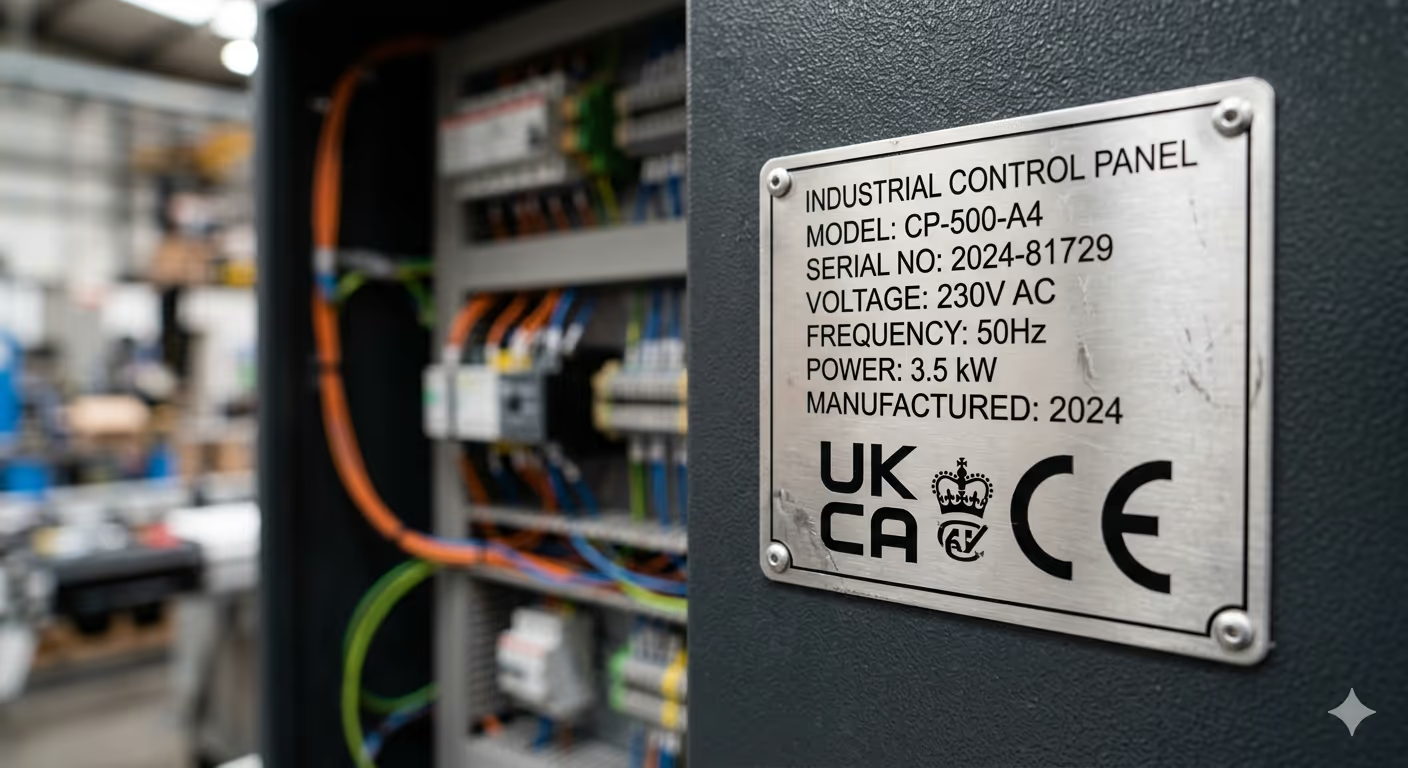
UKCA vs CE Marking for Control Panels
UKCA vs CE marking for electrical control panels: which directives apply, the real 2026 status and what you need to export panels to Great Britain.

5 Oct 2026
Power Automate Pricing and Premium Connectors
Power Automate pricing explained: what Premium, Process and Hosted Process cost, when premium connectors kick in and how to keep the bill under control.

30 Sep 2026
What It Costs to Automate a Process with AI
What it costs to automate a process with AI: indicative ranges by complexity, what drives the price up and which licences you pay for on top.