
n8n for Business: Costs and When It Pays Off
· by Panayot Dimkov
n8n is a workflow automation platform you can use in its cloud or install on your own server. The useful question about n8n for business is not whether it works, but when it pays off: when data must not leave your infrastructure, when the logic calls for writing code, or when volume makes pay-per-use pricing expensive, and always provided someone can administer it.
n8n usually arrives with two labels worth qualifying from the start: "it's free" and "it's open source". Neither is quite accurate, and understanding why is exactly what lets you decide whether it fits your company.
1The two modes and what they change
| Managed cloud | Self-hosted | |
|---|---|---|
| What you pay | A subscription based on the plan and monthly executions | Infrastructure and your own time, plus a licence if you need enterprise features |
| Who updates it | They do | You do, and it has to be done |
| Where the data sits | In their infrastructure | Wherever you decide |
| When it makes sense | You want n8n's advantages without administering anything | Data cannot leave, or volume makes per-use pricing unviable |
Most comparisons focus on self-hosting because it is the distinctive part. But for plenty of companies the managed mode is the right decision: same capabilities, without the work of maintaining a server.
2The licence, which is not what many assume
n8n's code is available, but not under an open source licence in the strict sense. It is distributed under a sustainable use licence, within what they call a fair-code model, and the project's own documentation explains that this is why they do not call themselves open source: licences recognised as such cannot include restrictions on use, and this one does.
For a smaller company using it internally, the licence is no obstacle. For anyone planning to resell it as a service, it is. Read it before building a business model on top, not after.
3The real cost of self-hosting n8n
First, what you can self-host without a licence fee: the Community Edition. Features a company often misses, such as single sign-on (SSO), sharing workflows and credentials between users, separate environments or Git version control, sit in the paid Business and Enterprise plans, even when the server is yours.
And even with the free edition, "no licence fee" and "free" are not the same thing. These are the items that show up as soon as it goes into production.
4When n8n is the best option for your business
5When not
- If nobody on the team is technical. The interface is visual, the maintenance is not. Without that internal capability, any provider's managed option is more sensible.
- If you live entirely in Microsoft 365. What you gain in flexibility you lose in identity and permissions integration, which you already had solved. Before adding another platform, check what automation your Microsoft 365 licence already covers.
- If it is four simple flows. Building and maintaining a platform to automate three alerts and a report is out of proportion.
- If the decision is driven by price. Choosing because "it's free" without counting the six items above is the most common way to end up paying more.
6If you go ahead, do it properly
Frequently asked questions
Is n8n free?
The Community Edition can run on your server without paying a licence, but that is not the same as free. Add the server, the updates, the backups, the monitoring and the time of whoever administers it, and features such as SSO or environments are paid. The cloud mode does carry a subscription and in exchange takes the maintenance off your hands.
Is it open source software?
Not in the strict sense of the term, and the project itself says so. It is distributed under a sustainable use licence that allows using and modifying it for internal purposes, but without a commercial agreement it rules out offering it as a service for third parties to build their own flows, or reselling it under another brand. Providing consulting services and building flows for clients is permitted.
Can I use it without knowing how to code?
Yes for the usual flows: building is visual and requires no code. The difference is that n8n lets you write code when needed, and much of its advantage sits there. What cannot be avoided is the technical profile to administer it if you host it yourself.
How does it compare with Power Automate or Make?
They are alike in what they automate and differ in licensing, execution and maintenance; the full comparison is in Power Automate vs n8n vs Make: how to choose.
Is it suitable for AI automation?
Yes, it can connect to model providers and run flows that classify, extract or draft. Here self-hosting adds something extra: you can pair it with a model running on your own servers, so the data never leaves your infrastructure. If you call an external model, the decision about where that data is processed remains yours and has to be documented.
In short
n8n pays off when data cannot leave your infrastructure, when the logic calls for writing code, or when volume makes per-operation pricing prohibitive. And it pays off especially if someone in the company already administers servers.
It does not pay off when the decision is driven by price, because "no licence" is not "no cost". And read the licence before assuming it is open source: for internal use there is no issue, for reselling there is. That is what we assess case by case in AI process automation.
Considering self-hosting your automation?
Tell us what data the process handles, what volume it has and who would administer the server. That quickly shows whether self-hosting adds value or just adds work.
Request a process analysisNexum Blog
Related articles
6 Aug 2026
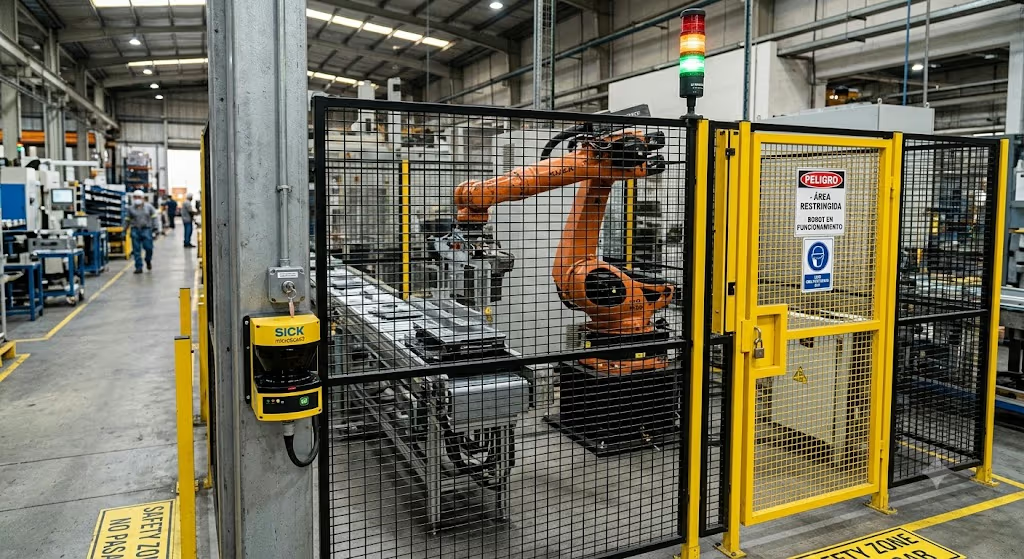
Robot cell safety standards: CE marking guide 2026
Which standards a robot cell must meet: EN ISO 10218, ISO/TS 15066, EN 60204-1, CE marking and who is responsible. A practical integrator's guide.

28 Oct 2026
Automating Purchase Orders and Approvals
How to automate purchase orders and keep spend under control: separate ordering from approving, set an approval matrix by amount and drop manual chasing.

16 Oct 2026
Automating Processes in Line with the GDPR
How to automate processes in line with the GDPR: the five usual failures, Article 22, the processor agreement and a flow with no legal surprises.