
Automating Sales Quotes
· by Panayot Dimkov
Automating sales quotes is not about filling in a template faster: a quote is a five-stage process. It gets requested, priced, written, sent and chased. The order that works is to solve pricing first (a single price list, discount rules and visible margin), then generate the document, and automate follow-up until the accepted quote becomes an order without retyping.
1Automating sales quotes: the five stages
| Stage | Where it gets stuck |
|---|---|
| Request | It arrives by email or phone, with incomplete information. The rep asks, the customer answers the next day |
| Configuration and pricing | Finding references, checking the price, deciding the discount. If someone has to be consulted, another day goes |
| Writing | Copying another customer's previous quote and changing what applies. That is where inherited errors slip in |
| Sending | Save the PDF, write the email, attach. And log it somewhere, if remembered |
| Follow-up | The stage that gets skipped. Nobody has a list of outstanding quotes sorted by age |
2Pricing is what has to be solved first
Automating document generation without solving pricing produces attractive, uncontrolled quotes. Before touching the template there are four business decisions.
With those four things defined, generating the document is almost trivial. Without them, automating it only speeds up a problem.
3The template nobody uses
Most companies have an official quote template. And it is common for each salesperson to work from their own adapted copy saved on their machine. The reason is usually the same: the official one does not cover their case.
- Text blocks by service type. If the template forces someone to delete three paragraphs that do not apply, they will make their own version. Let the document be assembled from what is being quoted.
- Up-to-date legal terms. This is the strongest argument for centralising: an old copy may carry terms that no longer hold.
- Automatic numbering. Without it nothing can be tracked, not even how many quotes have been issued.
- Consistent presentation. Less important than it looks, but a customer receiving two differently formatted proposals from the same company notices.
4Follow-up, where the money is
A quote sent and not chased is work done and thrown away. The cost of producing it has already been paid; all that is missing is the cheap part.
5From quote to order, without retyping
When the customer accepts, the order should be generated from the approved quote: same lines, same prices, same terms. It is a short stage to automate and it removes two known problems at once: transcription errors and the mismatch between what was quoted and what gets invoiced. Many ERP and invoicing tools can already convert a quote into an order directly; the condition is that the quote was created inside the system rather than as a stand-alone document.
If the quote is also accepted with an electronic signature, there is a record of which version was approved and when. That saves arguments when the invoice arrives.
6What AI adds to this process
In all four cases the system proposes and a person decides. A quote is a commercial offer with contractual consequences: not the place for full autonomy.
7What to measure
| Indicator | What it reveals |
|---|---|
| Hours from request to sending | One of the biggest influences on conversion when the customer is asking several suppliers for prices |
| Conversion rate | By rep, by product type and by amount band. Aggregated it says nothing |
| Average discount applied | If it varies a lot between reps, the pricing policy does not exist in practice |
| Quotes with no follow-up | Sent more than two weeks ago with no later contact. That is money on the table |
Frequently asked questions
Do I need a CRM to automate quotes?
You need a single place where quotes live with their status, and a CRM is the natural option. But if you do not have one, you can start with something simpler: what matters is not the tool but that a single list exists with number, customer, amount, date and status. Without that there is no follow-up.
My quotes are all very different — can they still be automated?
Yes, with one nuance: you automate the structure, not the content. Numbering, terms, price lists, format, sending and follow-up are the same for all of them even when the scope changes completely. And the descriptive part can start from a draft generated out of earlier proposals of the same type.
How do I stop each rep using their own template?
By first finding out why they do it. Almost always because the official template does not cover their case and forces them to delete half the document. If generation works by assembly — the document is built from what is being quoted — that reason disappears and the private template loses its advantage.
Can I tell whether the customer opened the quote?
Yes, by sending it as a link rather than an attachment. It provides useful commercial information for timing the call. But it means recording an action by the recipient, which is personal data: they must be informed and, if the notification relies on tracking pixels or cookies, e-privacy rules (PECR in the UK) may also require their prior consent.
What if the customer asks for changes to the quote already sent?
That is normal and the system has to allow for it: numbered versions of the same quote, with the previous one kept and the current one identified. The usual mistake is overwriting, and then nobody knows exactly what was accepted when the invoice is disputed.
In short
A quote is a five-stage process and the template is only one of them. Before automating generation you have to solve pricing: a single list, discount rules and a visible margin. After that, the document produces itself.
But the stage that pays back most is the last one. An automatic reminder and a list of outstanding quotes by age recover deals that were already paid for in effort and lost through forgetfulness. That is how we approach AI process automation.
How many quotes did you send last month, and how many closed?
If the second figure is hard to obtain, that is the first problem to solve. We review the full circuit with you, from request to closure, and say where to start.
Request a process analysisNexum Blog
Related articles

23 Oct 2026
Automating Email and Incident Handling with AI
How to automate email management with AI in four levels of risk: where a shared mailbox wins back hours and what is best left to a person.

9 Oct 2026
Mandatory B2B E-Invoicing in Spain: What to Do
Mandatory B2B e-invoicing in Spain now has its regulation: expected dates, how it differs from Verifactu and how to prepare while automating.
3 Jul 2026
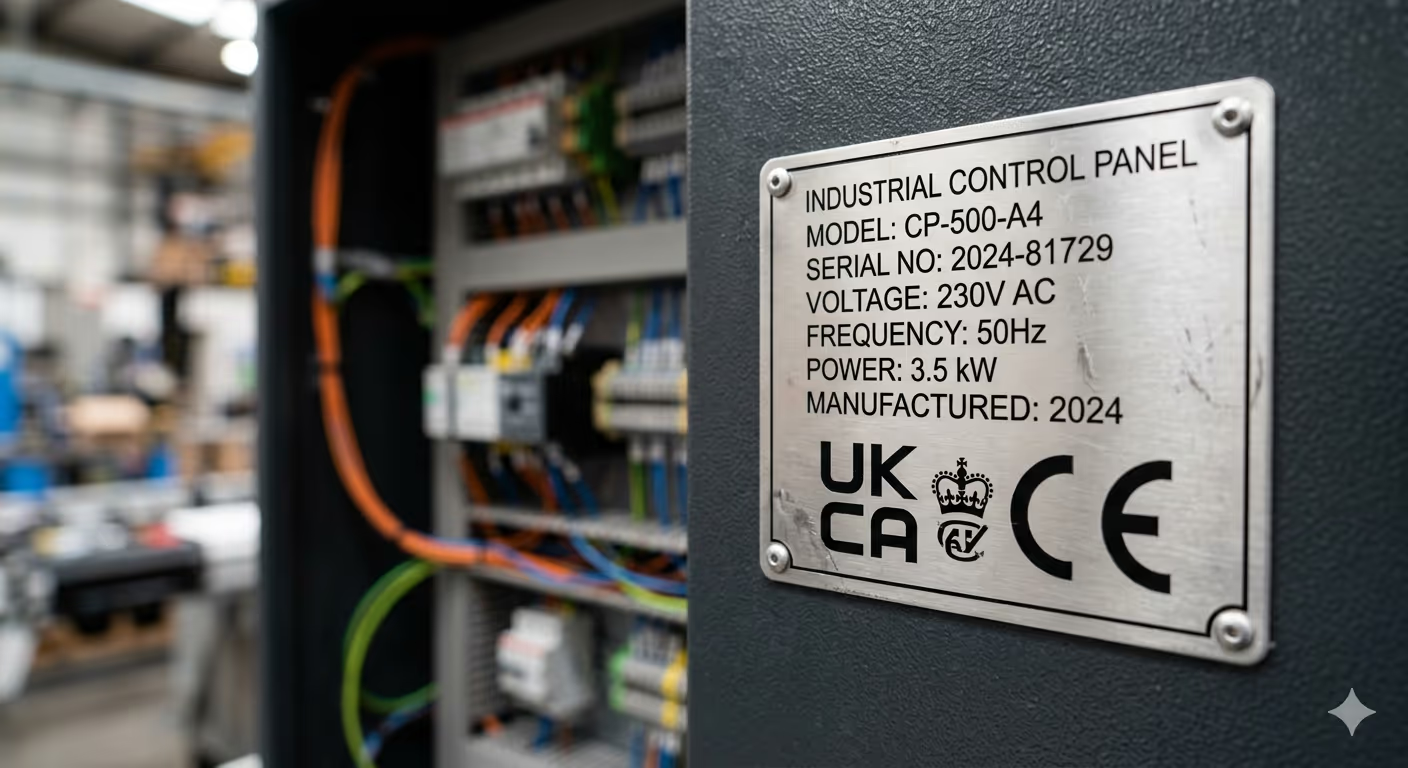
UKCA vs CE Marking for Control Panels
UKCA vs CE marking for electrical control panels: which directives apply, the real 2026 status and what you need to export panels to Great Britain.